




Fluicell
@fluicell.com
Transforming how we treat diseases with high precsision tissue solutions. We are developing advanced human cardiac drug screening models and tissue-based type 1 diabetes therapeutics.
👉 https://www.fluicell.com/
👉 https://www.fluicell.com/
How can tissue engineering and biofabrication technologies advance cancer research? In a new review, Bertassoni and coworker explore how early cancer models facilitate a transition from treating to intercepting disease.

Engineering and biofabrication of early cancer models

Engineering and biofabrication of early cancer models
Nature Reviews Bioengineering, Published online: 03 November 2025; doi:10.1038/s44222-025-00371-wEarly cancer biology and detection research is limited owing to a lack of clinical samples from pre-malignant and early-stage tumours. This Review discusses engineered in vitro systems that mimic early disease stages to investigate tumour progression and identify biomarkers for early cancer detection.
www.nature.com
November 13, 2025 at 12:22 PM
How can tissue engineering and biofabrication technologies advance cancer research? In a new review, Bertassoni and coworker explore how early cancer models facilitate a transition from treating to intercepting disease.
In recognition of the breast cancer awareness month, we are highlighting research that pave the way for new breast cancer treatments. Here, Trkulja et al present a method for designing antibodies for undruggable targets such as KRAS, whihch is implicated in TNBC.
www.science.org/doi/10.1126/...
www.science.org/doi/10.1126/...

Rational antibody design for undruggable targets using kinetically controlled biomolecular probes
This newly developed biological probes/proteomics method yields functional antibodies targeting previously undruggable targets.
www.science.org
October 21, 2025 at 12:37 PM
In recognition of the breast cancer awareness month, we are highlighting research that pave the way for new breast cancer treatments. Here, Trkulja et al present a method for designing antibodies for undruggable targets such as KRAS, whihch is implicated in TNBC.
www.science.org/doi/10.1126/...
www.science.org/doi/10.1126/...
“Some of my proudest moments as a researcher have been when I have been able to solve problems by going back to my notes to figure out the cause.”
👋 Meet Anton Rydberg and find out how applying a scientific mindset has value in both research and training.
🔗 www.fluicell.com/people/anton...
👋 Meet Anton Rydberg and find out how applying a scientific mindset has value in both research and training.
🔗 www.fluicell.com/people/anton...

September 25, 2025 at 12:49 PM
“Some of my proudest moments as a researcher have been when I have been able to solve problems by going back to my notes to figure out the cause.”
👋 Meet Anton Rydberg and find out how applying a scientific mindset has value in both research and training.
🔗 www.fluicell.com/people/anton...
👋 Meet Anton Rydberg and find out how applying a scientific mindset has value in both research and training.
🔗 www.fluicell.com/people/anton...
🧪 Want to combine bioprinitng and single-cell spatial transcriptomics? In a new paper in STAR Protocols, researchers at @ohsuknight.bsky.social present at method for spatial transcriptomics adapted for in vitro systems in 2D.
🔗 www.sciencedirect.com/science/arti...
🔗 www.sciencedirect.com/science/arti...

Protocol for single-cell spatial transcriptomic profiling of cultured cells and engineered tissues without embedding or sectioning
Spatial transcriptomics is a powerful tool for investigating how cellular composition and spatial relationships influence cell behavior. Here, we pres…
www.sciencedirect.com
September 18, 2025 at 12:52 PM
🧪 Want to combine bioprinitng and single-cell spatial transcriptomics? In a new paper in STAR Protocols, researchers at @ohsuknight.bsky.social present at method for spatial transcriptomics adapted for in vitro systems in 2D.
🔗 www.sciencedirect.com/science/arti...
🔗 www.sciencedirect.com/science/arti...
Reposted by Fluicell
🔬 Last week we had the great pleasure of opening a new part of our lab at Fluicell focused on extended tissue and cell culture studies. This new space further enhances our ability to analyze tissue development, cell function and cell survivability over time.

September 16, 2025 at 12:33 PM
🔬 Last week we had the great pleasure of opening a new part of our lab at Fluicell focused on extended tissue and cell culture studies. This new space further enhances our ability to analyze tissue development, cell function and cell survivability over time.
🔬 Last week we had the great pleasure of opening a new part of our lab at Fluicell focused on extended tissue and cell culture studies. This new space further enhances our ability to analyze tissue development, cell function and cell survivability over time.
September 16, 2025 at 12:33 PM
🔬 Last week we had the great pleasure of opening a new part of our lab at Fluicell focused on extended tissue and cell culture studies. This new space further enhances our ability to analyze tissue development, cell function and cell survivability over time.
👋Join us in welcoming Rosa Lacordaire and Charlotte Cany from @espciparispsl.bsky.social who are doing a research internship with us.
Supporting young researchers is an important part of Fluicell’s commitment to building the future of life science, and we’re excited to follow their progress.
Supporting young researchers is an important part of Fluicell’s commitment to building the future of life science, and we’re excited to follow their progress.

September 5, 2025 at 8:16 AM
👋Join us in welcoming Rosa Lacordaire and Charlotte Cany from @espciparispsl.bsky.social who are doing a research internship with us.
Supporting young researchers is an important part of Fluicell’s commitment to building the future of life science, and we’re excited to follow their progress.
Supporting young researchers is an important part of Fluicell’s commitment to building the future of life science, and we’re excited to follow their progress.
We are excited to announce that we are partnering with Ambusol to create groundbreaking new ways to treat cancer. Leveraging our microfluidic technology, we are developing a novel type of device for high precision drug delivery directly to the tumor.
🔗 www.fluicell.com/news/fluicel...
🔗 www.fluicell.com/news/fluicel...

September 2, 2025 at 12:12 PM
We are excited to announce that we are partnering with Ambusol to create groundbreaking new ways to treat cancer. Leveraging our microfluidic technology, we are developing a novel type of device for high precision drug delivery directly to the tumor.
🔗 www.fluicell.com/news/fluicel...
🔗 www.fluicell.com/news/fluicel...
Reposted by Fluicell
🚀 We are excited to announce that we have received funding from Breakthrough T1D for a collaboration to develop type 1 diabetes tissue therapeutics.
The collaboration combines our Nexocyte platfom with unique stem cell material to build designer islets for type 1 diabetes treatment.
The collaboration combines our Nexocyte platfom with unique stem cell material to build designer islets for type 1 diabetes treatment.

August 22, 2025 at 11:50 AM
🚀 We are excited to announce that we have received funding from Breakthrough T1D for a collaboration to develop type 1 diabetes tissue therapeutics.
The collaboration combines our Nexocyte platfom with unique stem cell material to build designer islets for type 1 diabetes treatment.
The collaboration combines our Nexocyte platfom with unique stem cell material to build designer islets for type 1 diabetes treatment.
🚀 We are excited to announce that we have received funding from Breakthrough T1D for a collaboration to develop type 1 diabetes tissue therapeutics.
The collaboration combines our Nexocyte platfom with unique stem cell material to build designer islets for type 1 diabetes treatment.
The collaboration combines our Nexocyte platfom with unique stem cell material to build designer islets for type 1 diabetes treatment.
August 22, 2025 at 11:50 AM
🚀 We are excited to announce that we have received funding from Breakthrough T1D for a collaboration to develop type 1 diabetes tissue therapeutics.
The collaboration combines our Nexocyte platfom with unique stem cell material to build designer islets for type 1 diabetes treatment.
The collaboration combines our Nexocyte platfom with unique stem cell material to build designer islets for type 1 diabetes treatment.
Reposted by Fluicell
🧪 Researchers at @uofcalifornia.bsky.social have discovered new ways to selectively target specific voltage-gated sodium channels, affecting neuronal excitability. Their results can enable more precise ways to treat epilepsy and other neurological conditions.
🔗 www.fluicell.com/news/selecti...
🔗 www.fluicell.com/news/selecti...

June 24, 2025 at 7:54 AM
🧪 Researchers at @uofcalifornia.bsky.social have discovered new ways to selectively target specific voltage-gated sodium channels, affecting neuronal excitability. Their results can enable more precise ways to treat epilepsy and other neurological conditions.
🔗 www.fluicell.com/news/selecti...
🔗 www.fluicell.com/news/selecti...
🧪 Researchers at @uofcalifornia.bsky.social have discovered new ways to selectively target specific voltage-gated sodium channels, affecting neuronal excitability. Their results can enable more precise ways to treat epilepsy and other neurological conditions.
🔗 www.fluicell.com/news/selecti...
🔗 www.fluicell.com/news/selecti...
June 24, 2025 at 7:54 AM
🧪 Researchers at @uofcalifornia.bsky.social have discovered new ways to selectively target specific voltage-gated sodium channels, affecting neuronal excitability. Their results can enable more precise ways to treat epilepsy and other neurological conditions.
🔗 www.fluicell.com/news/selecti...
🔗 www.fluicell.com/news/selecti...
🧪Are you attending #AACR25? Make sure to check out the poster "Bioprinting 3D spatially resolved tumor avatars to mimic the native tumor microenvironment" presented by Haylie Helms of @ohsuknight.bsky.social (abstract nr LB161).
🔗 aacrjournals.org/cancerres/ar...
#CancerResearch #Bioprinting
🔗 aacrjournals.org/cancerres/ar...
#CancerResearch #Bioprinting
Abstract LB161: Bioprinting 3D spatially resolved tumor avatars to mimic the native tumor microenvironment
Abstract. Engineered tumor avatars provide opportunities to identify mechanisms of cancer initiation, progression, and treatment resistance. We previously reported the development of a single-cell bio...
aacrjournals.org
April 28, 2025 at 8:37 AM
🧪Are you attending #AACR25? Make sure to check out the poster "Bioprinting 3D spatially resolved tumor avatars to mimic the native tumor microenvironment" presented by Haylie Helms of @ohsuknight.bsky.social (abstract nr LB161).
🔗 aacrjournals.org/cancerres/ar...
#CancerResearch #Bioprinting
🔗 aacrjournals.org/cancerres/ar...
#CancerResearch #Bioprinting
A stunning example of biological complexity and the important relationship between tissue microstructure and function
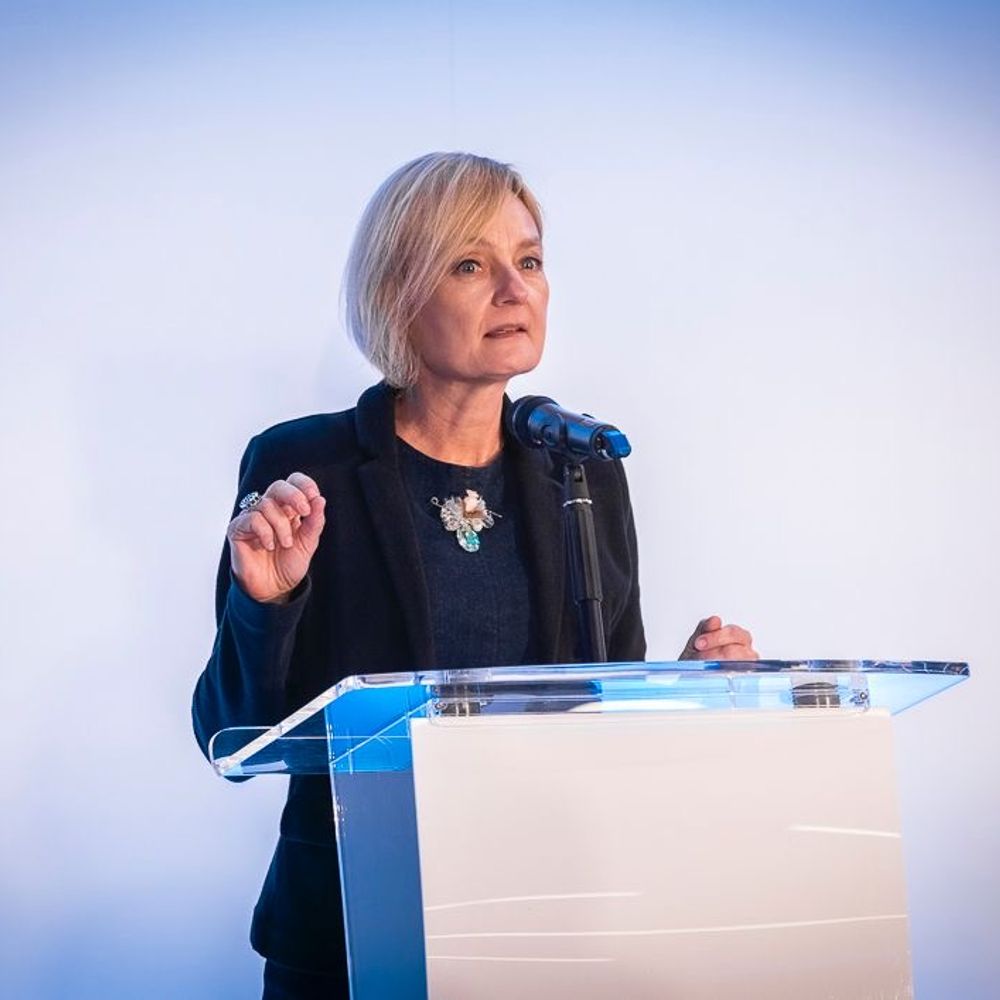
An unprecedented dataset of high resolution anatomical images of individual cells in mouse visual cortex, mapped on to their responses - a foundation for discovering the computational bases of cortical circuits.
A tour de force from the MICrONS consortium
🧪
www.nature.com/immersive/d4...
A tour de force from the MICrONS consortium
🧪
www.nature.com/immersive/d4...

The MICrONS Project
An unprecedented dataset of high resolution anatomical images of individual cells in mouse visual cortex, mapped on to their responses. This integrated view of function and structure lays a foundation...
www.nature.com
April 10, 2025 at 6:56 AM
A stunning example of biological complexity and the important relationship between tissue microstructure and function
Last week, the BIRDIE project organized a workshop to discuss how to bring in vitro research models from bench to business.
You can now watch a recorded version of the workshop, giving you the chance to learn more about organ-on-chip standardization, bioethics and in vitro model commercialization
You can now watch a recorded version of the workshop, giving you the chance to learn more about organ-on-chip standardization, bioethics and in vitro model commercialization

BIRDIE From bench to business workshop
YouTube video by Fluicell AB
youtu.be
March 21, 2025 at 8:11 AM
Last week, the BIRDIE project organized a workshop to discuss how to bring in vitro research models from bench to business.
You can now watch a recorded version of the workshop, giving you the chance to learn more about organ-on-chip standardization, bioethics and in vitro model commercialization
You can now watch a recorded version of the workshop, giving you the chance to learn more about organ-on-chip standardization, bioethics and in vitro model commercialization
We are excited to announce that our technology for generating three dimensional biological tissues has been granted a patent in the EU. The technology is the foundation for our tissue-based products for regenerative medicine and drug development targeting type 1-diabetes and cardiac disease.

March 14, 2025 at 9:29 AM
We are excited to announce that our technology for generating three dimensional biological tissues has been granted a patent in the EU. The technology is the foundation for our tissue-based products for regenerative medicine and drug development targeting type 1-diabetes and cardiac disease.
Can light be a tool for labeling living cells? In a new study from researchers at @harvard.edu and Chinese Academy of Medical Sciences, Sarah Innes-Gold et al. present a method for light-activated cell labeling with high precision. Read more on our website.
🔗 www.fluicell.com/news/scienti...
🔗 www.fluicell.com/news/scienti...

February 25, 2025 at 1:40 PM
Can light be a tool for labeling living cells? In a new study from researchers at @harvard.edu and Chinese Academy of Medical Sciences, Sarah Innes-Gold et al. present a method for light-activated cell labeling with high precision. Read more on our website.
🔗 www.fluicell.com/news/scienti...
🔗 www.fluicell.com/news/scienti...
Owe Orwar and team have created a biohybrid random access memory based on patch-clamped GABA receptors placed in an open volume microfluidic device, generating laminar agonist patterns. The receptors read and store the chemical input signals as state distribution.
#JournalClub #Biohybrid #Dynaflow
#JournalClub #Biohybrid #Dynaflow

A Biohybrid Dynamic Random Access Memory
We report that GABAA receptors in a patch-clamped biological cell form a short-term memory circuit when integrated with a scanning-probe microfluidic device. Laminar patterns of receptor activators (a...
pubs.acs.org
February 21, 2025 at 10:01 AM
Owe Orwar and team have created a biohybrid random access memory based on patch-clamped GABA receptors placed in an open volume microfluidic device, generating laminar agonist patterns. The receptors read and store the chemical input signals as state distribution.
#JournalClub #Biohybrid #Dynaflow
#JournalClub #Biohybrid #Dynaflow
Reposted by Fluicell
Resolving GPCR-kinetics is key for understanding how external stimuli is converted to cellular response.
Using FRET, Carsten Hoffmann and team study how CXC chemokine receptor 4 ligands affect activation, revealing distinct mechanisms that reflect pharmacological properties.
#JournalClub
Using FRET, Carsten Hoffmann and team study how CXC chemokine receptor 4 ligands affect activation, revealing distinct mechanisms that reflect pharmacological properties.
#JournalClub

Kinetic Analysis of the Early Signaling Steps of the Human Chemokine Receptor CXCR4
G protein–coupled receptors (GPCRs) are biologic switches that transduce extracellular
stimuli into intracellular responses in the cell. Temporally resolving GPCR transduction
pathways is key to under...
molpharm.aspetjournals.org
February 14, 2025 at 8:11 AM
Resolving GPCR-kinetics is key for understanding how external stimuli is converted to cellular response.
Using FRET, Carsten Hoffmann and team study how CXC chemokine receptor 4 ligands affect activation, revealing distinct mechanisms that reflect pharmacological properties.
#JournalClub
Using FRET, Carsten Hoffmann and team study how CXC chemokine receptor 4 ligands affect activation, revealing distinct mechanisms that reflect pharmacological properties.
#JournalClub
Resolving GPCR-kinetics is key for understanding how external stimuli is converted to cellular response.
Using FRET, Carsten Hoffmann and team study how CXC chemokine receptor 4 ligands affect activation, revealing distinct mechanisms that reflect pharmacological properties.
#JournalClub
Using FRET, Carsten Hoffmann and team study how CXC chemokine receptor 4 ligands affect activation, revealing distinct mechanisms that reflect pharmacological properties.
#JournalClub
Kinetic Analysis of the Early Signaling Steps of the Human Chemokine Receptor CXCR4
G protein–coupled receptors (GPCRs) are biologic switches that transduce extracellular
stimuli into intracellular responses in the cell. Temporally resolving GPCR transduction
pathways is key to under...
molpharm.aspetjournals.org
February 14, 2025 at 8:11 AM
Resolving GPCR-kinetics is key for understanding how external stimuli is converted to cellular response.
Using FRET, Carsten Hoffmann and team study how CXC chemokine receptor 4 ligands affect activation, revealing distinct mechanisms that reflect pharmacological properties.
#JournalClub
Using FRET, Carsten Hoffmann and team study how CXC chemokine receptor 4 ligands affect activation, revealing distinct mechanisms that reflect pharmacological properties.
#JournalClub
Great to see the diversity of approaches when it comes to addressing biofabrication challenges such as tissue resolution, scalability and functional control!
We need a breadth of new technologies to fully realize the potential of biofabrication within therapeutics and drug development.
We need a breadth of new technologies to fully realize the potential of biofabrication within therapeutics and drug development.
Our February focus issue delves into advancements in biofabrication technologies, showcasing how they are transforming our capacity to create complex biological structures with unmatched precision, control and speed – all free to access
Read it here: go.nature.com/3WTonm7
Read it here: go.nature.com/3WTonm7

February 13, 2025 at 2:37 PM
Great to see the diversity of approaches when it comes to addressing biofabrication challenges such as tissue resolution, scalability and functional control!
We need a breadth of new technologies to fully realize the potential of biofabrication within therapeutics and drug development.
We need a breadth of new technologies to fully realize the potential of biofabrication within therapeutics and drug development.
Reposted by Fluicell

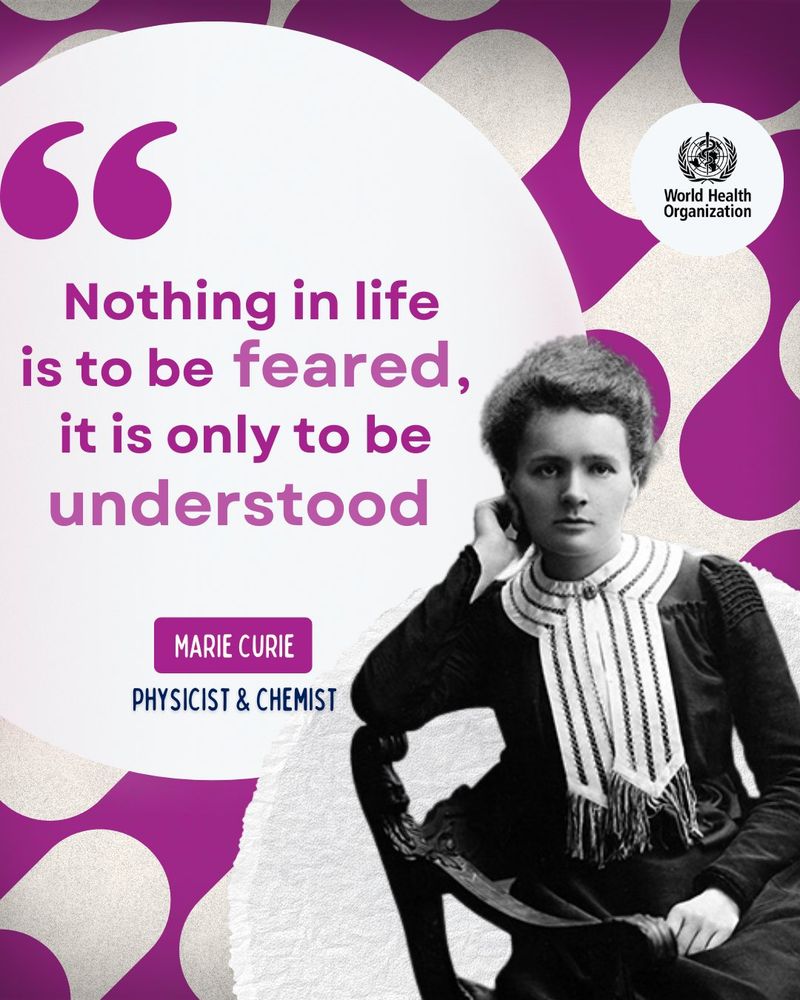
Today is International Day of Women & Girls in Science.
Marie Curie, the first woman to win a Nobel Prize. Her contributions have left an indelible mark on the world of science & health & continue to inspire generations of scientists & innovators. 🔬 #WomenInScience #WomenInSTEM
Marie Curie, the first woman to win a Nobel Prize. Her contributions have left an indelible mark on the world of science & health & continue to inspire generations of scientists & innovators. 🔬 #WomenInScience #WomenInSTEM
February 11, 2025 at 7:52 AM
Today is International Day of Women & Girls in Science.
Marie Curie, the first woman to win a Nobel Prize. Her contributions have left an indelible mark on the world of science & health & continue to inspire generations of scientists & innovators. 🔬 #WomenInScience #WomenInSTEM
Marie Curie, the first woman to win a Nobel Prize. Her contributions have left an indelible mark on the world of science & health & continue to inspire generations of scientists & innovators. 🔬 #WomenInScience #WomenInSTEM
Reposted by Fluicell
McKerrall has used structure- and ligand-based design principles to discover a new series of Nav 1.7 inhibitors. Through compound optimization, the researchers were able to select a highly potent and metabolically stable, subtype selective Nav1.7 inhibitor for further studies in vivo
#JournalClub
#JournalClub

Structure- and Ligand-Based Discovery of Chromane Arylsulfonamide Nav1.7 Inhibitors for the Treatment of Chronic Pain
Using structure- and ligand-based design principles, a novel series of piperidyl chromane arylsulfonamide Nav1.7 inhibitors was discovered. Early optimization focused on improvement of potency through...
pubs.acs.org
February 7, 2025 at 8:08 AM
McKerrall has used structure- and ligand-based design principles to discover a new series of Nav 1.7 inhibitors. Through compound optimization, the researchers were able to select a highly potent and metabolically stable, subtype selective Nav1.7 inhibitor for further studies in vivo
#JournalClub
#JournalClub
🧪 On March 12, the BIRDIE consortium is gathering experts in organoids, organ-on-chip technology and kidney disease to discuss how andvanced in vitro models can transform drug development and biomedical research.
👉 birdieproject.eu/2025/02/07/f...
#OrganOnChip #Science #Bioprinting #KidneyDisease
👉 birdieproject.eu/2025/02/07/f...
#OrganOnChip #Science #Bioprinting #KidneyDisease

February 10, 2025 at 8:32 AM
🧪 On March 12, the BIRDIE consortium is gathering experts in organoids, organ-on-chip technology and kidney disease to discuss how andvanced in vitro models can transform drug development and biomedical research.
👉 birdieproject.eu/2025/02/07/f...
#OrganOnChip #Science #Bioprinting #KidneyDisease
👉 birdieproject.eu/2025/02/07/f...
#OrganOnChip #Science #Bioprinting #KidneyDisease
McKerrall has used structure- and ligand-based design principles to discover a new series of Nav 1.7 inhibitors. Through compound optimization, the researchers were able to select a highly potent and metabolically stable, subtype selective Nav1.7 inhibitor for further studies in vivo
#JournalClub
#JournalClub
Structure- and Ligand-Based Discovery of Chromane Arylsulfonamide Nav1.7 Inhibitors for the Treatment of Chronic Pain
Using structure- and ligand-based design principles, a novel series of piperidyl chromane arylsulfonamide Nav1.7 inhibitors was discovered. Early optimization focused on improvement of potency through...
pubs.acs.org
February 7, 2025 at 8:08 AM
McKerrall has used structure- and ligand-based design principles to discover a new series of Nav 1.7 inhibitors. Through compound optimization, the researchers were able to select a highly potent and metabolically stable, subtype selective Nav1.7 inhibitor for further studies in vivo
#JournalClub
#JournalClub