Erik_
@erik4.bsky.social
Reposted by Erik_

In Chinese, 唱歌 (chàng gē) means “to sing a song.”
📄 Want to use it in a sentence?
- 他喜欢在晚上唱歌。
- Tā xǐhuān zài wǎnshàng chànggē.
- He likes to sing in the evening.
🎯 Ready to practice? Reply using 唱歌 (chàng gē).
#LearnChineseHSKLevel2
📄 Want to use it in a sentence?
- 他喜欢在晚上唱歌。
- Tā xǐhuān zài wǎnshàng chànggē.
- He likes to sing in the evening.
🎯 Ready to practice? Reply using 唱歌 (chàng gē).
#LearnChineseHSKLevel2

May 3, 2025 at 1:03 AM
In Chinese, 唱歌 (chàng gē) means “to sing a song.”
📄 Want to use it in a sentence?
- 他喜欢在晚上唱歌。
- Tā xǐhuān zài wǎnshàng chànggē.
- He likes to sing in the evening.
🎯 Ready to practice? Reply using 唱歌 (chàng gē).
#LearnChineseHSKLevel2
📄 Want to use it in a sentence?
- 他喜欢在晚上唱歌。
- Tā xǐhuān zài wǎnshàng chànggē.
- He likes to sing in the evening.
🎯 Ready to practice? Reply using 唱歌 (chàng gē).
#LearnChineseHSKLevel2
Reposted by Erik_

Donald Trump espérait bloquer l’ascension de la Chine en la privant d’accès à la technologie américaine : il aura donné un coup de booster à ses efforts de découplage. Il a sous-estimé les capacités chinoises. Ma chronique Géopolitique du 7/10 @franceinter www.radiofrance.fr/franceinter/...

Poussée par la guerre commerciale de Trump, la Chine accélère son découplage technologique
Les États-Unis multiplient les restrictions à l’accès de la Chine à la technologie occidentale, mais le résultat est qu’ils ont poussé Pékin à accélérer un découplage déjà engagé. Huawei incarne cette...
www.radiofrance.fr
May 1, 2025 at 6:27 AM
Donald Trump espérait bloquer l’ascension de la Chine en la privant d’accès à la technologie américaine : il aura donné un coup de booster à ses efforts de découplage. Il a sous-estimé les capacités chinoises. Ma chronique Géopolitique du 7/10 @franceinter www.radiofrance.fr/franceinter/...


March 1, 2025 at 10:10 AM
Reposted by Erik_
In Chinese, the radical 鼠 (shǔ) means “rat.”
This is radical number 208, and it is part of the characters 鼢, 鼥, and 鼩 (among others).
#LearnChineseKangxiRadicals
This is radical number 208, and it is part of the characters 鼢, 鼥, and 鼩 (among others).
#LearnChineseKangxiRadicals

February 20, 2025 at 1:03 AM
In Chinese, the radical 鼠 (shǔ) means “rat.”
This is radical number 208, and it is part of the characters 鼢, 鼥, and 鼩 (among others).
#LearnChineseKangxiRadicals
This is radical number 208, and it is part of the characters 鼢, 鼥, and 鼩 (among others).
#LearnChineseKangxiRadicals
Reposted by Erik_
"Apparent".

Federal scientists reviewing Elon Musk’s Neuralink brain chip were fired as part of DOGE's latest purge, raising serious alarms about apparent conflicts of interest.

DOGE Purges FDA Workers Reviewing Elon Musk’s Neuralink Brain Chip
The department has worked at breakneck speed to gut federal programs and cut tens of thousands of government workers.
www.thedailybeast.com
February 18, 2025 at 9:21 PM
"Apparent".


Reposted by Erik_
In Chinese, 做 (zuò) means “to do.”
📝 Here's how to use it:
- 我在做作业。
- Wǒ zài zuò zuò yè.
- I am doing homework.
✏️ Let's practice: Respond using 做 (zuò).
#LearnChineseHSKLevel1
📝 Here's how to use it:
- 我在做作业。
- Wǒ zài zuò zuò yè.
- I am doing homework.
✏️ Let's practice: Respond using 做 (zuò).
#LearnChineseHSKLevel1

January 27, 2025 at 1:03 AM
In Chinese, 做 (zuò) means “to do.”
📝 Here's how to use it:
- 我在做作业。
- Wǒ zài zuò zuò yè.
- I am doing homework.
✏️ Let's practice: Respond using 做 (zuò).
#LearnChineseHSKLevel1
📝 Here's how to use it:
- 我在做作业。
- Wǒ zài zuò zuò yè.
- I am doing homework.
✏️ Let's practice: Respond using 做 (zuò).
#LearnChineseHSKLevel1
Reposted by Erik_
Si Donald Trump est sérieux dans son intention d’expulser les Palestiniens de Gaza, ça sera un signe inquiétant de plus du monde qui s’annonce, fondé sur la loi du plus fort. En plus d’être un crime de guerre. Ma chronique Géopolitique du 7/10 @franceinter www.radiofrance.fr/franceinter/...

Plus question de solution politique, Donald Trump propose l’expulsion des Palestiniens de Gaza
La proposition de Donald Trump d’envoyer les Palestiniens de la bande de Gaza en Égypte et en Jordanie est approuvée par l’extrême droite israélienne, mais rejetée par les Palestiniens et les pays con...
www.radiofrance.fr
January 27, 2025 at 7:32 AM
Si Donald Trump est sérieux dans son intention d’expulser les Palestiniens de Gaza, ça sera un signe inquiétant de plus du monde qui s’annonce, fondé sur la loi du plus fort. En plus d’être un crime de guerre. Ma chronique Géopolitique du 7/10 @franceinter www.radiofrance.fr/franceinter/...
Reposted by Erik_


January 25, 2025 at 4:41 PM
Reposted by Erik_

Elon Musk a vraiment le cœur sur la main et passe gentiment faire un petit coucou à ses amis ultra nationalistes et xénophobes de l
AFD.
www.leparisien.fr/internationa...
AFD.
www.leparisien.fr/internationa...

Elon Musk intervient par visioconférence à un meeting du parti d’extrême droite allemand AfD
Ces dernières semaines, le milliardaire, patron de Space X et Tesla et soutien de Donald Trump, s’est régulièrement immiscé dans la politiqu
www.leparisien.fr
January 25, 2025 at 8:03 PM
Elon Musk a vraiment le cœur sur la main et passe gentiment faire un petit coucou à ses amis ultra nationalistes et xénophobes de l
AFD.
www.leparisien.fr/internationa...
AFD.
www.leparisien.fr/internationa...
Reposted by Erik_

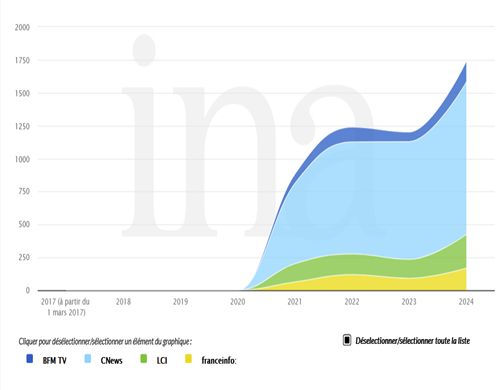
J'adore le nouveau service de l'INA : data.ina.fr
Voilà ce que ça donne pour savoir qui parle et depuis quand du wokisme...
Voilà ce que ça donne pour savoir qui parle et depuis quand du wokisme...
January 24, 2025 at 6:15 PM
J'adore le nouveau service de l'INA : data.ina.fr
Voilà ce que ça donne pour savoir qui parle et depuis quand du wokisme...
Voilà ce que ça donne pour savoir qui parle et depuis quand du wokisme...

January 19, 2025 at 8:23 AM
Reposted by Erik_


Reposted by Erik_

Ma femme devait faire une mission de traduction pour une administration. Devis approuvé verbalement, bon de commande en préparation, c'était imminent. Appel hier "en fait ça a déjà été traduit désolé".
Si vous avez du taf en trad ES, EN vous pouvez me contacter.
Partage apprécié !
Si vous avez du taf en trad ES, EN vous pouvez me contacter.
Partage apprécié !
January 17, 2025 at 6:04 AM
Ma femme devait faire une mission de traduction pour une administration. Devis approuvé verbalement, bon de commande en préparation, c'était imminent. Appel hier "en fait ça a déjà été traduit désolé".
Si vous avez du taf en trad ES, EN vous pouvez me contacter.
Partage apprécié !
Si vous avez du taf en trad ES, EN vous pouvez me contacter.
Partage apprécié !
Reposted by Erik_

Ce serait quand même rigolo de voir la tête de Musk si Wikipédia avait des dons record cette année, mais vous faites ce que vous voulez.

December 26, 2024 at 8:57 AM
Ce serait quand même rigolo de voir la tête de Musk si Wikipédia avait des dons record cette année, mais vous faites ce que vous voulez.

Reposted by Erik_

Le grand arrivage sur Bluesky (Musée Elon Musk, Novembre 2024)
November 19, 2024 at 6:54 PM
Le grand arrivage sur Bluesky (Musée Elon Musk, Novembre 2024)

Reposted by Erik_

Source @williamreymond.bsky.social : liste des données aspirées par Threads. Heu, non merci…


December 17, 2023 at 9:15 AM
Source @williamreymond.bsky.social : liste des données aspirées par Threads. Heu, non merci…
Reposted by Erik_