



Department of Translational Genomics - University of Cologne
@dtg-cologne.bsky.social
www.translational-genomics.de
🔬 How Small Cell Lung Cancer Hijacks Neuronal Synapses
A groundbreaking study led by researchers from the Department of Translational Genomics and SFB1399 has uncovered that SCLC cells form functional synapses with neurons— effectively hijacking neural signaling to promote tumor growth.
A groundbreaking study led by researchers from the Department of Translational Genomics and SFB1399 has uncovered that SCLC cells form functional synapses with neurons— effectively hijacking neural signaling to promote tumor growth.
September 11, 2025 at 9:37 AM
🔬 How Small Cell Lung Cancer Hijacks Neuronal Synapses
A groundbreaking study led by researchers from the Department of Translational Genomics and SFB1399 has uncovered that SCLC cells form functional synapses with neurons— effectively hijacking neural signaling to promote tumor growth.
A groundbreaking study led by researchers from the Department of Translational Genomics and SFB1399 has uncovered that SCLC cells form functional synapses with neurons— effectively hijacking neural signaling to promote tumor growth.
Reposted by Department of Translational Genomics - University of Cologne

Die neue Methode übertrifft bestehende Methoden wie #ChIP-seq und #CUT&RUN in Bezug auf Sensitivität und Auflösung der Ergebnisse. 📈
Die Studie wurde in @natcomms.nature.com veröffentlicht👇
www.nature.com/articles/s41...
Die Studie wurde in @natcomms.nature.com veröffentlicht👇
www.nature.com/articles/s41...
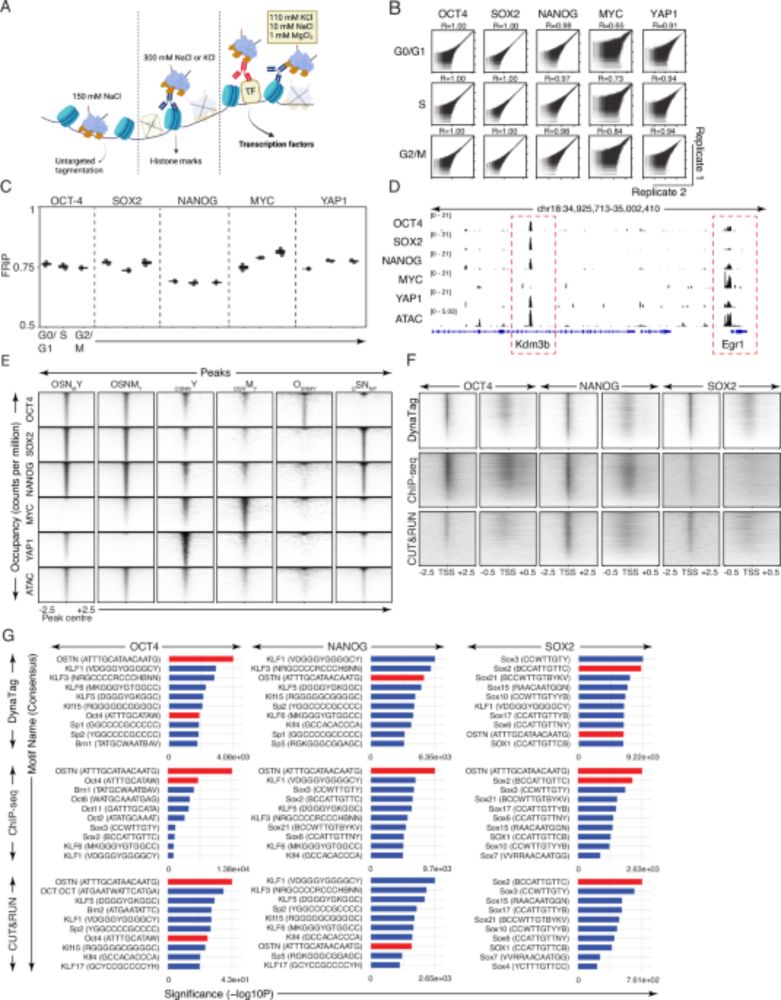
DynaTag for efficient mapping of transcription factors in low-input samples and at single-cell resolution - Nature Communications
Transcription factors shape cell identity, but mapping their genomic targets remains challenging. Here the authors present DynaTag, a modified CUT&Tag method for profiling TF occupancy in bulk and...
www.nature.com
July 28, 2025 at 9:45 AM
Die neue Methode übertrifft bestehende Methoden wie #ChIP-seq und #CUT&RUN in Bezug auf Sensitivität und Auflösung der Ergebnisse. 📈
Die Studie wurde in @natcomms.nature.com veröffentlicht👇
www.nature.com/articles/s41...
Die Studie wurde in @natcomms.nature.com veröffentlicht👇
www.nature.com/articles/s41...
Reposted by Department of Translational Genomics - University of Cologne
#DynaTag outperforms existing methods like #ChIP-seq and #CUT&RUN in terms of sensitivity and resolution. 📈 The study was published in @natcomms.nature.com 👇
www.nature.com/articles/s41...
www.nature.com/articles/s41...
DynaTag for efficient mapping of transcription factors in low-input samples and at single-cell resolution - Nature Communications
Transcription factors shape cell identity, but mapping their genomic targets remains challenging. Here the authors present DynaTag, a modified CUT&Tag method for profiling TF occupancy in bulk and...
www.nature.com
July 28, 2025 at 9:51 AM
#DynaTag outperforms existing methods like #ChIP-seq and #CUT&RUN in terms of sensitivity and resolution. 📈 The study was published in @natcomms.nature.com 👇
www.nature.com/articles/s41...
www.nature.com/articles/s41...
Image credit: @gloglita.bsky.social @lifescienceeditors.bsky.social captured DynaTag in action: a pA-Tn5 probe (multicoloured) binds an antibody (white), which binds p53 (green) on DNA (blue) within 2 nucleosomes (7/7)
July 28, 2025 at 9:11 AM
Image credit: @gloglita.bsky.social @lifescienceeditors.bsky.social captured DynaTag in action: a pA-Tn5 probe (multicoloured) binds an antibody (white), which binds p53 (green) on DNA (blue) within 2 nucleosomes (7/7)
Thanks to former PhD student Pascal Hunold and lab members Giulia Pizzolato & Olivia van Ray for their amazing work. Grateful to @dtg-cologne.bsky.social, Peifer, George & Thomas labs, funders @unicologne.bsky.social #CMMC #sfb1399 @crc1678.bsky.social #FOR5504 #Fritz_Thyssen_Foundation (6/7)
July 28, 2025 at 9:10 AM
Thanks to former PhD student Pascal Hunold and lab members Giulia Pizzolato & Olivia van Ray for their amazing work. Grateful to @dtg-cologne.bsky.social, Peifer, George & Thomas labs, funders @unicologne.bsky.social #CMMC #sfb1399 @crc1678.bsky.social #FOR5504 #Fritz_Thyssen_Foundation (6/7)
🗝️ #DynaTag can reveal nuanced TF occupancy behaviour and shed light on transcriptional regulation in health and disease. In small cell lung cancer #SCLC PDX models, it uncovered surprising gain-of-function p53, FOXA1 & MYC activity post-chemotherapy – not for ASCL1, NEUROD1, POU2F3 or YAP1 (5/7)

July 28, 2025 at 9:08 AM
How is DynaTag better than CUT&Tag?
⚡Preserves weak/transient TF binding without signal loss
⚡Better signal-to-noise & resolution
⚡Works for all TFs (high and low DNA-binding affinity) & histone marks
⚡Low-input needed, bulk or single-cell, scalable to multi-cellular systems (4/7)
⚡Preserves weak/transient TF binding without signal loss
⚡Better signal-to-noise & resolution
⚡Works for all TFs (high and low DNA-binding affinity) & histone marks
⚡Low-input needed, bulk or single-cell, scalable to multi-cellular systems (4/7)

July 28, 2025 at 9:08 AM
How is DynaTag better than CUT&Tag?
⚡Preserves weak/transient TF binding without signal loss
⚡Better signal-to-noise & resolution
⚡Works for all TFs (high and low DNA-binding affinity) & histone marks
⚡Low-input needed, bulk or single-cell, scalable to multi-cellular systems (4/7)
⚡Preserves weak/transient TF binding without signal loss
⚡Better signal-to-noise & resolution
⚡Works for all TFs (high and low DNA-binding affinity) & histone marks
⚡Low-input needed, bulk or single-cell, scalable to multi-cellular systems (4/7)
🤔 How to capture nuanced TF-DNA interactions?
💡 Enter #DynaTag: ‘Dynamic targets and Tagmentation’ captures transient TF-DNA interactions that standard CUT&Tag misses.
The trick? Sample prep under physiological salt stabilizes specific interactions without promoting untargeted tagmentation 🧂 (3/7)
💡 Enter #DynaTag: ‘Dynamic targets and Tagmentation’ captures transient TF-DNA interactions that standard CUT&Tag misses.
The trick? Sample prep under physiological salt stabilizes specific interactions without promoting untargeted tagmentation 🧂 (3/7)

July 28, 2025 at 9:07 AM
🤔 How to capture nuanced TF-DNA interactions?
💡 Enter #DynaTag: ‘Dynamic targets and Tagmentation’ captures transient TF-DNA interactions that standard CUT&Tag misses.
The trick? Sample prep under physiological salt stabilizes specific interactions without promoting untargeted tagmentation 🧂 (3/7)
💡 Enter #DynaTag: ‘Dynamic targets and Tagmentation’ captures transient TF-DNA interactions that standard CUT&Tag misses.
The trick? Sample prep under physiological salt stabilizes specific interactions without promoting untargeted tagmentation 🧂 (3/7)
❗TF occupancy mapping is still challenging. CUT&Tag was a breakthrough, but it has limits…
👉 Doesn’t work well for TFs that only transiently bind DNA
👉 These fleeting interactions are often lost during sample prep
That means we’re missing key regulatory events and it’s time for a new method (2/7)
👉 Doesn’t work well for TFs that only transiently bind DNA
👉 These fleeting interactions are often lost during sample prep
That means we’re missing key regulatory events and it’s time for a new method (2/7)
July 28, 2025 at 9:06 AM
❗TF occupancy mapping is still challenging. CUT&Tag was a breakthrough, but it has limits…
👉 Doesn’t work well for TFs that only transiently bind DNA
👉 These fleeting interactions are often lost during sample prep
That means we’re missing key regulatory events and it’s time for a new method (2/7)
👉 Doesn’t work well for TFs that only transiently bind DNA
👉 These fleeting interactions are often lost during sample prep
That means we’re missing key regulatory events and it’s time for a new method (2/7)
July 28, 2025 at 9:06 AM
🧪Move over CUT&Tag, there’s a new #TranscriptionFactor mapping method in town.
The newly developed DynaTag by Robert and his lab @epistrucstab.bsky.social is faster, cleaner, more sensitive than #ChIPseq, #CUT&RUN and #CUT&Tag.
🔗 Our @natcomms.nature.com paper: www.nature.com/articles/s41...
The newly developed DynaTag by Robert and his lab @epistrucstab.bsky.social is faster, cleaner, more sensitive than #ChIPseq, #CUT&RUN and #CUT&Tag.
🔗 Our @natcomms.nature.com paper: www.nature.com/articles/s41...

July 28, 2025 at 9:04 AM
🧪Move over CUT&Tag, there’s a new #TranscriptionFactor mapping method in town.
The newly developed DynaTag by Robert and his lab @epistrucstab.bsky.social is faster, cleaner, more sensitive than #ChIPseq, #CUT&RUN and #CUT&Tag.
🔗 Our @natcomms.nature.com paper: www.nature.com/articles/s41...
The newly developed DynaTag by Robert and his lab @epistrucstab.bsky.social is faster, cleaner, more sensitive than #ChIPseq, #CUT&RUN and #CUT&Tag.
🔗 Our @natcomms.nature.com paper: www.nature.com/articles/s41...
On behalf of the conference chair Caroline Dive and the organizing committee Reinhard Büttner, Roman Thomas, Jürgen Wolf:
We are delighted to announce the 3rd Cologne Conference on Lung Cancer (CCLC), June 26th – 27th, 2025 at the Maritim Hotel in Cologne.
Registration is now open!! cologne-clc.com
We are delighted to announce the 3rd Cologne Conference on Lung Cancer (CCLC), June 26th – 27th, 2025 at the Maritim Hotel in Cologne.
Registration is now open!! cologne-clc.com

March 10, 2025 at 11:13 AM
On behalf of the conference chair Caroline Dive and the organizing committee Reinhard Büttner, Roman Thomas, Jürgen Wolf:
We are delighted to announce the 3rd Cologne Conference on Lung Cancer (CCLC), June 26th – 27th, 2025 at the Maritim Hotel in Cologne.
Registration is now open!! cologne-clc.com
We are delighted to announce the 3rd Cologne Conference on Lung Cancer (CCLC), June 26th – 27th, 2025 at the Maritim Hotel in Cologne.
Registration is now open!! cologne-clc.com
👋Hallo Bluesky wir sind #DepartmentofTranslationalGenomics // we are #DepartmentofTranslationalGenomics
February 10, 2025 at 9:10 AM
👋Hallo Bluesky wir sind #DepartmentofTranslationalGenomics // we are #DepartmentofTranslationalGenomics