




David Trevascus
@dtcupcakes.bsky.social
Astrophysics PhD student at MPIA Heidelberg 🇩🇪
Studying the formation of planets via direct imaging 🪐
he/they 🏳️🌈
Studying the formation of planets via direct imaging 🪐
he/they 🏳️🌈
My first PhD paper about hot/cold-start for the PDS 70 planets is now up on arXiv! You can find it here: arxiv.org/abs/2504.11210
Big thanks to all my co-authors and everyone else who helped push it over the line!
Big thanks to all my co-authors and everyone else who helped push it over the line!

Differentiating Formation Models with New Dynamical Masses for the PDS 70 Protoplanets
Hot- and cold-start planet formation models predict differing luminosities for the young, bright planets that direct imaging surveys are most sensitive to. However, precise mass estimates are required...
arxiv.org
April 17, 2025 at 3:28 PM
My first PhD paper about hot/cold-start for the PDS 70 planets is now up on arXiv! You can find it here: arxiv.org/abs/2504.11210
Big thanks to all my co-authors and everyone else who helped push it over the line!
Big thanks to all my co-authors and everyone else who helped push it over the line!
Reposted by David Trevascus

A very good online lesson-style thing about what ChatGPT is and whether it's a huge invention (or just bullshit).
Probably a great thing to get in front of your students, seeing as they're almost definitely using it regularly: thebullshitmachines.com
Probably a great thing to get in front of your students, seeing as they're almost definitely using it regularly: thebullshitmachines.com
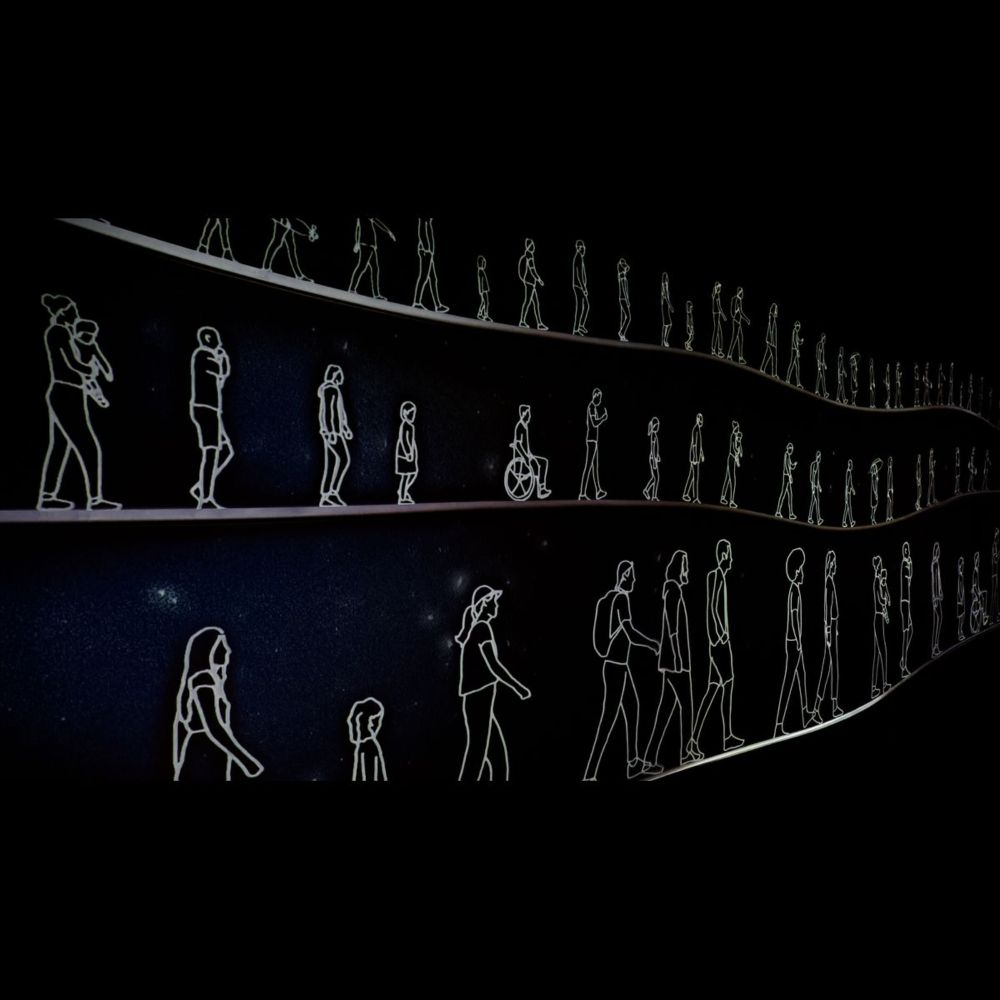
INTRODUCTION
thebullshitmachines.com
March 3, 2025 at 10:05 AM
A very good online lesson-style thing about what ChatGPT is and whether it's a huge invention (or just bullshit).
Probably a great thing to get in front of your students, seeing as they're almost definitely using it regularly: thebullshitmachines.com
Probably a great thing to get in front of your students, seeing as they're almost definitely using it regularly: thebullshitmachines.com
Reposted by David Trevascus
The best dark sky in the world - the Atacama Desert in Chile, which hosts many @eso.org telescopes - is under threat from an industrial project. 🔭
Astronomers can sign a petition in favour of moving the planned industrial project: docs.google.com/forms/d/e/1F...
Astronomers can sign a petition in favour of moving the planned industrial project: docs.google.com/forms/d/e/1F...

World's darkest and clearest skies at risk from industrial megaproject
On December 24th, AES Andes, a subsidiary of the US power company AES Corporation, submitted a project for a massive industrial complex for environmental impact assessment. This complex threatens the pristine skies above ESO’s Paranal Observatory in Chile’s Atacama Desert, the darkest and clearest of any astronomical observatory in the world [1]. The industrial megaproject is planned to be located just 5 to 11 kilometres from telescopes at Paranal, which would cause irreparable damage to astronomical observations, in particular due to light pollution emitted throughout the project’s operational life. Relocating the complex would save one of Earth's last truly pristine dark skies.
www.eso.org
February 17, 2025 at 8:46 AM
The best dark sky in the world - the Atacama Desert in Chile, which hosts many @eso.org telescopes - is under threat from an industrial project. 🔭
Astronomers can sign a petition in favour of moving the planned industrial project: docs.google.com/forms/d/e/1F...
Astronomers can sign a petition in favour of moving the planned industrial project: docs.google.com/forms/d/e/1F...
Reposted by David Trevascus

The skies above Paranal are at risk from a proposed industrial megaproject.
This would be located in the vicinity of ESO's Observatory. If constructed, it would irreparably impact astronomical observations.
Read more: https://www.eso.org/public/news/eso2501/
🔭
📷 ESO/P. Horálek
This would be located in the vicinity of ESO's Observatory. If constructed, it would irreparably impact astronomical observations.
Read more: https://www.eso.org/public/news/eso2501/
🔭
📷 ESO/P. Horálek
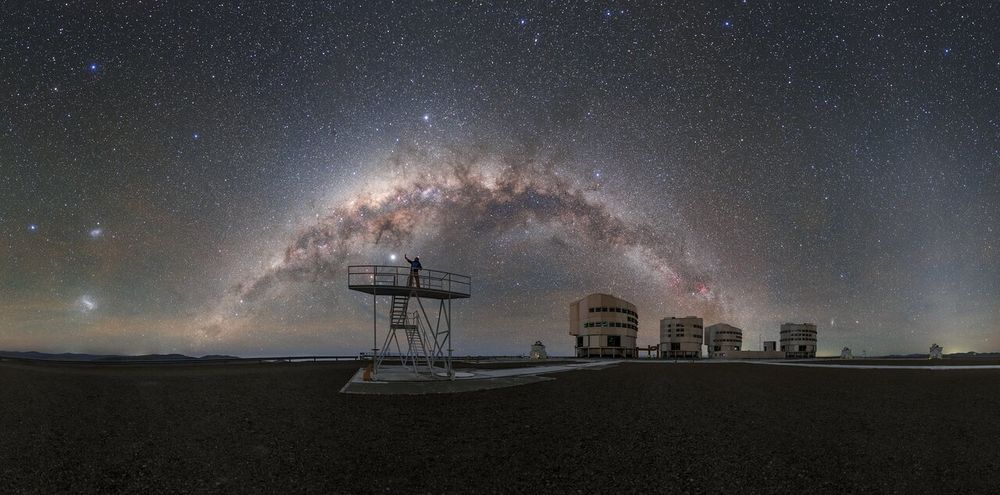
World's darkest and clearest skies at risk from industrial megaproject
On December 24th, AES Andes, a subsidiary of the US power company AES Corporation, submitted a project for a massive industrial complex for environmental impact assessment. This complex threatens the pristine skies above ESO’s Paranal Observatory in Chile’s Atacama Desert, the darkest and clearest of any astronomical observatory in the world [1]. The industrial megaproject is planned to be located just 5 to 11 kilometres from telescopes at Paranal, which would cause irreparable damage to astronomical observations, in particular due to light pollution emitted throughout the project’s operational life. Relocating the complex would save one of Earth's last truly pristine dark skies.
www.eso.org
January 10, 2025 at 8:00 AM
The skies above Paranal are at risk from a proposed industrial megaproject.
This would be located in the vicinity of ESO's Observatory. If constructed, it would irreparably impact astronomical observations.
Read more: https://www.eso.org/public/news/eso2501/
🔭
📷 ESO/P. Horálek
This would be located in the vicinity of ESO's Observatory. If constructed, it would irreparably impact astronomical observations.
Read more: https://www.eso.org/public/news/eso2501/
🔭
📷 ESO/P. Horálek