



Reposted by horatius

📢 Na ra ket ar fazi-se ken ! Ne fais plus cette erreur ! 📢
Douetañs az peus diwar-benn ur reolenn yezhadur, ur ger pe ur stagell e brezhoneg ? Desketa zo amañ evit sikour !
✅ Respontoù da’z holl c'houlennoù yezh
✅ Alioù evit mirout ouzh fazioù boas
✅ Skouerioù da lakaat e pleustr
Douetañs az peus diwar-benn ur reolenn yezhadur, ur ger pe ur stagell e brezhoneg ? Desketa zo amañ evit sikour !
✅ Respontoù da’z holl c'houlennoù yezh
✅ Alioù evit mirout ouzh fazioù boas
✅ Skouerioù da lakaat e pleustr

August 21, 2025 at 3:37 PM
📢 Na ra ket ar fazi-se ken ! Ne fais plus cette erreur ! 📢
Douetañs az peus diwar-benn ur reolenn yezhadur, ur ger pe ur stagell e brezhoneg ? Desketa zo amañ evit sikour !
✅ Respontoù da’z holl c'houlennoù yezh
✅ Alioù evit mirout ouzh fazioù boas
✅ Skouerioù da lakaat e pleustr
Douetañs az peus diwar-benn ur reolenn yezhadur, ur ger pe ur stagell e brezhoneg ? Desketa zo amañ evit sikour !
✅ Respontoù da’z holl c'houlennoù yezh
✅ Alioù evit mirout ouzh fazioù boas
✅ Skouerioù da lakaat e pleustr
Reposted by horatius

@wikimediafoundation.org signed the Statement on the Four Digital Rights of Memory Institutions!
The organisation behind projects, like #Wikipedia, knows better than that preserving & sharing knowledge depends on strong digital rights.
#ProtectOurFutureMemory
www.internetarchive.eu/2025/09/26/w...
The organisation behind projects, like #Wikipedia, knows better than that preserving & sharing knowledge depends on strong digital rights.
#ProtectOurFutureMemory
www.internetarchive.eu/2025/09/26/w...

Wikimedia Signs Statement Supporting Digital Rights of Memory Institutions - Internet Archive Europe
The global Our Future Memory campaign to secure digital rights for libraries, archives, and other memory institutions has gained another powerful ally. Wikimedia, one of the world’s leading champions ...
www.internetarchive.eu
September 26, 2025 at 7:15 AM
@wikimediafoundation.org signed the Statement on the Four Digital Rights of Memory Institutions!
The organisation behind projects, like #Wikipedia, knows better than that preserving & sharing knowledge depends on strong digital rights.
#ProtectOurFutureMemory
www.internetarchive.eu/2025/09/26/w...
The organisation behind projects, like #Wikipedia, knows better than that preserving & sharing knowledge depends on strong digital rights.
#ProtectOurFutureMemory
www.internetarchive.eu/2025/09/26/w...
Reposted by horatius

Glagolitic! On a tram!

September 1, 2025 at 8:04 AM
Glagolitic! On a tram!
Reposted by horatius

The runic text is taken from the Konungs skuggsjá (The King's Mirror), advising one to "learn all tongues without forgetting your own". The original has "helzt latínu og völsku" 'but first Latin & French', 'völsku', cognate with Welsh, reflecting its use by Germanic speakers to refer to Romance ones

September 6, 2025 at 6:22 PM
The runic text is taken from the Konungs skuggsjá (The King's Mirror), advising one to "learn all tongues without forgetting your own". The original has "helzt latínu og völsku" 'but first Latin & French', 'völsku', cognate with Welsh, reflecting its use by Germanic speakers to refer to Romance ones
Reposted by horatius
Seems trivial to say, but learning a foreign language so often illuminates my native English. Just today, by thinking how a Czech word for the 'primrose' plant (prvosenka) resembles the word for 'first' (první), I then realised that 'primrose' is likewise the 'prime-rose'.
September 7, 2025 at 3:31 PM
Seems trivial to say, but learning a foreign language so often illuminates my native English. Just today, by thinking how a Czech word for the 'primrose' plant (prvosenka) resembles the word for 'first' (první), I then realised that 'primrose' is likewise the 'prime-rose'.
Reposted by horatius

"That is actually based."
"OK, grandpa."
"What the? Why are you calling me grandpa?"
"Because you're talking like a Swedish teenager from Uppsala in the late 19th century."
"What!?"
"You heard me."
"OK, grandpa."
"What the? Why are you calling me grandpa?"
"Because you're talking like a Swedish teenager from Uppsala in the late 19th century."
"What!?"
"You heard me."
![Screenshot from the 1900 edition of "Nyare bidrag till kännedom om de svenska landsmålen ock svenskt folklif" from a list of slang words used by the youths of the day.
basen: "dä va basen" = det var fint, styvt. sk. Ups.
basi(g) a. bra, trevlig o. d. (jfr föreg.); "här va basit". sk. Ups.
Approximate translation:
the base: "that was the base" = that was nice, cool*. [the "sk." means it was schoolboy slang and "Ups." indicates it is used in the area of Uppsala.]
Base(d): adjective. great, pleasant and similar (compare with previous entry.); "this is based". Also schoolyard slang from Uppsala.
*the actual word used here, "styvt", means "stiff, tight", but in modern Swedish, the use of styvt as positive slang is obsolete except for in the (usually used sarcastically) somewhat archaic phrase "visa sig på styva linan", which roughly translates into "show off on the tightrope", meaning "showing off", basically.](https://cdn.bsky.app/img/feed_thumbnail/plain/did:plc:524qhrgsiotysfqluco53nw7/bafkreihftjbr4hkjkpuzm4mzcznxwjmmasdtb7iobhqniv5eo7luaoofwy@jpeg)
August 19, 2025 at 1:44 PM
"That is actually based."
"OK, grandpa."
"What the? Why are you calling me grandpa?"
"Because you're talking like a Swedish teenager from Uppsala in the late 19th century."
"What!?"
"You heard me."
"OK, grandpa."
"What the? Why are you calling me grandpa?"
"Because you're talking like a Swedish teenager from Uppsala in the late 19th century."
"What!?"
"You heard me."
Reposted by horatius

no step on snek

I recently became acquainted with "Osanaetoki Bankokubanashi" 童絵解万国噺, a Japanese illustrated history of America from 1861. The retelling of the revolutionary era is quite something. Here, for instance, is John Adams wielding a sword in mortal combat with a gigantic serpent.

August 20, 2025 at 11:41 AM
no step on snek
Reposted by horatius

Denmark to end book tax to encourage people to read

Denmark to end book tax to encourage people to read
Culture Minister Jakob Engel-Schmidt said that the measure was aimed at fixing Denmark's 'reading crisis.' The Scandinavian country's 25% sales tax on books is currently the highest in Europe.
www.lemonde.fr
August 20, 2025 at 9:26 AM
Denmark to end book tax to encourage people to read
Reposted by horatius

New video series by yours truly on Biblical and Semiticist stuff – "banal [within the field], yet awesome" facts and opinions. First episode out now, on whether Greek or Hebrew is harder for beginners:
www.youtube.com/watch?v=4726...
www.youtube.com/watch?v=4726...

Which is harder – Greek or Hebrew? Wikander's "Banal Yet 'MINDBLOWING' Biblical Studies Facts" #1
YouTube video by Baalcycle
www.youtube.com
April 16, 2025 at 12:38 AM
New video series by yours truly on Biblical and Semiticist stuff – "banal [within the field], yet awesome" facts and opinions. First episode out now, on whether Greek or Hebrew is harder for beginners:
www.youtube.com/watch?v=4726...
www.youtube.com/watch?v=4726...
Reposted by horatius

C’est de loin la meilleure traduction française de Dante que j'ai jamais lue. Elle saisit quelque chose de lui qu'aucune autre version française n'arrive à rendre.
Fortement recommandée.
Fortement recommandée.


July 27, 2025 at 6:16 PM
C’est de loin la meilleure traduction française de Dante que j'ai jamais lue. Elle saisit quelque chose de lui qu'aucune autre version française n'arrive à rendre.
Fortement recommandée.
Fortement recommandée.
Reposted by horatius

My daughter made me a miniature model of a teetering stack of unread books and it feels too close to home

August 9, 2025 at 9:19 AM
My daughter made me a miniature model of a teetering stack of unread books and it feels too close to home
Reposted by horatius

and to my grandchildren i leave 86 gigabytes of menswear photos to win any menswear argument online
August 2, 2025 at 5:35 PM
and to my grandchildren i leave 86 gigabytes of menswear photos to win any menswear argument online
Reposted by horatius
Where would I go to understand the versification principles of rap music? I know traditional English literary versification but the system rappers use is hard to figure out beyond "there's a basic four-beat thing going on".
Weirdly this will be relevant to my dissertation about pre-Islamic poetry
Weirdly this will be relevant to my dissertation about pre-Islamic poetry
June 27, 2025 at 9:48 PM
Where would I go to understand the versification principles of rap music? I know traditional English literary versification but the system rappers use is hard to figure out beyond "there's a basic four-beat thing going on".
Weirdly this will be relevant to my dissertation about pre-Islamic poetry
Weirdly this will be relevant to my dissertation about pre-Islamic poetry
Reposted by horatius
'It is less that AI is the cause of degradation in reading and thinking, and more that the creation of a culture that views knowledge primarily in an instrumental manner has made it easier to misuse AI.'

AI thrives where education has been devalued | The Observer
A culture that views knowledge as a means to an end invites the misuse of new technology
observer.co.uk
August 2, 2025 at 6:48 AM
'It is less that AI is the cause of degradation in reading and thinking, and more that the creation of a culture that views knowledge primarily in an instrumental manner has made it easier to misuse AI.'
Reposted by horatius
A lot of interesting chapters here!

Reading: Performance and Materiality in Hebrew and Aramaic Traditions
This volume contains the proceedings the 'Reading: Performance and Materiality in Hebrew and Aramaic Traditions' colloquium, hosted at the University of Oxford in 2023, and jointly sponsored by the Or...
www.openbookpublishers.com
July 22, 2025 at 4:01 AM
A lot of interesting chapters here!
Reposted by horatius
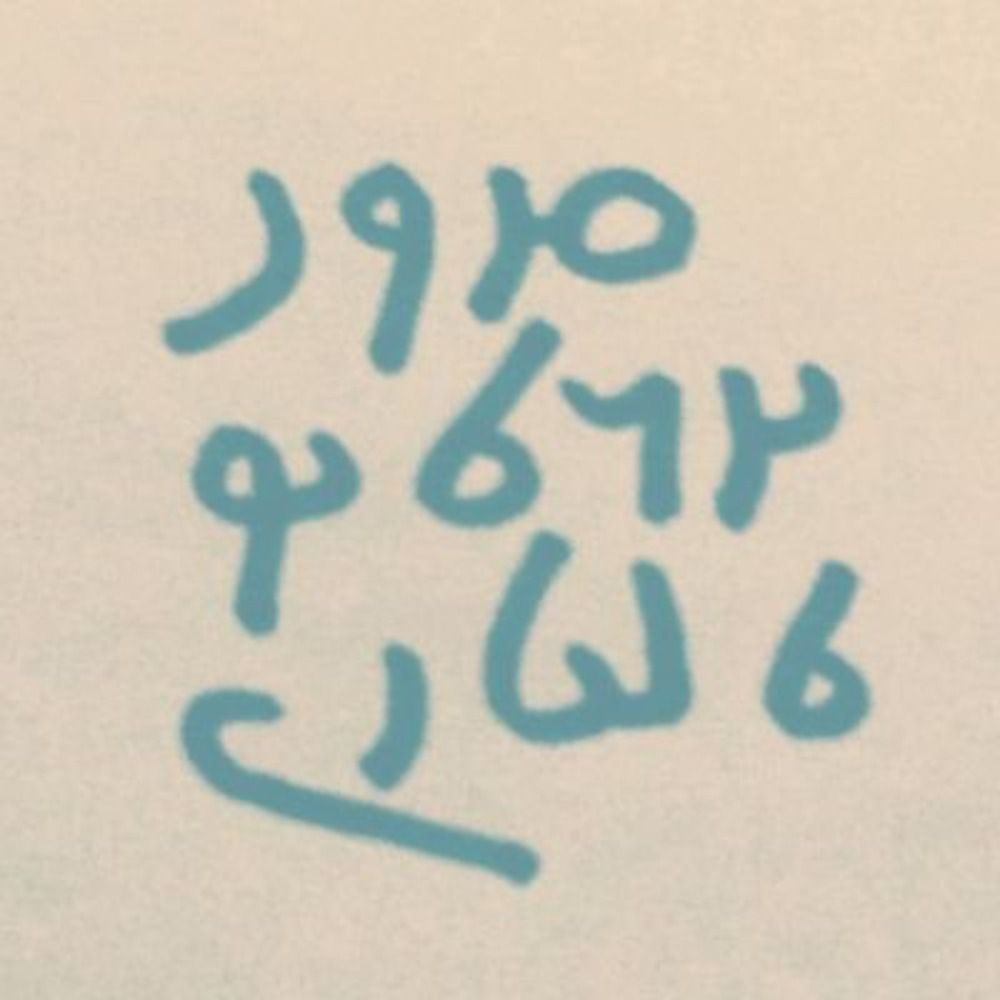
Note to self: don't decide you'll talk about Modern South Arabian historical vocalism in your comparative Semitics class again.
My brain is thoroughly broken.
For those who want to suffer along, check out the very difficult but excellent paper by Dufour:
www.academia.edu/70038716/Vow...
My brain is thoroughly broken.
For those who want to suffer along, check out the very difficult but excellent paper by Dufour:
www.academia.edu/70038716/Vow...

Vowel quality as a history maker: Stress, metaphony and the renewal of Proto-Semitic morphology in Modern South Arabian
The right of Patience Epps, Danny Law and Na'ama Pat-El to be identified as the authors of the editorial material, and of the authors for their individual chapters, has been asserted in accordance...
www.academia.edu
July 10, 2025 at 11:34 AM
Note to self: don't decide you'll talk about Modern South Arabian historical vocalism in your comparative Semitics class again.
My brain is thoroughly broken.
For those who want to suffer along, check out the very difficult but excellent paper by Dufour:
www.academia.edu/70038716/Vow...
My brain is thoroughly broken.
For those who want to suffer along, check out the very difficult but excellent paper by Dufour:
www.academia.edu/70038716/Vow...
Reposted by horatius
'Quoth', although archaic, is better known nowadays than its present-tense counterpart: 'queath'.
The two go back to Old English cweþan 'to say'. From this, Old English derived becweþan 'to assert'.
While obsolete on its own, you can still find 'queath' in the modern form of becweþan: 'bequeath'.
The two go back to Old English cweþan 'to say'. From this, Old English derived becweþan 'to assert'.
While obsolete on its own, you can still find 'queath' in the modern form of becweþan: 'bequeath'.
July 10, 2025 at 11:26 AM
'Quoth', although archaic, is better known nowadays than its present-tense counterpart: 'queath'.
The two go back to Old English cweþan 'to say'. From this, Old English derived becweþan 'to assert'.
While obsolete on its own, you can still find 'queath' in the modern form of becweþan: 'bequeath'.
The two go back to Old English cweþan 'to say'. From this, Old English derived becweþan 'to assert'.
While obsolete on its own, you can still find 'queath' in the modern form of becweþan: 'bequeath'.
Reposted by horatius

L'ensemble des étudiant-es faisant de l'histoire romaine (antique) DOIT lire le livre de François Cadiou, l'armée imaginaire, fantastique leçon de lecture des sources, leçon de méthode, montrant combien les modernes projettent dans le passé, bien souvent, des choses qui ne sont PAS dans les textes
Un très grand livre d’histoire antique aujourd’hui dans le podcast Le fil de l’épée. Avec @alexjubelin.bsky.social on reçoit François Cadiou pour parler de l’armée de la Rome républicaine et de la pseudo réforme marienne. @lerubicon.bsky.social porte bien son nom!
youtu.be/HBWWEmRxkrg?...
youtu.be/HBWWEmRxkrg?...

Légion, ça ose tout. Repenser les Armées romaines [Le Fil de l'épée #36]
YouTube video by Le Collimateur
youtu.be
June 8, 2025 at 8:39 AM
L'ensemble des étudiant-es faisant de l'histoire romaine (antique) DOIT lire le livre de François Cadiou, l'armée imaginaire, fantastique leçon de lecture des sources, leçon de méthode, montrant combien les modernes projettent dans le passé, bien souvent, des choses qui ne sont PAS dans les textes
Reposted by horatius

I'm obsessed with how much ancient history wikipedia editors managed to fit into the "yo mama" article
!["ancient times": "The incarnations of filial piety in various cultures are reflected by examples through history.
Rabbi Eliezer (c. 100 CE) was said to have interrupted a man reading aloud the opening words of the then-banned and still-troubling Ezekiel 23.[5]
Man: "Mortal, proclaim to Jerusalem her abominations..."
Eliezer: "Why don't you go out and proclaim the abominations of your mother?"](https://cdn.bsky.app/img/feed_thumbnail/plain/did:plc:cyyd366g3hrxp5rynixm2mm3/bafkreidcdkfyzscdzh4unmybeifcgcczndq75j3rpnc56ukljmmru6t6he@jpeg)
!["Plutarch's biography of Cicero notes that:[6]
Again, in a dispute with Cicero, Metellus Nepos asked repeatedly "Who is your father?"
"In your case," said Cicero, "your mother has made the answer to this question rather difficult."
In the Strategies of the Warring States, it is recorded that the following was said by the King Wei of Qi after "](https://cdn.bsky.app/img/feed_thumbnail/plain/did:plc:cyyd366g3hrxp5rynixm2mm3/bafkreicsucky7emyx7w7yqakzcybqu42emqanuohytxmnyk4c5dect3ujy@jpeg)
May 8, 2025 at 12:04 PM
I'm obsessed with how much ancient history wikipedia editors managed to fit into the "yo mama" article
Reposted by horatius

Khmer/Thai word of the day:
Kh. រដ្ឋបាល [rŏət.tʰaʔ.ɓaːl] 'government'
Th. รัฐบาล [rat̚˦.tʰa˨.baːn˧] 'government'
as can be read from the orthograhy <ra-ṭṭha-pā-la >, a compound from Pali raṭṭha (Skt. rāṣṭra) 'kingdom' + pāla 'guard'
Kh. រដ្ឋបាល [rŏət.tʰaʔ.ɓaːl] 'government'
Th. รัฐบาล [rat̚˦.tʰa˨.baːn˧] 'government'
as can be read from the orthograhy <ra-ṭṭha-pā-la >, a compound from Pali raṭṭha (Skt. rāṣṭra) 'kingdom' + pāla 'guard'
March 20, 2025 at 1:17 PM
Khmer/Thai word of the day:
Kh. រដ្ឋបាល [rŏət.tʰaʔ.ɓaːl] 'government'
Th. รัฐบาล [rat̚˦.tʰa˨.baːn˧] 'government'
as can be read from the orthograhy <ra-ṭṭha-pā-la >, a compound from Pali raṭṭha (Skt. rāṣṭra) 'kingdom' + pāla 'guard'
Kh. រដ្ឋបាល [rŏət.tʰaʔ.ɓaːl] 'government'
Th. รัฐบาล [rat̚˦.tʰa˨.baːn˧] 'government'
as can be read from the orthograhy <ra-ṭṭha-pā-la >, a compound from Pali raṭṭha (Skt. rāṣṭra) 'kingdom' + pāla 'guard'
Reposted by horatius
Some Khmer/Thai loanwords from Teochew:
Kh. ថៅកែ [tʰaw ˈkae], Th. เถ้าแก่ [tʰaw˥˩.kɛː˨˩] 'owner of a store', fr. Te. 頭家 tao5 gê1
Kh. ចាប់ឆាយ [cap ˈcʰaːj], Th. จับฉ่าย [t͡ɕap̚˨˩.t͡ɕʰaːj˨˩] 'mixed vegetables', fr. Te. 雜菜 zab8 cai3
Kh. ស៊ីអ៊ីវ [siː.ˈʔiːw], Th. ซีอิ๊ว [siː˧.ʔiw˦˥/] 'soy sauce', fr. Te. 豉油 si7 iu5
Kh. ថៅកែ [tʰaw ˈkae], Th. เถ้าแก่ [tʰaw˥˩.kɛː˨˩] 'owner of a store', fr. Te. 頭家 tao5 gê1
Kh. ចាប់ឆាយ [cap ˈcʰaːj], Th. จับฉ่าย [t͡ɕap̚˨˩.t͡ɕʰaːj˨˩] 'mixed vegetables', fr. Te. 雜菜 zab8 cai3
Kh. ស៊ីអ៊ីវ [siː.ˈʔiːw], Th. ซีอิ๊ว [siː˧.ʔiw˦˥/] 'soy sauce', fr. Te. 豉油 si7 iu5

March 24, 2025 at 6:05 PM
Some Khmer/Thai loanwords from Teochew:
Kh. ថៅកែ [tʰaw ˈkae], Th. เถ้าแก่ [tʰaw˥˩.kɛː˨˩] 'owner of a store', fr. Te. 頭家 tao5 gê1
Kh. ចាប់ឆាយ [cap ˈcʰaːj], Th. จับฉ่าย [t͡ɕap̚˨˩.t͡ɕʰaːj˨˩] 'mixed vegetables', fr. Te. 雜菜 zab8 cai3
Kh. ស៊ីអ៊ីវ [siː.ˈʔiːw], Th. ซีอิ๊ว [siː˧.ʔiw˦˥/] 'soy sauce', fr. Te. 豉油 si7 iu5
Kh. ថៅកែ [tʰaw ˈkae], Th. เถ้าแก่ [tʰaw˥˩.kɛː˨˩] 'owner of a store', fr. Te. 頭家 tao5 gê1
Kh. ចាប់ឆាយ [cap ˈcʰaːj], Th. จับฉ่าย [t͡ɕap̚˨˩.t͡ɕʰaːj˨˩] 'mixed vegetables', fr. Te. 雜菜 zab8 cai3
Kh. ស៊ីអ៊ីវ [siː.ˈʔiːw], Th. ซีอิ๊ว [siː˧.ʔiw˦˥/] 'soy sauce', fr. Te. 豉油 si7 iu5
Reposted by horatius
TIL: Chinese 茗 míng 'tea' is possibly of Austroasiatic origin, cf. Palaung မျံမ် miəm 'tea'. The word is also borrowed into Kradai languages, cf. Thai เมี่ยง [mia̯ŋ˥˩] ' fermented leaves of wild tea plants'.
📷 George van Driem 2019 The Tale of Tea, p. 37
📷 George van Driem 2019 The Tale of Tea, p. 37

March 15, 2025 at 3:56 PM
TIL: Chinese 茗 míng 'tea' is possibly of Austroasiatic origin, cf. Palaung မျံမ် miəm 'tea'. The word is also borrowed into Kradai languages, cf. Thai เมี่ยง [mia̯ŋ˥˩] ' fermented leaves of wild tea plants'.
📷 George van Driem 2019 The Tale of Tea, p. 37
📷 George van Driem 2019 The Tale of Tea, p. 37
Reposted by horatius
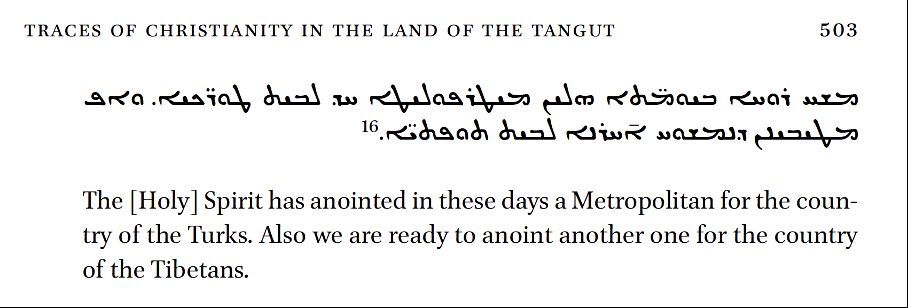
Attestation of the word "Tibetan" in Syriac:
ܒܝܬ ܬܦܘܬܝܐ
byt tpwtyʾ (lit. 'house of Tibetans')
📷: www.academia.edu/86125290/Tra...
ܒܝܬ ܬܦܘܬܝܐ
byt tpwtyʾ (lit. 'house of Tibetans')
📷: www.academia.edu/86125290/Tra...
November 19, 2024 at 3:04 PM
Attestation of the word "Tibetan" in Syriac:
ܒܝܬ ܬܦܘܬܝܐ
byt tpwtyʾ (lit. 'house of Tibetans')
📷: www.academia.edu/86125290/Tra...
ܒܝܬ ܬܦܘܬܝܐ
byt tpwtyʾ (lit. 'house of Tibetans')
📷: www.academia.edu/86125290/Tra...
Reposted by horatius

For the saint that's in it today, the etymology of the name "Brigit":
Modern Irish Bríd [ˈbʲrʲiːdʲ] < pre-reform Irish Brighid < Old Irish Brigit [ˈbʲrʲiɣʲədʲ] < Primitive Irish *Brigēddī [ˈbriɣɛːdːiː] < Proto-Celtic *Brigantī < Proto-Indo-European *bʰr̥g̑ʰn̥tih₂- "high one, elevated one (fem.)".
/1
Modern Irish Bríd [ˈbʲrʲiːdʲ] < pre-reform Irish Brighid < Old Irish Brigit [ˈbʲrʲiɣʲədʲ] < Primitive Irish *Brigēddī [ˈbriɣɛːdːiː] < Proto-Celtic *Brigantī < Proto-Indo-European *bʰr̥g̑ʰn̥tih₂- "high one, elevated one (fem.)".
/1
February 1, 2025 at 7:11 AM
For the saint that's in it today, the etymology of the name "Brigit":
Modern Irish Bríd [ˈbʲrʲiːdʲ] < pre-reform Irish Brighid < Old Irish Brigit [ˈbʲrʲiɣʲədʲ] < Primitive Irish *Brigēddī [ˈbriɣɛːdːiː] < Proto-Celtic *Brigantī < Proto-Indo-European *bʰr̥g̑ʰn̥tih₂- "high one, elevated one (fem.)".
/1
Modern Irish Bríd [ˈbʲrʲiːdʲ] < pre-reform Irish Brighid < Old Irish Brigit [ˈbʲrʲiɣʲədʲ] < Primitive Irish *Brigēddī [ˈbriɣɛːdːiː] < Proto-Celtic *Brigantī < Proto-Indo-European *bʰr̥g̑ʰn̥tih₂- "high one, elevated one (fem.)".
/1
Reposted by horatius
The similarity between the English words 'ago' and 'go' isn't an accident – 'ago' comes from the Old English verb āgān, meaning 'to go away, to pass', which is built on the verb gān 'to go'
'Two days ago' is etymologically 'two days passed'
'Two days ago' is etymologically 'two days passed'
November 9, 2024 at 10:18 AM
The similarity between the English words 'ago' and 'go' isn't an accident – 'ago' comes from the Old English verb āgān, meaning 'to go away, to pass', which is built on the verb gān 'to go'
'Two days ago' is etymologically 'two days passed'
'Two days ago' is etymologically 'two days passed'