



Dr. Dominic Ng
@dominicng.bsky.social
Neurology trainee | PhD candidate decoding the brain | Academic writer distilling complex neuroscience into concise, peer-reviewed insights
A pattern I’ve noticed in successful people
1. Relentless persistence - willing to bang their head against a wall a million times
2. Ruthless prioritisation - able to focus on what matters and ignore what doesn’t
3. Irrational self-belief - delusional about their own capabilities
1. Relentless persistence - willing to bang their head against a wall a million times
2. Ruthless prioritisation - able to focus on what matters and ignore what doesn’t
3. Irrational self-belief - delusional about their own capabilities
December 9, 2025 at 1:59 PM
A pattern I’ve noticed in successful people
1. Relentless persistence - willing to bang their head against a wall a million times
2. Ruthless prioritisation - able to focus on what matters and ignore what doesn’t
3. Irrational self-belief - delusional about their own capabilities
1. Relentless persistence - willing to bang their head against a wall a million times
2. Ruthless prioritisation - able to focus on what matters and ignore what doesn’t
3. Irrational self-belief - delusional about their own capabilities
New review links microplastics to Alzheimer’s and Parkinson’s progression via:
• Oxidative stress
• Neuroinflammation
• Blood-brain barrier disruption
• Mitochondrial dysfunction
• Direct interaction with disease proteins (β-amyloid, tau, α-synuclein)
• Oxidative stress
• Neuroinflammation
• Blood-brain barrier disruption
• Mitochondrial dysfunction
• Direct interaction with disease proteins (β-amyloid, tau, α-synuclein)

December 9, 2025 at 1:01 PM
New review links microplastics to Alzheimer’s and Parkinson’s progression via:
• Oxidative stress
• Neuroinflammation
• Blood-brain barrier disruption
• Mitochondrial dysfunction
• Direct interaction with disease proteins (β-amyloid, tau, α-synuclein)
• Oxidative stress
• Neuroinflammation
• Blood-brain barrier disruption
• Mitochondrial dysfunction
• Direct interaction with disease proteins (β-amyloid, tau, α-synuclein)
A common antidepressant (sertraline) cut repeat domestic violence reoffending by 44% when paired with counseling.
First randomised controlled trial of medication for domestic violence prevention.
First randomised controlled trial of medication for domestic violence prevention.

December 8, 2025 at 12:57 PM
A common antidepressant (sertraline) cut repeat domestic violence reoffending by 44% when paired with counseling.
First randomised controlled trial of medication for domestic violence prevention.
First randomised controlled trial of medication for domestic violence prevention.
Plastic has been found in 77% of human blood samples tested. It's in our lungs, brains, and placentas.
10 ways to lower your exposure:
1. Ditch plastic tea bags.
A single bag at 95°C releases 11.6 billion microplastics. Use loose-leaf with a steel infuser.
10 ways to lower your exposure:
1. Ditch plastic tea bags.
A single bag at 95°C releases 11.6 billion microplastics. Use loose-leaf with a steel infuser.
December 7, 2025 at 1:00 PM
Plastic has been found in 77% of human blood samples tested. It's in our lungs, brains, and placentas.
10 ways to lower your exposure:
1. Ditch plastic tea bags.
A single bag at 95°C releases 11.6 billion microplastics. Use loose-leaf with a steel infuser.
10 ways to lower your exposure:
1. Ditch plastic tea bags.
A single bag at 95°C releases 11.6 billion microplastics. Use loose-leaf with a steel infuser.
Almost 6 in 10 GPs surveyed by the BBC believe mental health problems are being over-diagnosed.

December 6, 2025 at 2:56 PM
Almost 6 in 10 GPs surveyed by the BBC believe mental health problems are being over-diagnosed.
I’m a neuroscientist.
You’d never keep your dog inside for 10 hours without a walk, skip its meals, or keep it up all night - so why treat your brain that way?
Take yourself for a walk.
You’d never keep your dog inside for 10 hours without a walk, skip its meals, or keep it up all night - so why treat your brain that way?
Take yourself for a walk.
December 3, 2025 at 2:00 PM
I’m a neuroscientist.
You’d never keep your dog inside for 10 hours without a walk, skip its meals, or keep it up all night - so why treat your brain that way?
Take yourself for a walk.
You’d never keep your dog inside for 10 hours without a walk, skip its meals, or keep it up all night - so why treat your brain that way?
Take yourself for a walk.
As a neuroscientist, here are 7 ways to trick your brain into doing difficult things:
1. Shrink the task to just two minutes.
Your brain resists big commitments. So don't make one.
- "Work out" → do one exercise.
- "Clean the house" → pick up three items.
1. Shrink the task to just two minutes.
Your brain resists big commitments. So don't make one.
- "Work out" → do one exercise.
- "Clean the house" → pick up three items.
December 3, 2025 at 1:30 PM
As a neuroscientist, here are 7 ways to trick your brain into doing difficult things:
1. Shrink the task to just two minutes.
Your brain resists big commitments. So don't make one.
- "Work out" → do one exercise.
- "Clean the house" → pick up three items.
1. Shrink the task to just two minutes.
Your brain resists big commitments. So don't make one.
- "Work out" → do one exercise.
- "Clean the house" → pick up three items.
Neuroplasticity - your brain’s ability to rewire and adapt - doesn’t slow to a halt as you age. It stays active your whole life.
As a neuroscientist, here are 6 ways to boost it at ANY age:
As a neuroscientist, here are 6 ways to boost it at ANY age:
December 2, 2025 at 3:12 PM
Neuroplasticity - your brain’s ability to rewire and adapt - doesn’t slow to a halt as you age. It stays active your whole life.
As a neuroscientist, here are 6 ways to boost it at ANY age:
As a neuroscientist, here are 6 ways to boost it at ANY age:
New study shows that a one-hour walk in the forest led to measurable changes in the brain’s stress centre.

November 28, 2025 at 1:02 PM
New study shows that a one-hour walk in the forest led to measurable changes in the brain’s stress centre.
Drinking 3-4 cups of coffee daily may slow biological aging in people with mental illness by ~5 years, based on new research from @BMJMentalHealth
But the effect disappears above 4 cups.
But the effect disappears above 4 cups.
November 27, 2025 at 8:52 PM
Drinking 3-4 cups of coffee daily may slow biological aging in people with mental illness by ~5 years, based on new research from @BMJMentalHealth
But the effect disappears above 4 cups.
But the effect disappears above 4 cups.
Fluoride in drinking water does not negatively affect cognitive ability - and may actually provide benefit.

November 27, 2025 at 11:48 AM
Fluoride in drinking water does not negatively affect cognitive ability - and may actually provide benefit.
I regret to inform you that the things that matter most - a calm mind, a healthy body, and a loving home - cannot be bought. They must be earned. Slowly. Daily. Deliberately.
November 26, 2025 at 2:40 PM
I regret to inform you that the things that matter most - a calm mind, a healthy body, and a loving home - cannot be bought. They must be earned. Slowly. Daily. Deliberately.
The happiest people I know have shorter to-do lists. Fewer ambitions. Fewer commitments. Fewer things demanding their attention.
They’re not doing less - they’re doing less that doesn’t matter. You can fill your calendar or refine it. One looks successful. The other actually is.
They’re not doing less - they’re doing less that doesn’t matter. You can fill your calendar or refine it. One looks successful. The other actually is.
November 25, 2025 at 6:17 PM
The happiest people I know have shorter to-do lists. Fewer ambitions. Fewer commitments. Fewer things demanding their attention.
They’re not doing less - they’re doing less that doesn’t matter. You can fill your calendar or refine it. One looks successful. The other actually is.
They’re not doing less - they’re doing less that doesn’t matter. You can fill your calendar or refine it. One looks successful. The other actually is.
A 40-year study found that staying active in midlife and beyond is linked to 40% lower dementia risk.
The simplest thing you can do for your brain is take a walk.
The simplest thing you can do for your brain is take a walk.

November 25, 2025 at 3:50 PM
A 40-year study found that staying active in midlife and beyond is linked to 40% lower dementia risk.
The simplest thing you can do for your brain is take a walk.
The simplest thing you can do for your brain is take a walk.
As a neuroscientist, I observe this cycle daily:
- Oversleep and miss morning light
- Feel exhausted by afternoon
- Can’t fall asleep at bedtime
- Wake up late again
Your brain requires morning light to set its internal clock. Skip it, and the pattern continues.
- Oversleep and miss morning light
- Feel exhausted by afternoon
- Can’t fall asleep at bedtime
- Wake up late again
Your brain requires morning light to set its internal clock. Skip it, and the pattern continues.
November 24, 2025 at 12:52 PM
As a neuroscientist, I observe this cycle daily:
- Oversleep and miss morning light
- Feel exhausted by afternoon
- Can’t fall asleep at bedtime
- Wake up late again
Your brain requires morning light to set its internal clock. Skip it, and the pattern continues.
- Oversleep and miss morning light
- Feel exhausted by afternoon
- Can’t fall asleep at bedtime
- Wake up late again
Your brain requires morning light to set its internal clock. Skip it, and the pattern continues.
Living in a walkable place might be the most underrated health advantage.
Coffee shop, restaurant, park - each destination adds steps you didn’t plan for.
Coffee shop, restaurant, park - each destination adds steps you didn’t plan for.
November 23, 2025 at 1:09 PM
Living in a walkable place might be the most underrated health advantage.
Coffee shop, restaurant, park - each destination adds steps you didn’t plan for.
Coffee shop, restaurant, park - each destination adds steps you didn’t plan for.
A habit worth building:
Tell people the specific impact they had on you. Not "thanks for everything." But, “the way you handled that meeting taught me confidence."
Generic praise is forgotten. Most people have no idea what they do well. Show them.
Tell people the specific impact they had on you. Not "thanks for everything." But, “the way you handled that meeting taught me confidence."
Generic praise is forgotten. Most people have no idea what they do well. Show them.
November 22, 2025 at 5:47 PM
A habit worth building:
Tell people the specific impact they had on you. Not "thanks for everything." But, “the way you handled that meeting taught me confidence."
Generic praise is forgotten. Most people have no idea what they do well. Show them.
Tell people the specific impact they had on you. Not "thanks for everything." But, “the way you handled that meeting taught me confidence."
Generic praise is forgotten. Most people have no idea what they do well. Show them.
New Nature study on the "Batman effect": When a pregnant woman boarded Milan trains alone, 38% offered seats. But when Batman boarded the same train, that jumped to 67%.

November 21, 2025 at 2:46 PM
New Nature study on the "Batman effect": When a pregnant woman boarded Milan trains alone, 38% offered seats. But when Batman boarded the same train, that jumped to 67%.
Handwritten notes beat typing for academic performance - even though typing produces MORE notes, according to a meta-analysis of 3000 students.

November 21, 2025 at 2:04 PM
Handwritten notes beat typing for academic performance - even though typing produces MORE notes, according to a meta-analysis of 3000 students.
Repetition rewires
Repetition rewires
Repetition rewires
As a neuroscientist, I can tell you: the brain doesn't distinguish between the habits that serve you and the ones that destroy you.
The question isn't whether you'll change, but what you'll become.
Repetition rewires
Repetition rewires
As a neuroscientist, I can tell you: the brain doesn't distinguish between the habits that serve you and the ones that destroy you.
The question isn't whether you'll change, but what you'll become.
November 20, 2025 at 5:52 PM
Repetition rewires
Repetition rewires
Repetition rewires
As a neuroscientist, I can tell you: the brain doesn't distinguish between the habits that serve you and the ones that destroy you.
The question isn't whether you'll change, but what you'll become.
Repetition rewires
Repetition rewires
As a neuroscientist, I can tell you: the brain doesn't distinguish between the habits that serve you and the ones that destroy you.
The question isn't whether you'll change, but what you'll become.
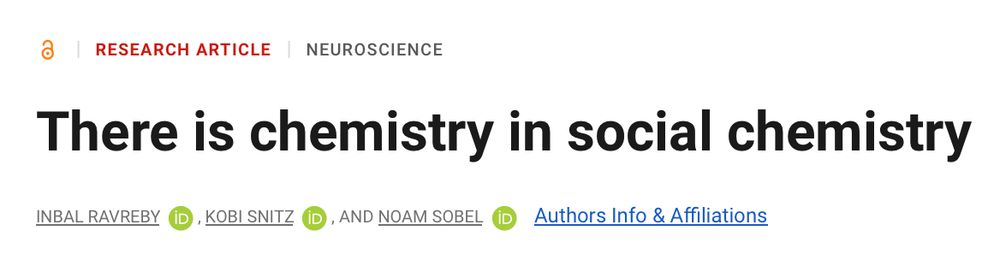
Friendship might have a smell.
A 2022 study found people with similar body odours were far more likely to instantly “click” as friends – an electronic nose even predicted positive stranger pairings with ~71% accuracy.
A 2022 study found people with similar body odours were far more likely to instantly “click” as friends – an electronic nose even predicted positive stranger pairings with ~71% accuracy.
November 20, 2025 at 5:11 PM
Friendship might have a smell.
A 2022 study found people with similar body odours were far more likely to instantly “click” as friends – an electronic nose even predicted positive stranger pairings with ~71% accuracy.
A 2022 study found people with similar body odours were far more likely to instantly “click” as friends – an electronic nose even predicted positive stranger pairings with ~71% accuracy.
A new study finds testosterone is linked to men acting on conviction, not audience.
Men got testosterone or placebo and chose between getting money or giving it to charity.
Placebo men became more generous when watched while men on testosterone didn't.
Men got testosterone or placebo and chose between getting money or giving it to charity.
Placebo men became more generous when watched while men on testosterone didn't.

November 19, 2025 at 2:01 PM
A new study finds testosterone is linked to men acting on conviction, not audience.
Men got testosterone or placebo and chose between getting money or giving it to charity.
Placebo men became more generous when watched while men on testosterone didn't.
Men got testosterone or placebo and chose between getting money or giving it to charity.
Placebo men became more generous when watched while men on testosterone didn't.
Oxytocin receptors act as friendship accelerators. Prairie voles lacking them need double the time to bond.
Warmth + time = connection. Keep showing up, even in small ways.
Warmth + time = connection. Keep showing up, even in small ways.

November 19, 2025 at 12:58 PM
Oxytocin receptors act as friendship accelerators. Prairie voles lacking them need double the time to bond.
Warmth + time = connection. Keep showing up, even in small ways.
Warmth + time = connection. Keep showing up, even in small ways.
Don’t talk about your plans. Finish them.
As a neuroscientist, sharing goals feels good, but it tricks your brain into thinking you’ve already won. Stay quiet. Do the work. Let your results speak for you.
As a neuroscientist, sharing goals feels good, but it tricks your brain into thinking you’ve already won. Stay quiet. Do the work. Let your results speak for you.
November 18, 2025 at 1:57 PM
Don’t talk about your plans. Finish them.
As a neuroscientist, sharing goals feels good, but it tricks your brain into thinking you’ve already won. Stay quiet. Do the work. Let your results speak for you.
As a neuroscientist, sharing goals feels good, but it tricks your brain into thinking you’ve already won. Stay quiet. Do the work. Let your results speak for you.
Pets completely protect against mental decline from living alone.
9-year study of 7,945 older adults: People living alone with pets kept their mental sharpness just as well as those living with family.
Your dog or cat might be saving your brain.
9-year study of 7,945 older adults: People living alone with pets kept their mental sharpness just as well as those living with family.
Your dog or cat might be saving your brain.

November 18, 2025 at 1:01 PM
Pets completely protect against mental decline from living alone.
9-year study of 7,945 older adults: People living alone with pets kept their mental sharpness just as well as those living with family.
Your dog or cat might be saving your brain.
9-year study of 7,945 older adults: People living alone with pets kept their mental sharpness just as well as those living with family.
Your dog or cat might be saving your brain.