




Dorothy Koveal
@dkoveal.bsky.social
Georgia Tech / Emory, fluorescent biosensor developer, protein biochemist / structure solver, microfluidics / microchip / microwell tinkerer, parent, mentor
Reposted by Dorothy Koveal

Our first preprint has been accepted for publication www.science.org/doi/10.1126/... !!
tldr: @ezeyulu00.bsky.social , @amartyapradhan.bsky.social , @dkoveal.bsky.social and I developed a method using injectable nanoparticles to turn mice into…constellations in motion. 🧵⤵️
tldr: @ezeyulu00.bsky.social , @amartyapradhan.bsky.social , @dkoveal.bsky.social and I developed a method using injectable nanoparticles to turn mice into…constellations in motion. 🧵⤵️

High-resolution in vivo kinematic tracking with customized injectable fluorescent nanoparticles
Injectable fluorescent nanoparticles were used to track positions on and inside of freely moving animals at high resolution.
www.science.org
October 2, 2025 at 7:45 PM
Our first preprint has been accepted for publication www.science.org/doi/10.1126/... !!
tldr: @ezeyulu00.bsky.social , @amartyapradhan.bsky.social , @dkoveal.bsky.social and I developed a method using injectable nanoparticles to turn mice into…constellations in motion. 🧵⤵️
tldr: @ezeyulu00.bsky.social , @amartyapradhan.bsky.social , @dkoveal.bsky.social and I developed a method using injectable nanoparticles to turn mice into…constellations in motion. 🧵⤵️
Reposted by Dorothy Koveal
This work was driven by the singular vision and dedication of Zeynep Ulutas, @ezeyulu00.bsky.social . We could not have finished this without @amartyapradhan.bsky.social . @dkoveal.bsky.social provided key guidance on chemistry.
October 2, 2025 at 7:45 PM
This work was driven by the singular vision and dedication of Zeynep Ulutas, @ezeyulu00.bsky.social . We could not have finished this without @amartyapradhan.bsky.social . @dkoveal.bsky.social provided key guidance on chemistry.
Beautiful structural analysis of a lifetime sensor from Rosen et al. Really cool mechanism reveal - something I never would have guessed when we made LiLac. A must-read for sensor folks!
www.pnas.org/doi/10.1073/...
www.pnas.org/doi/10.1073/...
a man in a suit and tie is dancing in a room in front of a wall .
ALT: a man in a suit and tie is dancing in a room in front of a wall .
media.tenor.com
March 9, 2025 at 7:33 PM
Beautiful structural analysis of a lifetime sensor from Rosen et al. Really cool mechanism reveal - something I never would have guessed when we made LiLac. A must-read for sensor folks!
www.pnas.org/doi/10.1073/...
www.pnas.org/doi/10.1073/...
Reposted by Dorothy Koveal

How do tiny magnetic fields affect biochemistry? Overflowing with pride over Katherine Xiang's study on a giant magnetic field effect in a red fluorescent protein, www.biorxiv.org/content/10.1...

Mechanism of giant magnetic field effect in fluorescence of mScarlet3, a red fluorescent protein
Several fluorescent proteins, when expressed in E. coli, are sensitive to weak magnetic fields1. We found that mScarlet3 fluorescence in E. coli reversibly decreased by 21% in the presence of a 60 mT ...
www.biorxiv.org
February 28, 2025 at 4:00 PM
How do tiny magnetic fields affect biochemistry? Overflowing with pride over Katherine Xiang's study on a giant magnetic field effect in a red fluorescent protein, www.biorxiv.org/content/10.1...
Reposted by Dorothy Koveal
Could one envision a synthetic receptor technology that is fully programmable, able to detect diverse extracellular antigens – both soluble and cell-attached – and convert that recognition into a wide range of intracellular responses, from gene expression and real-time fluorescence to modulation..
December 4, 2024 at 4:05 PM
Could one envision a synthetic receptor technology that is fully programmable, able to detect diverse extracellular antigens – both soluble and cell-attached – and convert that recognition into a wide range of intracellular responses, from gene expression and real-time fluorescence to modulation..
Reposted by Dorothy Koveal
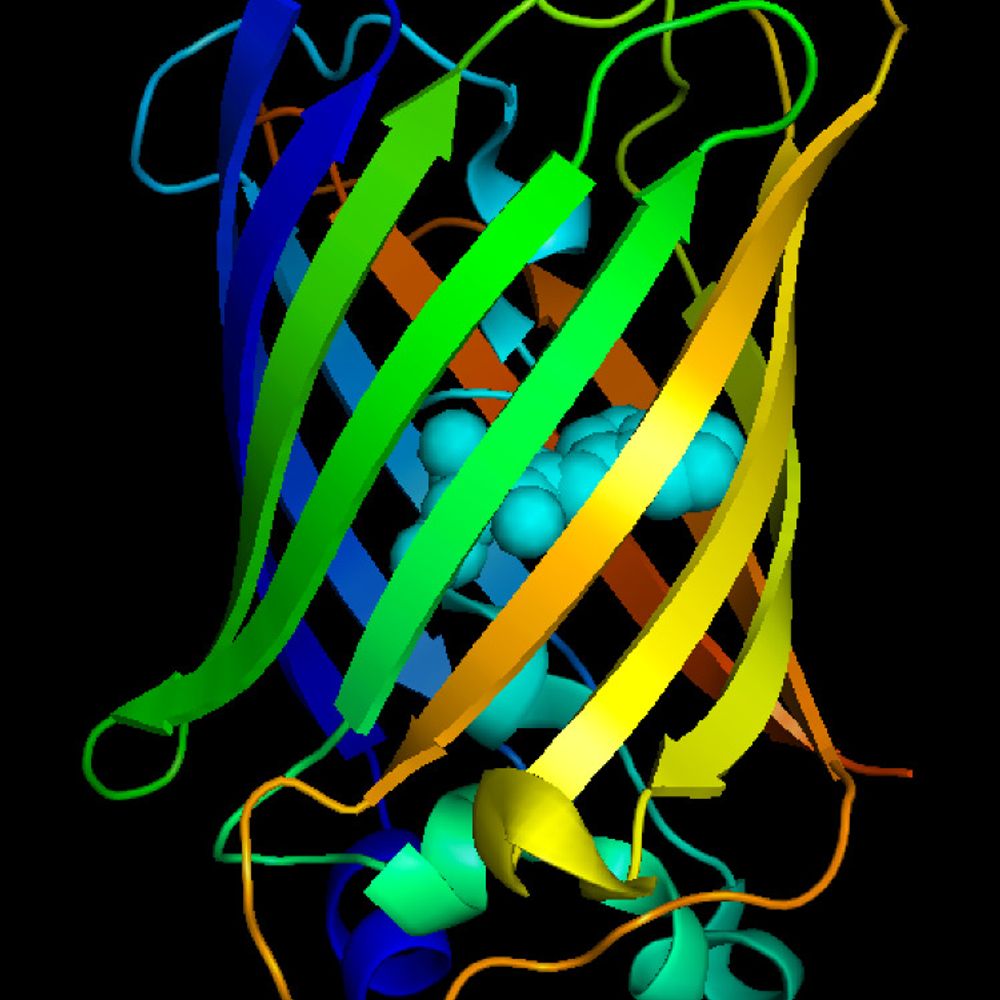
Great to see this online as #preprint:
TINGL - A Turquoise INdicator for GLucose by the lab of @basteusink.bsky.social (and a small contribution from me): www.biorxiv.org/content/10.1...
TINGL - A Turquoise INdicator for GLucose by the lab of @basteusink.bsky.social (and a small contribution from me): www.biorxiv.org/content/10.1...

December 3, 2024 at 9:41 PM
Great to see this online as #preprint:
TINGL - A Turquoise INdicator for GLucose by the lab of @basteusink.bsky.social (and a small contribution from me): www.biorxiv.org/content/10.1...
TINGL - A Turquoise INdicator for GLucose by the lab of @basteusink.bsky.social (and a small contribution from me): www.biorxiv.org/content/10.1...
Reposted by Dorothy Koveal

Out yesterday in Neuron, the final print version of our paper on voltage imaging with ASAP5, "A fast and responsive voltage indicator with enhanced sensitivity for unitary synaptic events"
www.cell.com/neuron/fullt...
www.cell.com/neuron/fullt...

A fast and responsive voltage indicator with enhanced sensitivity for unitary synaptic events
Hao, Lee, et al. report ASAP5, a GEVI that enhances responsivity and accelerates kinetics.
It enables single-trial recordings of sub- and suprathreshold activities in flies,
mice, and human stem-cell-...
www.cell.com
November 22, 2024 at 9:24 PM
Out yesterday in Neuron, the final print version of our paper on voltage imaging with ASAP5, "A fast and responsive voltage indicator with enhanced sensitivity for unitary synaptic events"
www.cell.com/neuron/fullt...
www.cell.com/neuron/fullt...