11/2025
20. "Pioneers of the Pathway", by Stuart Jaffe.
A family drama on a space colony/wormhole portal development setting with a murder investigation as a framing narrative. The book tries to do a lot and manages to maintain focus, though it sometimes invites questions it can't answer.
20. "Pioneers of the Pathway", by Stuart Jaffe.
A family drama on a space colony/wormhole portal development setting with a murder investigation as a framing narrative. The book tries to do a lot and manages to maintain focus, though it sometimes invites questions it can't answer.

November 30, 2025 at 1:22 PM
11/2025
20. "Pioneers of the Pathway", by Stuart Jaffe.
A family drama on a space colony/wormhole portal development setting with a murder investigation as a framing narrative. The book tries to do a lot and manages to maintain focus, though it sometimes invites questions it can't answer.
20. "Pioneers of the Pathway", by Stuart Jaffe.
A family drama on a space colony/wormhole portal development setting with a murder investigation as a framing narrative. The book tries to do a lot and manages to maintain focus, though it sometimes invites questions it can't answer.
Today I saw someone in the park walking like this and it just brought joy to my heart.

November 20, 2025 at 9:47 PM
Today I saw someone in the park walking like this and it just brought joy to my heart.
I swear all these articles have to be written by people who have never met an actual child.
"What's a mistake you learned from today?"
"Who were you proud of today?"
These are all corporate language, who-moved-my-cheese bullshit.
"What's a mistake you learned from today?"
"Who were you proud of today?"
These are all corporate language, who-moved-my-cheese bullshit.

November 11, 2025 at 10:36 AM
I swear all these articles have to be written by people who have never met an actual child.
"What's a mistake you learned from today?"
"Who were you proud of today?"
These are all corporate language, who-moved-my-cheese bullshit.
"What's a mistake you learned from today?"
"Who were you proud of today?"
These are all corporate language, who-moved-my-cheese bullshit.
11/2025.
19. Solaris, by Stanislaw Lem.
A short book that is surprisingly dense. A story of a truly alien first contact which shows not just how impossible it would be for humans to communicate with an alien creature, but how alien we are to each other.
Tremendous mood and atmosphere.
19. Solaris, by Stanislaw Lem.
A short book that is surprisingly dense. A story of a truly alien first contact which shows not just how impossible it would be for humans to communicate with an alien creature, but how alien we are to each other.
Tremendous mood and atmosphere.

November 7, 2025 at 5:40 PM
11/2025.
19. Solaris, by Stanislaw Lem.
A short book that is surprisingly dense. A story of a truly alien first contact which shows not just how impossible it would be for humans to communicate with an alien creature, but how alien we are to each other.
Tremendous mood and atmosphere.
19. Solaris, by Stanislaw Lem.
A short book that is surprisingly dense. A story of a truly alien first contact which shows not just how impossible it would be for humans to communicate with an alien creature, but how alien we are to each other.
Tremendous mood and atmosphere.
10/2025
18. Roadside Picnic , by Arkady & Boris Strugatsky.
Its unadorned and direct writing only heightens its powerful concept: what if the first alien contact scenario is neither dystopia nor utopia, but a deeply shallow, deeply unsatisfying, relentlessly expanding void.
18. Roadside Picnic , by Arkady & Boris Strugatsky.
Its unadorned and direct writing only heightens its powerful concept: what if the first alien contact scenario is neither dystopia nor utopia, but a deeply shallow, deeply unsatisfying, relentlessly expanding void.

October 23, 2025 at 11:17 PM
10/2025
18. Roadside Picnic , by Arkady & Boris Strugatsky.
Its unadorned and direct writing only heightens its powerful concept: what if the first alien contact scenario is neither dystopia nor utopia, but a deeply shallow, deeply unsatisfying, relentlessly expanding void.
18. Roadside Picnic , by Arkady & Boris Strugatsky.
Its unadorned and direct writing only heightens its powerful concept: what if the first alien contact scenario is neither dystopia nor utopia, but a deeply shallow, deeply unsatisfying, relentlessly expanding void.
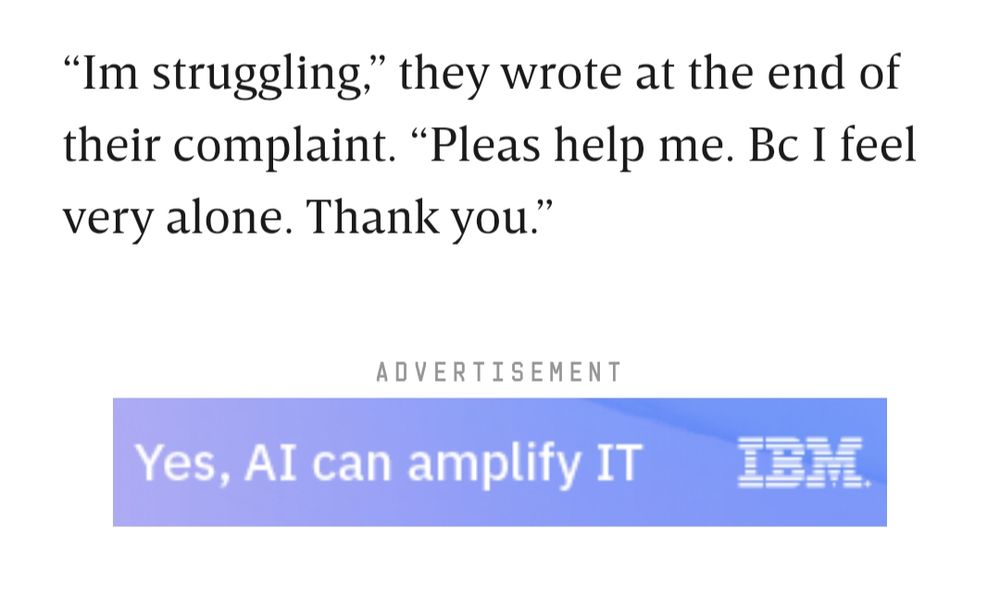
The beautiful little horrors of algorithm-based advertisements. This, from an article about AI Psychosis and the pleas of those affected, directed at the FTC.
October 22, 2025 at 12:02 PM
The beautiful little horrors of algorithm-based advertisements. This, from an article about AI Psychosis and the pleas of those affected, directed at the FTC.
9/2025
17. "Dr. No", by Percival Everett.
Nothing is funnier than this book, and that's not nothing.
17. "Dr. No", by Percival Everett.
Nothing is funnier than this book, and that's not nothing.

October 3, 2025 at 10:30 PM
9/2025
17. "Dr. No", by Percival Everett.
Nothing is funnier than this book, and that's not nothing.
17. "Dr. No", by Percival Everett.
Nothing is funnier than this book, and that's not nothing.
9/2025
16. The Confusions of Young Törless, by Robert Musil.
I'm of 2 minds on this book (which suits it perfectly):
1. This novel is painfully relevant and meaningful in 2025. A powerful, important book.
2. These kids are INSUFFERABLE.
16. The Confusions of Young Törless, by Robert Musil.
I'm of 2 minds on this book (which suits it perfectly):
1. This novel is painfully relevant and meaningful in 2025. A powerful, important book.
2. These kids are INSUFFERABLE.

September 28, 2025 at 10:27 PM
9/2025
16. The Confusions of Young Törless, by Robert Musil.
I'm of 2 minds on this book (which suits it perfectly):
1. This novel is painfully relevant and meaningful in 2025. A powerful, important book.
2. These kids are INSUFFERABLE.
16. The Confusions of Young Törless, by Robert Musil.
I'm of 2 minds on this book (which suits it perfectly):
1. This novel is painfully relevant and meaningful in 2025. A powerful, important book.
2. These kids are INSUFFERABLE.
9/2025
15. White Jenna, by Jane Yolen.
There's a very interesting concept fueling the structure of this book and the prior entry and some really good ideas behind the duology. Any problems I may have with this book are likely my fault for not being a late 1980s teenage girl.
15. White Jenna, by Jane Yolen.
There's a very interesting concept fueling the structure of this book and the prior entry and some really good ideas behind the duology. Any problems I may have with this book are likely my fault for not being a late 1980s teenage girl.


September 22, 2025 at 2:36 AM
9/2025
15. White Jenna, by Jane Yolen.
There's a very interesting concept fueling the structure of this book and the prior entry and some really good ideas behind the duology. Any problems I may have with this book are likely my fault for not being a late 1980s teenage girl.
15. White Jenna, by Jane Yolen.
There's a very interesting concept fueling the structure of this book and the prior entry and some really good ideas behind the duology. Any problems I may have with this book are likely my fault for not being a late 1980s teenage girl.
Aquí ayudamos.
Mi reseña favorita del libro:
Mi reseña favorita del libro:

September 16, 2025 at 1:44 AM
Aquí ayudamos.
Mi reseña favorita del libro:
Mi reseña favorita del libro:

9/2025
14. Sister Light, Sister Dark, by Jane Yolen.
I debated whether to count it as a book or wait to count this and the sequel as one, but both were published individually first, which is wild to me, because this is absolutely not a complete novel by any stretch of the definition.
14. Sister Light, Sister Dark, by Jane Yolen.
I debated whether to count it as a book or wait to count this and the sequel as one, but both were published individually first, which is wild to me, because this is absolutely not a complete novel by any stretch of the definition.

September 15, 2025 at 12:03 PM
9/2025
14. Sister Light, Sister Dark, by Jane Yolen.
I debated whether to count it as a book or wait to count this and the sequel as one, but both were published individually first, which is wild to me, because this is absolutely not a complete novel by any stretch of the definition.
14. Sister Light, Sister Dark, by Jane Yolen.
I debated whether to count it as a book or wait to count this and the sequel as one, but both were published individually first, which is wild to me, because this is absolutely not a complete novel by any stretch of the definition.
My 2c about Labubu is:
"Reject modernity; embrace tradition".
"Reject modernity; embrace tradition".

September 10, 2025 at 12:14 PM
My 2c about Labubu is:
"Reject modernity; embrace tradition".
"Reject modernity; embrace tradition".
9/2025
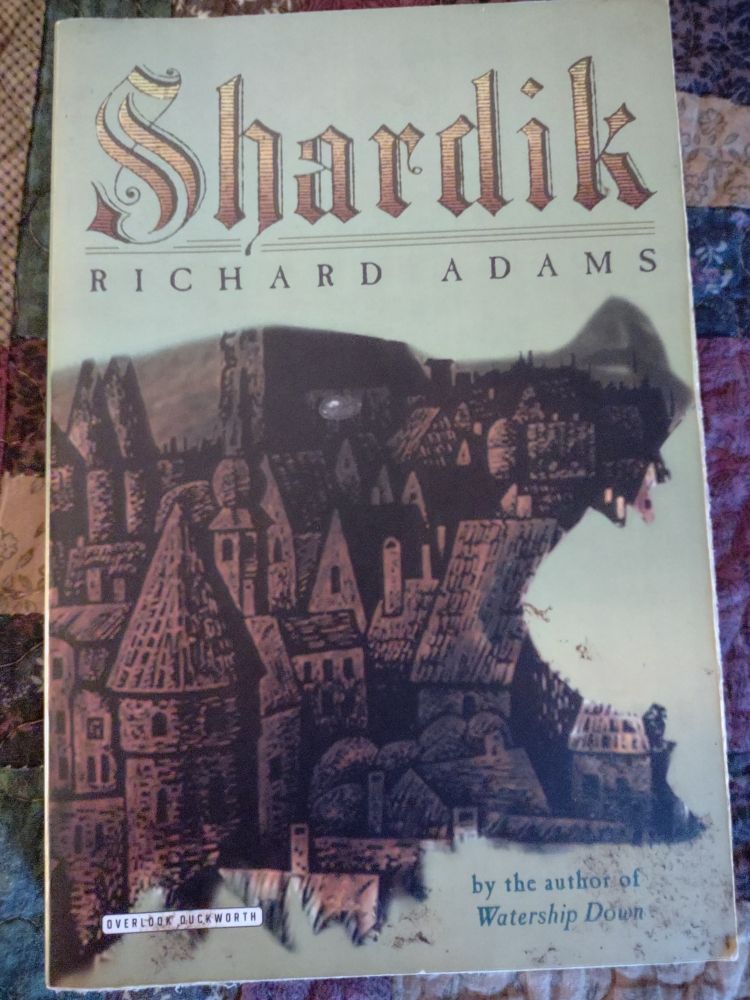
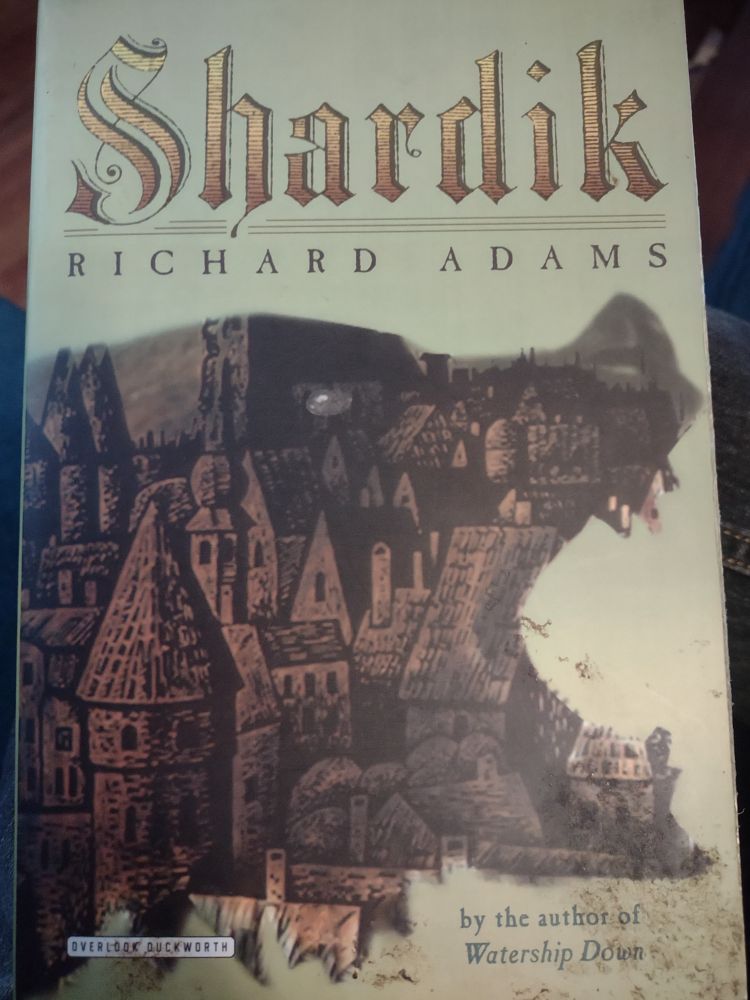
13. Shardik, by Richard Adams.
Ambitious, earnest, moving, and often unrestrained, Shardik represents to me all that fantasy literature can thematically and aesthetically accomplish.
This book connected with me very deeply, but I can see why it did not connect with many readers.
13. Shardik, by Richard Adams.
Ambitious, earnest, moving, and often unrestrained, Shardik represents to me all that fantasy literature can thematically and aesthetically accomplish.
This book connected with me very deeply, but I can see why it did not connect with many readers.
September 8, 2025 at 5:50 PM
9/2025
13. Shardik, by Richard Adams.
Ambitious, earnest, moving, and often unrestrained, Shardik represents to me all that fantasy literature can thematically and aesthetically accomplish.
This book connected with me very deeply, but I can see why it did not connect with many readers.
13. Shardik, by Richard Adams.
Ambitious, earnest, moving, and often unrestrained, Shardik represents to me all that fantasy literature can thematically and aesthetically accomplish.
This book connected with me very deeply, but I can see why it did not connect with many readers.
Made with fucking Mithril by Dwarves from the Lonely Mountain, apparently.

September 7, 2025 at 7:38 PM
Made with fucking Mithril by Dwarves from the Lonely Mountain, apparently.
"Shardik", by Richard Adams (1974).

September 4, 2025 at 3:32 PM
"Shardik", by Richard Adams (1974).
Shiro Amada, cause he said "fuck everything, even the plot of this anime" and left everything behind for the woman he loved.

September 3, 2025 at 10:25 AM
Shiro Amada, cause he said "fuck everything, even the plot of this anime" and left everything behind for the woman he loved.
8/2025
12. With the bildungsroman aspect found in the previous two books removed, we are left with a rather conventional quest format that relies heavily on the promise of what is to come in the next book.
More focused than the two books that preceded it, but also far less engaging.
12. With the bildungsroman aspect found in the previous two books removed, we are left with a rather conventional quest format that relies heavily on the promise of what is to come in the next book.
More focused than the two books that preceded it, but also far less engaging.

August 2, 2025 at 3:35 AM
8/2025
12. With the bildungsroman aspect found in the previous two books removed, we are left with a rather conventional quest format that relies heavily on the promise of what is to come in the next book.
More focused than the two books that preceded it, but also far less engaging.
12. With the bildungsroman aspect found in the previous two books removed, we are left with a rather conventional quest format that relies heavily on the promise of what is to come in the next book.
More focused than the two books that preceded it, but also far less engaging.
Treated myself to 3 books at the used book store. "Little, Big" I have wanted to read for quite a while; "Shardik" was a book that made a big impression on kid me and I've been wanting to reread it for decades... "Dragonbone Chair" I need for... bildungsroman reasons.


August 2, 2025 at 1:17 AM
Treated myself to 3 books at the used book store. "Little, Big" I have wanted to read for quite a while; "Shardik" was a book that made a big impression on kid me and I've been wanting to reread it for decades... "Dragonbone Chair" I need for... bildungsroman reasons.
Time to revisit the classics.

July 31, 2025 at 3:20 AM
Time to revisit the classics.
There's beauty out there.


July 30, 2025 at 10:26 PM
There's beauty out there.
Just me and boys hanging out downtown.

July 26, 2025 at 3:10 PM
Just me and boys hanging out downtown.
One of my many "micro dreams" is one day setting up a website dedicated to the most hilariously faint praises in book blurbs/endorsements. I'd put this one on the site's banner.
They put this bad boy in TWO of the books in the same series.
They put this bad boy in TWO of the books in the same series.

July 23, 2025 at 1:33 AM
One of my many "micro dreams" is one day setting up a website dedicated to the most hilariously faint praises in book blurbs/endorsements. I'd put this one on the site's banner.
They put this bad boy in TWO of the books in the same series.
They put this bad boy in TWO of the books in the same series.
You would think a movie can't have everything, but this movie has a baby AND a gorilla.

June 27, 2025 at 3:45 PM
You would think a movie can't have everything, but this movie has a baby AND a gorilla.