




Benjamin Serbe
@bserbe.bsky.social
Archaeologist | GIS & Network Science | PostDoc at Datencampus & CRC 1266 | Kiel University
Pinned
Benjamin Serbe
@bserbe.bsky.social
· Nov 28
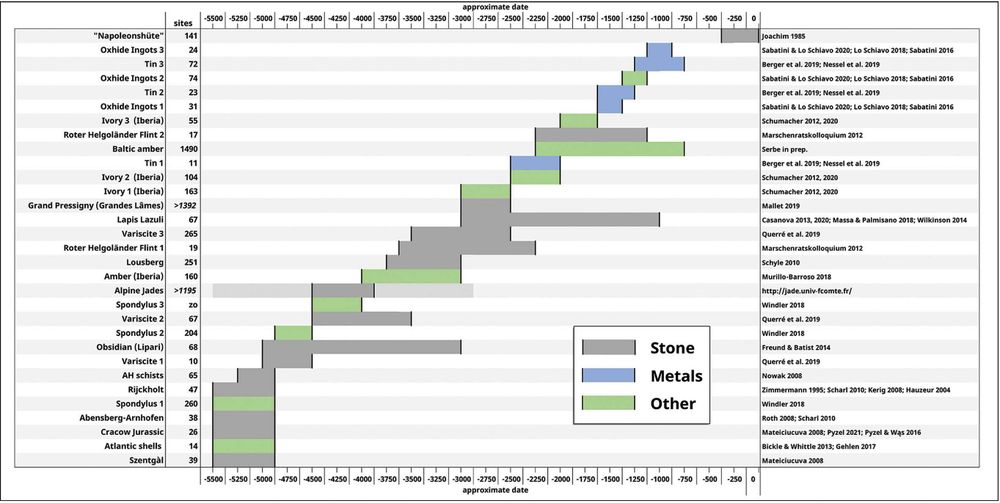
What is the Big Exchange Project?
The project is an international collaboration with archaeologists and network scientists to inverstigate lagre-scale exchange networks in Prehistoric Eurasia and Africa. We focus on raw materials with a distinct source which data are publically available.
1/3
The project is an international collaboration with archaeologists and network scientists to inverstigate lagre-scale exchange networks in Prehistoric Eurasia and Africa. We focus on raw materials with a distinct source which data are publically available.
1/3
Reposted by Benjamin Serbe
1/3 New recommendation: M. thor Straten, S. Strohm, J. Hilpert, @bserbe.bsky.social, T. Kerig, M. Renz (2025). A Network View on the Big Exchange Project: Integrating and Analysing Heterogeneous Datasets. v2 peer-reviewed and recommended by PCI Archaeology doi.org/10.5281/zeno...

December 9, 2025 at 10:08 AM
1/3 New recommendation: M. thor Straten, S. Strohm, J. Hilpert, @bserbe.bsky.social, T. Kerig, M. Renz (2025). A Network View on the Big Exchange Project: Integrating and Analysing Heterogeneous Datasets. v2 peer-reviewed and recommended by PCI Archaeology doi.org/10.5281/zeno...
Reposted by Benjamin Serbe

OUT NOW!
Bernstein in der Bronzezeit.
Netzwerke und Interaktion in Europa
by Benjamin Serbe
#ROOTS
📚 Read online for free or purchase your own volume at www.sidestone.com/books/bernst...
#amber #prehistory
Bernstein in der Bronzezeit.
Netzwerke und Interaktion in Europa
by Benjamin Serbe
#ROOTS
📚 Read online for free or purchase your own volume at www.sidestone.com/books/bernst...
#amber #prehistory

November 27, 2025 at 3:31 PM
OUT NOW!
Bernstein in der Bronzezeit.
Netzwerke und Interaktion in Europa
by Benjamin Serbe
#ROOTS
📚 Read online for free or purchase your own volume at www.sidestone.com/books/bernst...
#amber #prehistory
Bernstein in der Bronzezeit.
Netzwerke und Interaktion in Europa
by Benjamin Serbe
#ROOTS
📚 Read online for free or purchase your own volume at www.sidestone.com/books/bernst...
#amber #prehistory
It is done! Finally, after two years past the defense my PhD is online available! Two years of editing, figure revising and test prints. Thanks to all the people at @clusterroots.bsky.social for supporting this project.
Check out the digial version here: www.sidestone.com/books/bernst...
Check out the digial version here: www.sidestone.com/books/bernst...
www.sidestone.com
November 26, 2025 at 9:15 AM
It is done! Finally, after two years past the defense my PhD is online available! Two years of editing, figure revising and test prints. Thanks to all the people at @clusterroots.bsky.social for supporting this project.
Check out the digial version here: www.sidestone.com/books/bernst...
Check out the digial version here: www.sidestone.com/books/bernst...
Reposted by Benjamin Serbe

Hat hier jemand Verstopfung gesagt? #IchBinHanna newsletterversand.zeit.de/go/13/6KUV8M....

October 9, 2025 at 9:42 AM
Hat hier jemand Verstopfung gesagt? #IchBinHanna newsletterversand.zeit.de/go/13/6KUV8M....
Reposted by Benjamin Serbe

Weiß jemand, warum in Berlin der Palast der Republik abgerissen wurde, Hitlers Olympiastadion von 1936 aber nicht?
October 5, 2025 at 6:58 AM
Weiß jemand, warum in Berlin der Palast der Republik abgerissen wurde, Hitlers Olympiastadion von 1936 aber nicht?
Reposted by Benjamin Serbe

📕 What is gender #archaeology? 🏺
Explore how we can research gender roles in the past and how different gender issues in the academic world affect current archaeological thought in our latest #NewBookChronicle 🆓 doi.org/10.15184/aqy...
Explore how we can research gender roles in the past and how different gender issues in the academic world affect current archaeological thought in our latest #NewBookChronicle 🆓 doi.org/10.15184/aqy...

September 30, 2025 at 2:04 PM
📕 What is gender #archaeology? 🏺
Explore how we can research gender roles in the past and how different gender issues in the academic world affect current archaeological thought in our latest #NewBookChronicle 🆓 doi.org/10.15184/aqy...
Explore how we can research gender roles in the past and how different gender issues in the academic world affect current archaeological thought in our latest #NewBookChronicle 🆓 doi.org/10.15184/aqy...
Reposted by Benjamin Serbe
Looking for a place to submit your finished paper? We propose a totally free and transparent initiative! Made by archaeologists for archaeologists. Follow the steps below! 🏺🧪

September 27, 2025 at 7:48 AM
Looking for a place to submit your finished paper? We propose a totally free and transparent initiative! Made by archaeologists for archaeologists. Follow the steps below! 🏺🧪
Reposted by Benjamin Serbe

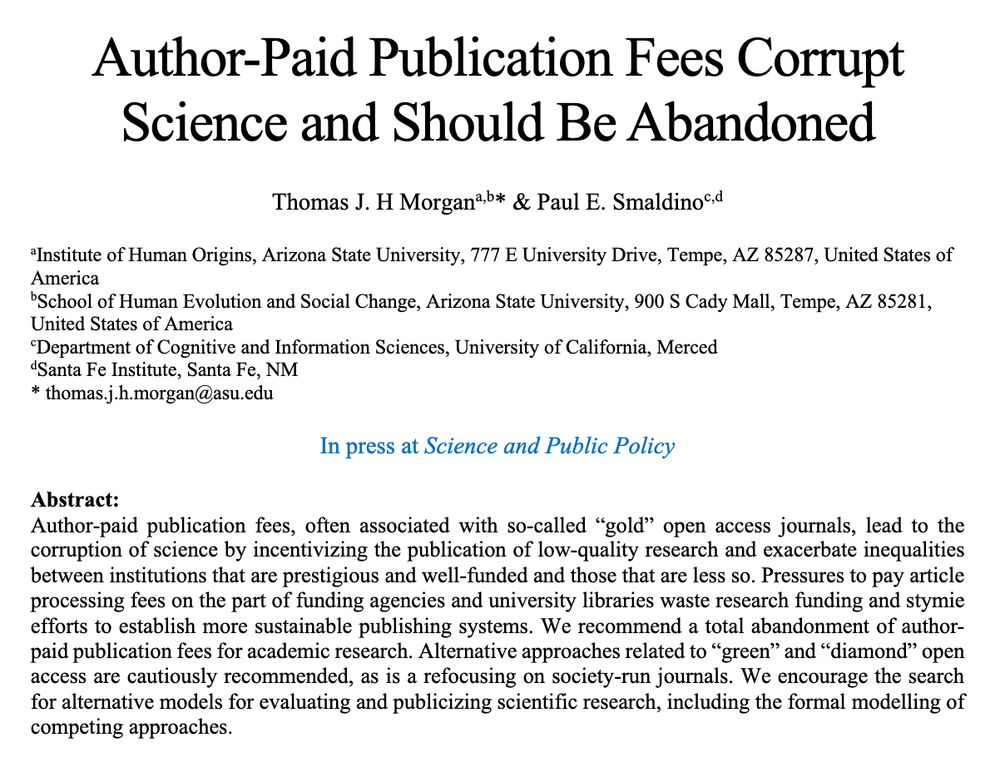
As grant money starts drying up, it's more important than ever not to waste it on paying publishers' open access "article processing fees" when we can host PDFs for free. Tom Morgan and I wrote a paper on this, forthcoming at Science and Public Policy. Accepted draft here: osf.io/preprints/os...
May 9, 2025 at 5:26 PM
As grant money starts drying up, it's more important than ever not to waste it on paying publishers' open access "article processing fees" when we can host PDFs for free. Tom Morgan and I wrote a paper on this, forthcoming at Science and Public Policy. Accepted draft here: osf.io/preprints/os...
Reposted by Benjamin Serbe

Peer-review originally emerged in response to journals' need to boost their own reputation and to sieve through growing and increasing numbers of submissions that couldnt all simply be printed, not primarily for reasons of quality control:
worksinprogress.co/issue/real-p...
🏺🗃️📕
worksinprogress.co/issue/real-p...
🏺🗃️📕

Real peer review has never been tried - Works in Progress Magazine
Outdated forms of peer review create bottlenecks that slow science. But in a world where research can now circulate rapidly on the Internet, we need to develop new ways to do science in public.
worksinprogress.co
August 17, 2025 at 4:07 PM
Peer-review originally emerged in response to journals' need to boost their own reputation and to sieve through growing and increasing numbers of submissions that couldnt all simply be printed, not primarily for reasons of quality control:
worksinprogress.co/issue/real-p...
🏺🗃️📕
worksinprogress.co/issue/real-p...
🏺🗃️📕
Reposted by Benjamin Serbe

It's out! 😀
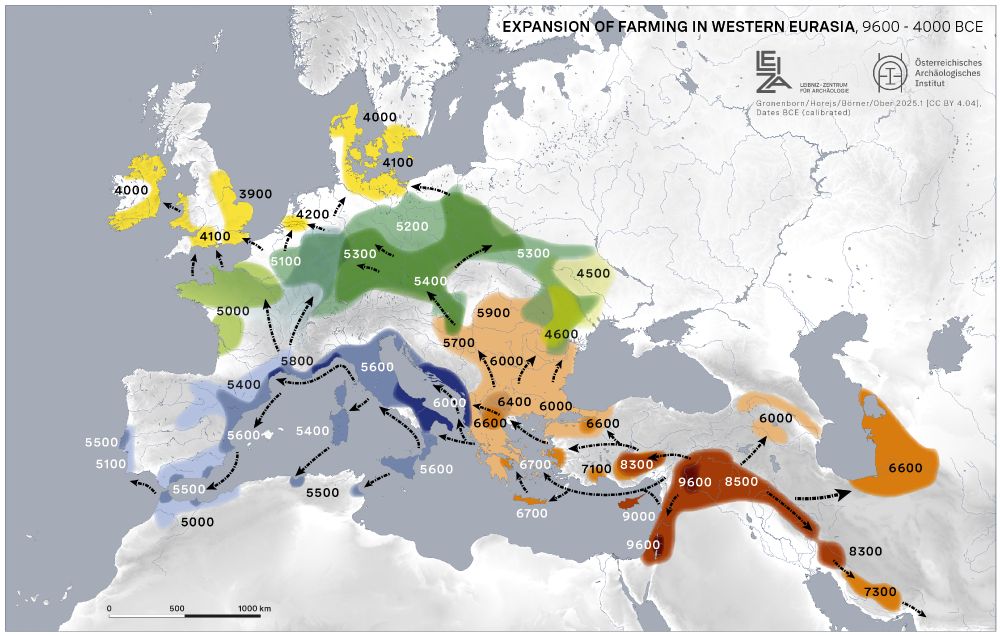
THE MAP: EXPANSION OF FARMING IN WESTERN EURASIA, 9600-4000 BCE
2025.1
Regional updates, particularly 🇺🇦. Colour and greyscale resolutions, and much asked for colour code and legend.
@barbarahorejs.bsky.social @leizarchaeology.bsky.social @oeai.bsky.social
zenodo.org/records/1688...
THE MAP: EXPANSION OF FARMING IN WESTERN EURASIA, 9600-4000 BCE
2025.1
Regional updates, particularly 🇺🇦. Colour and greyscale resolutions, and much asked for colour code and legend.
@barbarahorejs.bsky.social @leizarchaeology.bsky.social @oeai.bsky.social
zenodo.org/records/1688...
August 15, 2025 at 11:30 AM
It's out! 😀
THE MAP: EXPANSION OF FARMING IN WESTERN EURASIA, 9600-4000 BCE
2025.1
Regional updates, particularly 🇺🇦. Colour and greyscale resolutions, and much asked for colour code and legend.
@barbarahorejs.bsky.social @leizarchaeology.bsky.social @oeai.bsky.social
zenodo.org/records/1688...
THE MAP: EXPANSION OF FARMING IN WESTERN EURASIA, 9600-4000 BCE
2025.1
Regional updates, particularly 🇺🇦. Colour and greyscale resolutions, and much asked for colour code and legend.
@barbarahorejs.bsky.social @leizarchaeology.bsky.social @oeai.bsky.social
zenodo.org/records/1688...
Reposted by Benjamin Serbe

🥳 Finally out in PLOSone! ⚱️🦣 A big collaboration project led by Isabell Schmidt from Cologne University about #demography in Late #Palaeolithic Europe. This challenge to collect comparable data across different regions most of all showed the gaps in our knowledge.
journals.plos.org/plosone/arti...
journals.plos.org/plosone/arti...
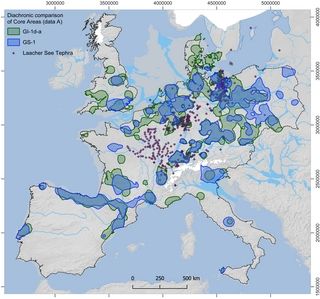
Large scale and regional demographic responses to climatic changes in Europe during the Final Palaeolithic
The European Final Palaeolithic witnessed marked changes in almost all societal domains. Despite a rich body of evidence, our knowledge of human palaeodemographic processes and regional population dyn...
journals.plos.org
April 3, 2025 at 4:46 PM
🥳 Finally out in PLOSone! ⚱️🦣 A big collaboration project led by Isabell Schmidt from Cologne University about #demography in Late #Palaeolithic Europe. This challenge to collect comparable data across different regions most of all showed the gaps in our knowledge.
journals.plos.org/plosone/arti...
journals.plos.org/plosone/arti...
Great participation in our session on AI in Archaeology at #KielScales25. Many interesting talks, projects and ideas on how to use and deal with AI and ML applications.
A really wonderful discussion why "digital literacy" is also important for archaeological research.
🏺
A really wonderful discussion why "digital literacy" is also important for archaeological research.
🏺
March 26, 2025 at 7:37 PM
Great participation in our session on AI in Archaeology at #KielScales25. Many interesting talks, projects and ideas on how to use and deal with AI and ML applications.
A really wonderful discussion why "digital literacy" is also important for archaeological research.
🏺
A really wonderful discussion why "digital literacy" is also important for archaeological research.
🏺
Reposted by Benjamin Serbe

A new philosophical-archaeological study by #ClusterROOTS members Vesa Arponen, René Ohlrau and Tim Kerig provides an analytical tool based on the #UnitedNations' #HumanDevelopmentIndex that can be applied directly to archaeological data. Read the whole story: www.uni-kiel.de/en/cluster-r...
🏺
🏺
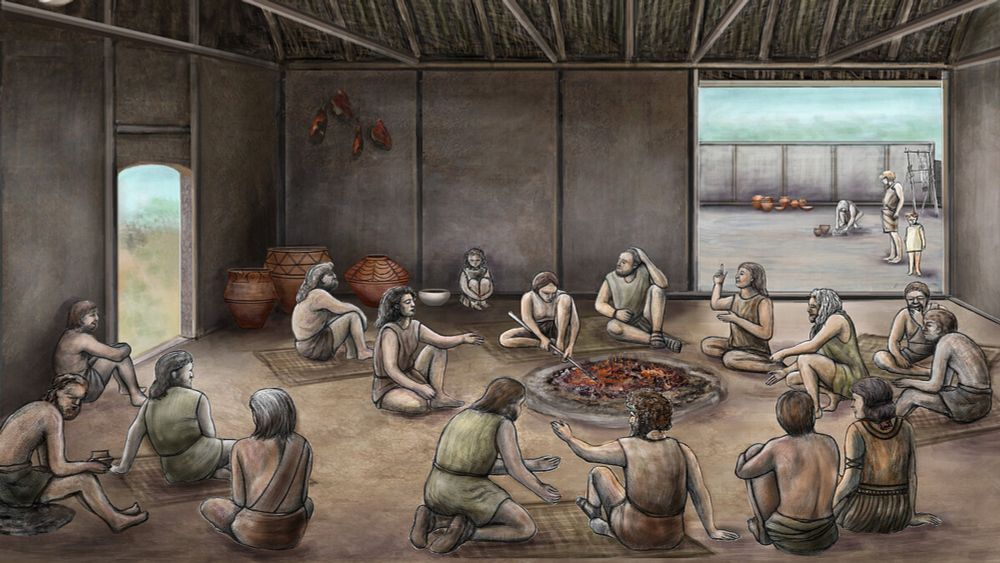
Peoples’ opportunities spur innovation 6,000 years ago
The UN’s Human Development Index provides new explanations for the success of Europe’s first mega settlements.
www.uni-kiel.de
November 29, 2024 at 10:53 AM
A new philosophical-archaeological study by #ClusterROOTS members Vesa Arponen, René Ohlrau and Tim Kerig provides an analytical tool based on the #UnitedNations' #HumanDevelopmentIndex that can be applied directly to archaeological data. Read the whole story: www.uni-kiel.de/en/cluster-r...
🏺
🏺
What is the Big Exchange Project?
The project is an international collaboration with archaeologists and network scientists to inverstigate lagre-scale exchange networks in Prehistoric Eurasia and Africa. We focus on raw materials with a distinct source which data are publically available.
1/3
The project is an international collaboration with archaeologists and network scientists to inverstigate lagre-scale exchange networks in Prehistoric Eurasia and Africa. We focus on raw materials with a distinct source which data are publically available.
1/3
November 28, 2024 at 12:14 PM
What is the Big Exchange Project?
The project is an international collaboration with archaeologists and network scientists to inverstigate lagre-scale exchange networks in Prehistoric Eurasia and Africa. We focus on raw materials with a distinct source which data are publically available.
1/3
The project is an international collaboration with archaeologists and network scientists to inverstigate lagre-scale exchange networks in Prehistoric Eurasia and Africa. We focus on raw materials with a distinct source which data are publically available.
1/3
Really productive (and a bit exhausting) day at the HESCOR Working Group Meeting at the University of Cologne today. Discussing different ideas on prehistoric networks and future directions of the Big Exchange Project. 🏺
November 27, 2024 at 10:29 PM
Really productive (and a bit exhausting) day at the HESCOR Working Group Meeting at the University of Cologne today. Discussing different ideas on prehistoric networks and future directions of the Big Exchange Project. 🏺
Reposted by Benjamin Serbe

New in IA: HS2 Phase One: Heritage GIS Digital Archive (Data paper) doi.org/10.11141/ia.... by Fred Farshid Aryankhesal
Highlighting the GIS spatial datasets from HS2 Phase One historic environment fieldwork programme & explains the technical components of the ADS datasets
Highlighting the GIS spatial datasets from HS2 Phase One historic environment fieldwork programme & explains the technical components of the ADS datasets
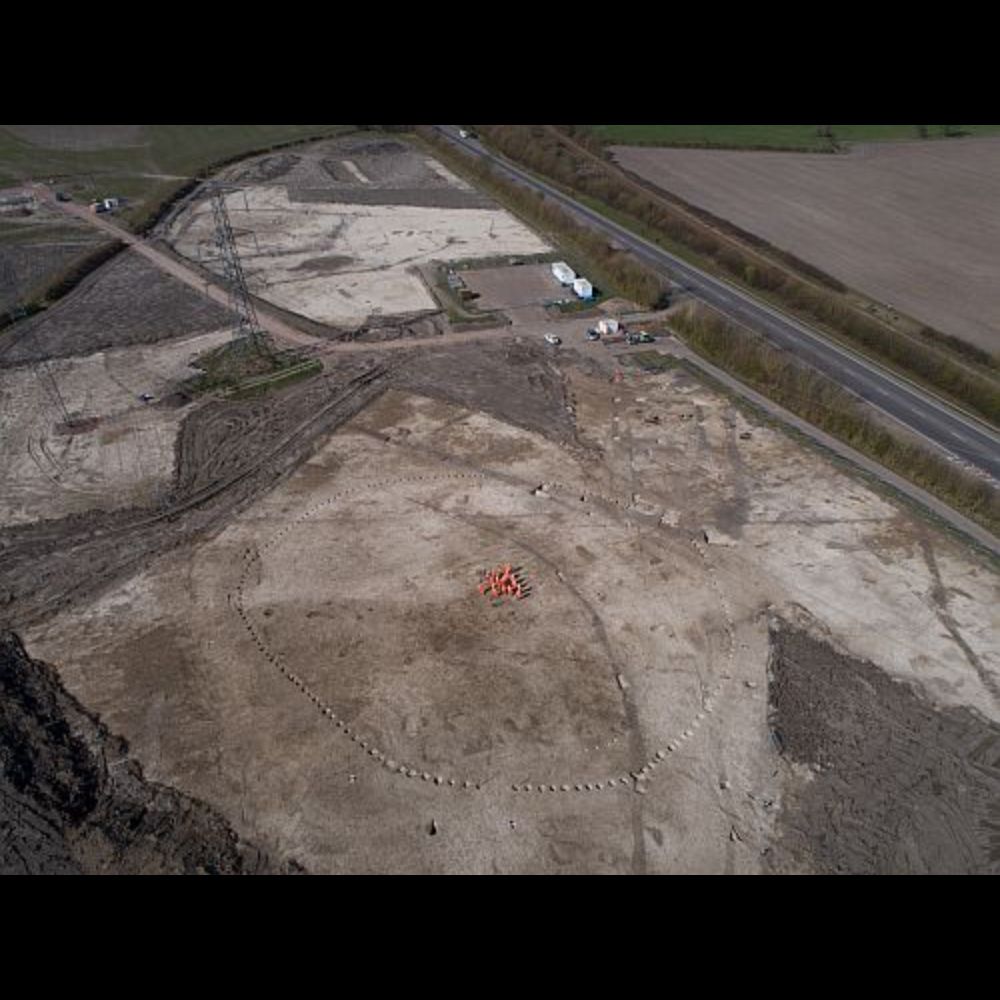
HS2 Phase One: Heritage GIS Digital Archive (Data paper)
This data paper highlights the GIS spatial datasets generated from the HS2 Phase One historic environment fieldwork programme. The paper explains the technical components of the datasets which are dep...
doi.org
October 31, 2023 at 3:36 PM
New in IA: HS2 Phase One: Heritage GIS Digital Archive (Data paper) doi.org/10.11141/ia.... by Fred Farshid Aryankhesal
Highlighting the GIS spatial datasets from HS2 Phase One historic environment fieldwork programme & explains the technical components of the ADS datasets
Highlighting the GIS spatial datasets from HS2 Phase One historic environment fieldwork programme & explains the technical components of the ADS datasets