



Beatrice Giuntoli
@beagiuntoli.bsky.social
Reposted by Beatrice Giuntoli

So happy this is out as a preprint (for) now. Since measuring ATP is tricky, we used ATP biosensors in collab with @schwarzlanderlab.bsky.social to show that in chloroplasts without PGR5, NPQ and pmf are diminished, yet ATP levels unchanged. Balancing ATP/NADPH must be achieved by different means.

Our new preprint 🚨🌱☀️on flourescent biosensing of ATP levels in chloroplasts in vivo shows disequilibrium between proton motive force and ATP levels. We show PGR5 dependent cyclic electron transfer does not augment ATP/NADPH ratios @gustaf23.bsky.social 🙌
www.biorxiv.org/cgi/content/...
www.biorxiv.org/cgi/content/...

November 12, 2025 at 7:32 PM
So happy this is out as a preprint (for) now. Since measuring ATP is tricky, we used ATP biosensors in collab with @schwarzlanderlab.bsky.social to show that in chloroplasts without PGR5, NPQ and pmf are diminished, yet ATP levels unchanged. Balancing ATP/NADPH must be achieved by different means.
Reposted by Beatrice Giuntoli

Happy to share the key part of my PhD! In our latest preprint with Salma Akter, @emilyflashman.bsky.social & @beagiuntoli.bsky.social, we show that H₂S is involved in oxygen sensing in plants!
How? Check it out!🌱✨
Many thanks to all the authors involved!
www.biorxiv.org/content/10.1...
How? Check it out!🌱✨
Many thanks to all the authors involved!
www.biorxiv.org/content/10.1...

Hydrogen sulfide modulates plant hypoxic responses through the persulfidation of Plant Cysteine Oxidases
Hydrogen sulfide (H₂S) is a gaseous molecule historically regarded as toxic. Nevertheless, increasing evidence has brought to light important physiological roles in both animals and plants. In plants,...
www.biorxiv.org
November 11, 2025 at 5:23 PM
Happy to share the key part of my PhD! In our latest preprint with Salma Akter, @emilyflashman.bsky.social & @beagiuntoli.bsky.social, we show that H₂S is involved in oxygen sensing in plants!
How? Check it out!🌱✨
Many thanks to all the authors involved!
www.biorxiv.org/content/10.1...
How? Check it out!🌱✨
Many thanks to all the authors involved!
www.biorxiv.org/content/10.1...
Reposted by Beatrice Giuntoli
Merry Christmas and enjoy enjoy our focus issue in @plantphys.bsky.social! 🎄🌊 #plantscience

December 25, 2024 at 10:32 AM
Merry Christmas and enjoy enjoy our focus issue in @plantphys.bsky.social! 🎄🌊 #plantscience
Reposted by Beatrice Giuntoli

With this news in mind, I am happy to announce we are recruiting a postdoc or PhD student with expertise in Plant Microbiology. Come join us in sunny Freiburg ! Please share far and wide, thank you, and happy holidays! 🌲
#plantscience #phd
www.hartman-plantlab.com/post/we-re-r...
#plantscience #phd
www.hartman-plantlab.com/post/we-re-r...
December 20, 2024 at 12:28 PM
With this news in mind, I am happy to announce we are recruiting a postdoc or PhD student with expertise in Plant Microbiology. Come join us in sunny Freiburg ! Please share far and wide, thank you, and happy holidays! 🌲
#plantscience #phd
www.hartman-plantlab.com/post/we-re-r...
#plantscience #phd
www.hartman-plantlab.com/post/we-re-r...
Reposted by Beatrice Giuntoli


Reposted by Beatrice Giuntoli


Reposted by Beatrice Giuntoli

The New Phytologist “next generation scientists 2025” meeting will be held at the University of Birmingham, 4th-7th August 🌱🌳 This is a free event aimed at early career plant scientists. For details of the meeting, eligibility, and how to apply, click here : www.newphytologist.org/nextgenevent...
Next generation scientists 2025
www.newphytologist.org
December 19, 2024 at 2:59 PM
The New Phytologist “next generation scientists 2025” meeting will be held at the University of Birmingham, 4th-7th August 🌱🌳 This is a free event aimed at early career plant scientists. For details of the meeting, eligibility, and how to apply, click here : www.newphytologist.org/nextgenevent...
Reposted by Beatrice Giuntoli
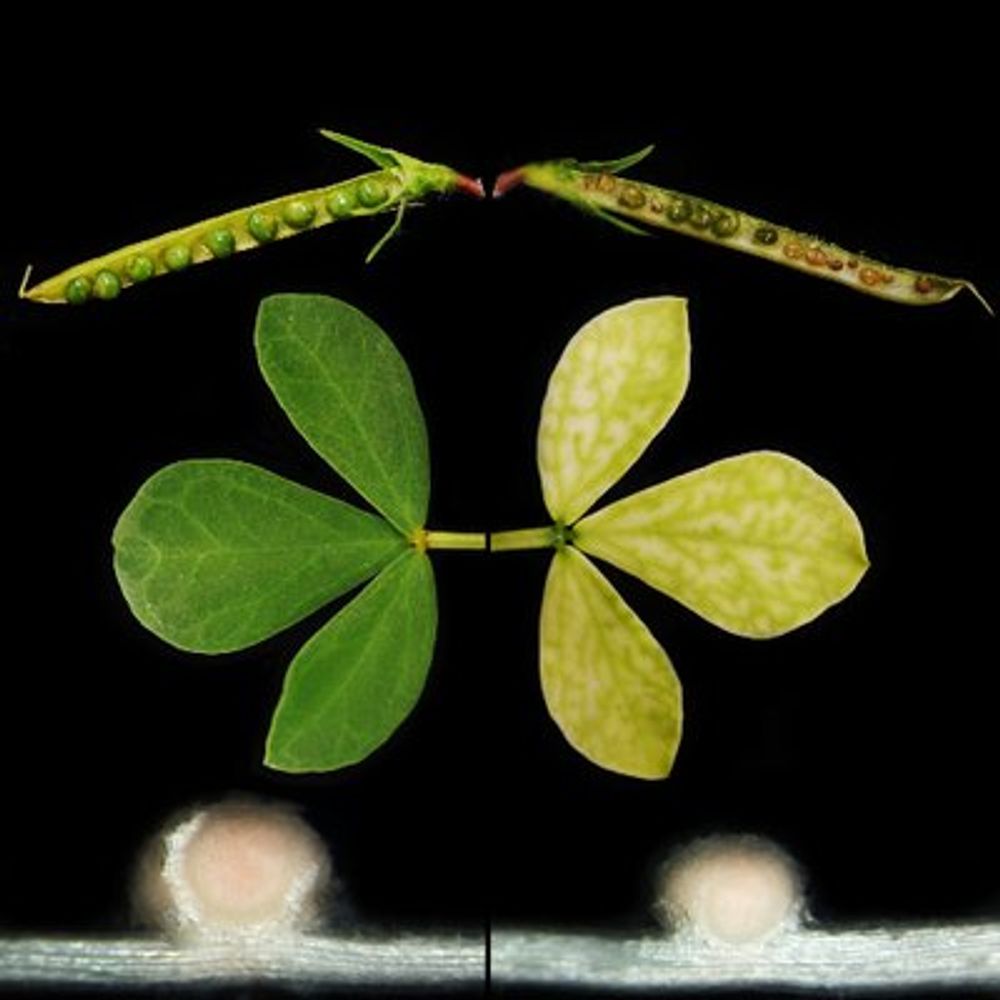
The January 2025 Focus Issue of Plant Physiology spotlights research on hypoxia in plants
Join us on Tuesday January 28 for a free webinar exploring the topic of hypoxia in plants. 👉
Join us on Tuesday January 28 for a free webinar exploring the topic of hypoxia in plants. 👉

January 28: Plant Physiology webinar, Hypoxia and Plants | Plant Science Today
Celebrating the January 2025 Focus Issue on Hypoxia and Plants Tuesday, January 28, 2025 7 AM EDT | Noon UTC | 1 PM CET | 9 PM Tokyo | About This Webinar The January 2025 Focus Issue of Plant…
buff.ly
December 17, 2024 at 5:07 PM
The January 2025 Focus Issue of Plant Physiology spotlights research on hypoxia in plants
Join us on Tuesday January 28 for a free webinar exploring the topic of hypoxia in plants. 👉
Join us on Tuesday January 28 for a free webinar exploring the topic of hypoxia in plants. 👉
Reposted by Beatrice Giuntoli

A postdoctoral position is available in the team of Gwyneth Ingram @rdplab.bsky.social as part of a collaborative project with our group @ibmp-cnrs.bsky.social
#plantscience
#plantscience

December 16, 2024 at 5:10 PM
A postdoctoral position is available in the team of Gwyneth Ingram @rdplab.bsky.social as part of a collaborative project with our group @ibmp-cnrs.bsky.social
#plantscience
#plantscience
Reposted by Beatrice Giuntoli
Please RT: We’re hiring a PhD and a Postdoc to explore the exciting intersection of microprotein biology, bioengineering, and flower development. 🌺
Apply now: resydeproject.org
Deadline: Jan 31
#PhDPosition #PostdocPosition #PlantScience #ComputationalBiology #Microproteins #ERC #RESYDE
Apply now: resydeproject.org
Deadline: Jan 31
#PhDPosition #PostdocPosition #PlantScience #ComputationalBiology #Microproteins #ERC #RESYDE
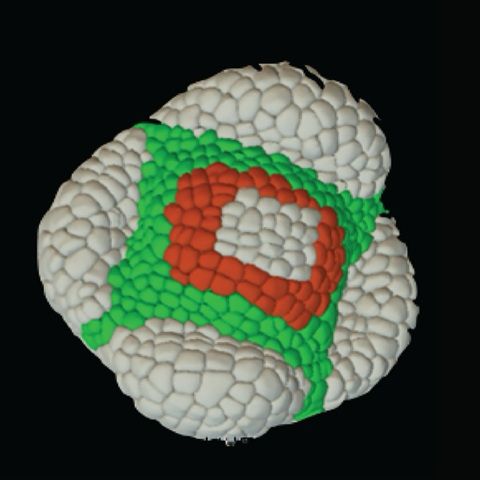
Home -
RESYDE: Collaboration between Humboldt-Universität zu Berlin, University of Sydney, Sainsbury Laboratory, University of Cambridge, and Umeå University.
eur01.safelinks.protection.outlook.com
December 17, 2024 at 7:24 AM
Please RT: We’re hiring a PhD and a Postdoc to explore the exciting intersection of microprotein biology, bioengineering, and flower development. 🌺
Apply now: resydeproject.org
Deadline: Jan 31
#PhDPosition #PostdocPosition #PlantScience #ComputationalBiology #Microproteins #ERC #RESYDE
Apply now: resydeproject.org
Deadline: Jan 31
#PhDPosition #PostdocPosition #PlantScience #ComputationalBiology #Microproteins #ERC #RESYDE
Reposted by Beatrice Giuntoli

Very interesting review that chimes with a lot of our thinking (and some of our current experimental directions) on N-degron pathway components portlandpress.com/biochemj/art...

Ubiquitin E3 ligases in the plant Arg/N-degron pathway
Regulation of protein longevity via the ubiquitin (Ub) — proteasome pathway is fundamental to eukaryotic biology. Ubiquitin E3 ligases (E3s) interact with substrate proteins and provide specificity to...
portlandpress.com
December 16, 2024 at 3:23 PM
Very interesting review that chimes with a lot of our thinking (and some of our current experimental directions) on N-degron pathway components portlandpress.com/biochemj/art...
Reposted by Beatrice Giuntoli
Preprint alert, please share!!
With our new study, we engineered an orthogonal hypoxia-responsive system in plants inspired by mammalian HIF protein degradation. We demonstrated that this system could control protein stability and activity, enabling modulation of Oxygen sensing outputs. Here's how:
With our new study, we engineered an orthogonal hypoxia-responsive system in plants inspired by mammalian HIF protein degradation. We demonstrated that this system could control protein stability and activity, enabling modulation of Oxygen sensing outputs. Here's how:
December 15, 2024 at 5:46 PM
Preprint alert, please share!!
With our new study, we engineered an orthogonal hypoxia-responsive system in plants inspired by mammalian HIF protein degradation. We demonstrated that this system could control protein stability and activity, enabling modulation of Oxygen sensing outputs. Here's how:
With our new study, we engineered an orthogonal hypoxia-responsive system in plants inspired by mammalian HIF protein degradation. We demonstrated that this system could control protein stability and activity, enabling modulation of Oxygen sensing outputs. Here's how: