



Anna Burnett
@annatep.bsky.social
Trainee Educational Psychologist in third year of training at the University of Southampton
Reposted by Anna Burnett
This sounds brilliant and it must have been such a relief to have an Ofsted inspector that understood
www.theguardian.com/education/20...
www.theguardian.com/education/20...
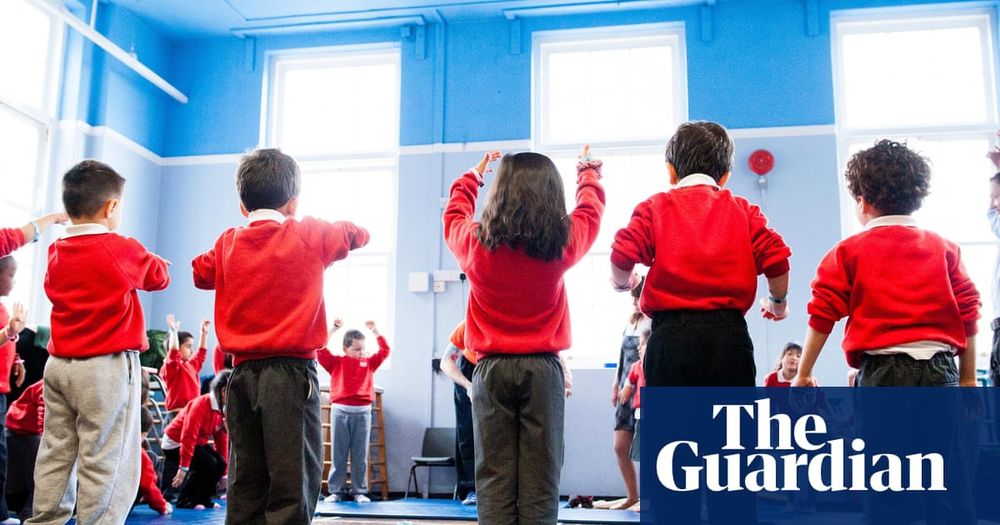
‘The impact has been profound’: the headteacher bringing play back to the classroom
Tina Farr has put play-based learning at the heart of lessons at her Oxford primary – with ‘phenomenal’ results
www.theguardian.com
June 13, 2025 at 6:17 AM
This sounds brilliant and it must have been such a relief to have an Ofsted inspector that understood
www.theguardian.com/education/20...
www.theguardian.com/education/20...
Here's a link to the pre-publication version of Henry Wood-Downie and my recently published article exploring school belonging and permanent exclusion for Caribbean Heritage boys: blog.soton.ac.uk/edpsych/2024...
Would love to hear your thoughts 😀
Would love to hear your thoughts 😀
An Exploration of Intersectionality and School Belonging in the Permanent Exclusion of Black Caribbean Boys in Schools in England: Implications for Educational Psychologists (2024) | University of So...
blog.soton.ac.uk
December 16, 2024 at 11:06 AM
Here's a link to the pre-publication version of Henry Wood-Downie and my recently published article exploring school belonging and permanent exclusion for Caribbean Heritage boys: blog.soton.ac.uk/edpsych/2024...
Would love to hear your thoughts 😀
Would love to hear your thoughts 😀
Excited to share my recently published article exploring school belonging in the permanent exclusion of Black Caribbean Boys in Schools in England: explore.bps.org.uk/content/bpse...
With huge thanks to my co-author Henry Wood-Downie. I'd love to hear your thoughts 😀
#EdPsychs #twitterEPs
With huge thanks to my co-author Henry Wood-Downie. I'd love to hear your thoughts 😀
#EdPsychs #twitterEPs

An exploration of intersectionality and school belonging in the permanent exclusion of Black Caribbean boys in schools in England: Implications for Educational Psychologists
AimsDisproportionately high exclusion rates of Black Caribbean Boys (BCBs) in England are considered from a school belonging perspective, particularly as mediated through teacher relations. The vulnerabilities of this group are considered, with intersectionality suggested as a critical concept.Method/RationaleBCBs are permanently excluded from schools in England at a rate three times higher than the general population. Permanent exclusion has been linked to a range of negative personal and socio-economic consequences, highlighting the need to address this disparity. School belonging mediates negative peer and parental influences and may be linked to school exclusion for some groups. Literature is reviewed considering belonging, linking belonginess threats to both pro-social and anti-social behaviour. The multi-dimensional nature of school belonging is noted. School belonging literature is reviewed, establishing the vital importance of teacher relationships. Evidence regarding BCB’s relationships with their teachers, often characterised by low expectations, differential treatment and racial bias, is considered.FindingsIt is argued that these negative relational influences constitute belonginess threats for BCBs. It is hypothesised that these, along with increased belongingness sensitivity amongst some BCBs, can drive increased anti-social behaviour, in some cases leading to school exclusion.LimitationsThis is a theoretical paper and further empirical research is needed into what constitutes school belonging for BCBs, whose lives are often impacted by various intersecting inequalities.ConclusionsInitiatives aiming to increase school belonging amongst BCBs, by improving their relationships with teachers, are suggested as a way of decreasing exclusions. A role for Educational Psychologists in supporting schools with evidence-based approaches to enhancing school belonging for this group is suggested.
explore.bps.org.uk
December 16, 2024 at 11:04 AM
Excited to share my recently published article exploring school belonging in the permanent exclusion of Black Caribbean Boys in Schools in England: explore.bps.org.uk/content/bpse...
With huge thanks to my co-author Henry Wood-Downie. I'd love to hear your thoughts 😀
#EdPsychs #twitterEPs
With huge thanks to my co-author Henry Wood-Downie. I'd love to hear your thoughts 😀
#EdPsychs #twitterEPs