



Alex Mendelsohn, PhD
@alexmendelsohn.bsky.social
Physicist who writes about the psychiatric system. Currently in long-term recovery from generalised anxiety disorder.
The Psychiatric Multiverse: https://psychiatricmultiverse.substack.com/
The Psychiatric Multiverse: https://psychiatricmultiverse.substack.com/
The claim is that the brain processes colour more quickly than it processes words.
The Stroop effect shows it is probably not as simple as that. For readers proficient in a language, word recognition becomes so quick, it interferes with colour recognition.
28/n
The Stroop effect shows it is probably not as simple as that. For readers proficient in a language, word recognition becomes so quick, it interferes with colour recognition.
28/n

May 7, 2025 at 8:58 PM
The claim is that the brain processes colour more quickly than it processes words.
The Stroop effect shows it is probably not as simple as that. For readers proficient in a language, word recognition becomes so quick, it interferes with colour recognition.
28/n
The Stroop effect shows it is probably not as simple as that. For readers proficient in a language, word recognition becomes so quick, it interferes with colour recognition.
28/n
Okay okay okay Alex. I hear the dedicated people who have read this far…
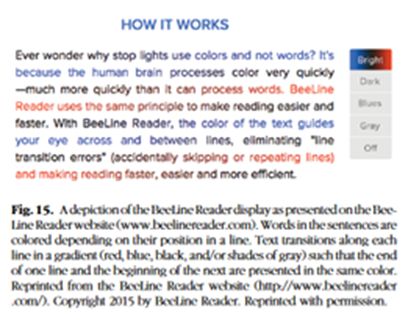
What about gradient colour text tech? Which helps guide vision to the next line (return sweeps). Surely there is nothing problematic with that??
Wellllll… ❌ish
27/n
What about gradient colour text tech? Which helps guide vision to the next line (return sweeps). Surely there is nothing problematic with that??
Wellllll… ❌ish
27/n
May 7, 2025 at 8:58 PM
Okay okay okay Alex. I hear the dedicated people who have read this far…
What about gradient colour text tech? Which helps guide vision to the next line (return sweeps). Surely there is nothing problematic with that??
Wellllll… ❌ish
27/n
What about gradient colour text tech? Which helps guide vision to the next line (return sweeps). Surely there is nothing problematic with that??
Wellllll… ❌ish
27/n
This was shown in the trailing mask paradigm.
As readers read “garden path” sentences (start out ambiguously e.g. “The desert trains… [1]…boys to be men [2]…are hot and dusty), a trail of x’s replaces the previously read word.
25/n (TBC below - ran out of thread!)
As readers read “garden path” sentences (start out ambiguously e.g. “The desert trains… [1]…boys to be men [2]…are hot and dusty), a trail of x’s replaces the previously read word.
25/n (TBC below - ran out of thread!)

May 7, 2025 at 8:53 PM
This was shown in the trailing mask paradigm.
As readers read “garden path” sentences (start out ambiguously e.g. “The desert trains… [1]…boys to be men [2]…are hot and dusty), a trail of x’s replaces the previously read word.
25/n (TBC below - ran out of thread!)
As readers read “garden path” sentences (start out ambiguously e.g. “The desert trains… [1]…boys to be men [2]…are hot and dusty), a trail of x’s replaces the previously read word.
25/n (TBC below - ran out of thread!)
The boundary paradigm uses an invisible boundary next to a “preview” or “target” word. The preview word is a non-word; the target word is a normal one.
In the non-word case, as the reader saccades across the invisible boundary, the computer changes it to the normal word (readers unaware).
22/n
In the non-word case, as the reader saccades across the invisible boundary, the computer changes it to the normal word (readers unaware).
22/n

May 7, 2025 at 8:53 PM
The boundary paradigm uses an invisible boundary next to a “preview” or “target” word. The preview word is a non-word; the target word is a normal one.
In the non-word case, as the reader saccades across the invisible boundary, the computer changes it to the normal word (readers unaware).
22/n
In the non-word case, as the reader saccades across the invisible boundary, the computer changes it to the normal word (readers unaware).
22/n
In natural reading, the loss is even smaller. This is likely because of parafoveal preview benefit. The second problem with RSVP.
Despite parafoveal vision being blurrier, it has been shown that the brain can preprocess upcoming words in a sentence…
21/n
Despite parafoveal vision being blurrier, it has been shown that the brain can preprocess upcoming words in a sentence…
21/n

May 7, 2025 at 8:53 PM
In natural reading, the loss is even smaller. This is likely because of parafoveal preview benefit. The second problem with RSVP.
Despite parafoveal vision being blurrier, it has been shown that the brain can preprocess upcoming words in a sentence…
21/n
Despite parafoveal vision being blurrier, it has been shown that the brain can preprocess upcoming words in a sentence…
21/n
Okay, so how about we turn to tech and remove the saccades completely?
What about using rapid-serial-visual-presentation (RSVP) apps, that will display one word at a time?
Sorry to disappoint, but again, probs a No ❌
For many reasons…
18/n
What about using rapid-serial-visual-presentation (RSVP) apps, that will display one word at a time?
Sorry to disappoint, but again, probs a No ❌
For many reasons…
18/n

May 7, 2025 at 8:53 PM
Okay, so how about we turn to tech and remove the saccades completely?
What about using rapid-serial-visual-presentation (RSVP) apps, that will display one word at a time?
Sorry to disappoint, but again, probs a No ❌
For many reasons…
18/n
What about using rapid-serial-visual-presentation (RSVP) apps, that will display one word at a time?
Sorry to disappoint, but again, probs a No ❌
For many reasons…
18/n
In the “gaze contingent moving window paradigm” experiments, readers looked at a line of text.
However, most of the text was obscured as “x’s” apart from a window digitally made around a reader’s fixation point (tracked using a camera).
As the reader moved their eyes, so did the window…
10/n
However, most of the text was obscured as “x’s” apart from a window digitally made around a reader’s fixation point (tracked using a camera).
As the reader moved their eyes, so did the window…
10/n

May 7, 2025 at 8:53 PM
In the “gaze contingent moving window paradigm” experiments, readers looked at a line of text.
However, most of the text was obscured as “x’s” apart from a window digitally made around a reader’s fixation point (tracked using a camera).
As the reader moved their eyes, so did the window…
10/n
However, most of the text was obscured as “x’s” apart from a window digitally made around a reader’s fixation point (tracked using a camera).
As the reader moved their eyes, so did the window…
10/n
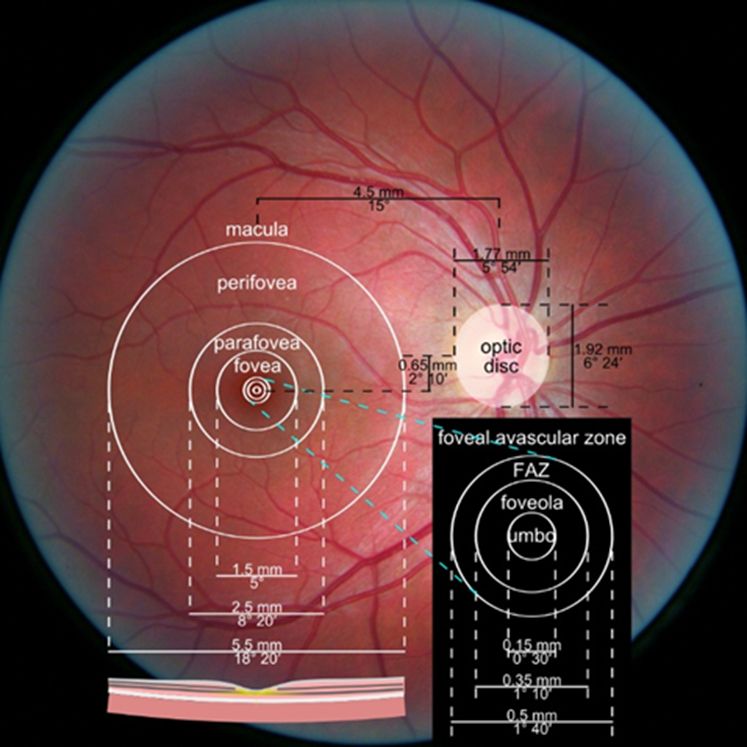
The angular region in which your vision is clearest is only 1 degree each side of the fixation (this area is approx. equivalent to holding your thumb out at arm’s length).
The visual acuity drops off moderately over next 4 degrees (parafovea), then dramatically after this (periphery).
8/n
The visual acuity drops off moderately over next 4 degrees (parafovea), then dramatically after this (periphery).
8/n
May 7, 2025 at 8:53 PM
The angular region in which your vision is clearest is only 1 degree each side of the fixation (this area is approx. equivalent to holding your thumb out at arm’s length).
The visual acuity drops off moderately over next 4 degrees (parafovea), then dramatically after this (periphery).
8/n
The visual acuity drops off moderately over next 4 degrees (parafovea), then dramatically after this (periphery).
8/n
Cone neural receptors sharply decrease in density as you enter the parafovea (ring surrounding centre).
Rod neural receptors, are sensitive only to brightness and are concentrated in the parafovea, decreasing slowly the further out you go.
7/n
Rod neural receptors, are sensitive only to brightness and are concentrated in the parafovea, decreasing slowly the further out you go.
7/n

May 7, 2025 at 8:53 PM
Cone neural receptors sharply decrease in density as you enter the parafovea (ring surrounding centre).
Rod neural receptors, are sensitive only to brightness and are concentrated in the parafovea, decreasing slowly the further out you go.
7/n
Rod neural receptors, are sensitive only to brightness and are concentrated in the parafovea, decreasing slowly the further out you go.
7/n
How do we read then?
To state the obvious… one word at a time (mostly).
Your eyes will “fixate” on a point in one word, then move quickly in a jump (saccade) to the next word (if the word is long, your eyes will fix on a location further down the same word).
5/n
To state the obvious… one word at a time (mostly).
Your eyes will “fixate” on a point in one word, then move quickly in a jump (saccade) to the next word (if the word is long, your eyes will fix on a location further down the same word).
5/n

May 7, 2025 at 8:53 PM
How do we read then?
To state the obvious… one word at a time (mostly).
Your eyes will “fixate” on a point in one word, then move quickly in a jump (saccade) to the next word (if the word is long, your eyes will fix on a location further down the same word).
5/n
To state the obvious… one word at a time (mostly).
Your eyes will “fixate” on a point in one word, then move quickly in a jump (saccade) to the next word (if the word is long, your eyes will fix on a location further down the same word).
5/n
Grammarly seemed to be in on the joke too...

January 11, 2025 at 6:11 PM
Grammarly seemed to be in on the joke too...
Chicken chicken chicken chicken chicken chicken chicken chicken chicken chicken chicken 2, 4, 8 & 16 chickens.
16 chickens!!!
chicken chicken chicken chicken chicken chicken...
16 chickens!!!
chicken chicken chicken chicken chicken chicken...

January 10, 2025 at 4:11 PM
Chicken chicken chicken chicken chicken chicken chicken chicken chicken chicken chicken 2, 4, 8 & 16 chickens.
16 chickens!!!
chicken chicken chicken chicken chicken chicken...
16 chickens!!!
chicken chicken chicken chicken chicken chicken...
Finally, take everything I've just said with a pinch of salt.
Social Science examines the most complex systems (interacting neural networks) with almost none of the tools available to the hard sciences.
I'll leave you with this infographic with an accidental placeholder no one removed.
Social Science examines the most complex systems (interacting neural networks) with almost none of the tools available to the hard sciences.
I'll leave you with this infographic with an accidental placeholder no one removed.

December 18, 2024 at 2:16 PM
Finally, take everything I've just said with a pinch of salt.
Social Science examines the most complex systems (interacting neural networks) with almost none of the tools available to the hard sciences.
I'll leave you with this infographic with an accidental placeholder no one removed.
Social Science examines the most complex systems (interacting neural networks) with almost none of the tools available to the hard sciences.
I'll leave you with this infographic with an accidental placeholder no one removed.
They found that "The transient changes in the moisture content in the bread and chicken were predicted and shown to be significantly affected by the air gap between the bread and chicken"
They even took MRI images of the moisture transfer...
They even took MRI images of the moisture transfer...

December 13, 2024 at 10:54 AM
They found that "The transient changes in the moisture content in the bread and chicken were predicted and shown to be significantly affected by the air gap between the bread and chicken"
They even took MRI images of the moisture transfer...
They even took MRI images of the moisture transfer...
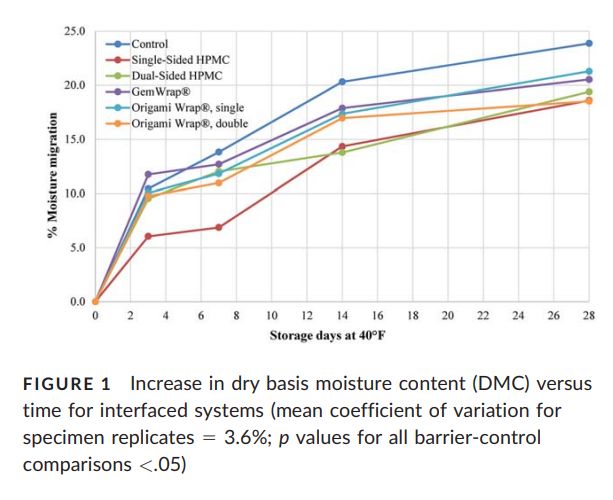
At 28 days they found that the protein based Origami Wrap film barrier "Significantly reduced moisture-induced softening" Importantly for Kemi, they found that increasing the number of layers of protein based barriers reduced moisture content further...
December 13, 2024 at 10:54 AM
At 28 days they found that the protein based Origami Wrap film barrier "Significantly reduced moisture-induced softening" Importantly for Kemi, they found that increasing the number of layers of protein based barriers reduced moisture content further...
...either you can set up deck.blue using another app password, then create a new column (plus sign bottom left of screen) using the list you have just made...
6/7
6/7

November 29, 2024 at 5:21 PM
...either you can set up deck.blue using another app password, then create a new column (plus sign bottom left of screen) using the list you have just made...
6/7
6/7