




AA (Adjie) Pratama
@adjiep.bsky.social
Joint-Postdoc in Küsel_lab, UniJena and Sullivan_lab, OhioState | alum UniGroningen| #firstgenphd | he/him/his 🏳️🌈| I study viruses
https://www.aadjiepratama.com
https://www.aadjiepratama.com
Pinned

Hidden viral players: Diversity and ecological roles of viruses in groundwater microbiomes
Groundwater ecosystems harbor diverse microbial communities adapted to energy-limited, light-deprived conditions, yet the role of viruses in these environments remains poorly understood. Here, we anal...
www.biorxiv.org
“Hidden viral players: Diversity and ecological roles of viruses in groundwater Microbiomes”
We uncover how viruses shape groundwater microbial communities and ecosystem function.
www.biorxiv.org/content/10.1...
We uncover how viruses shape groundwater microbial communities and ecosystem function.
www.biorxiv.org/content/10.1...
Reposted by AA (Adjie) Pratama

Very interesting strategy to sense infection!
Bacteria can sense when a virus starts shredding their genome — by detecting methylated mononucleotides.
Here’s the story of how we discovered the Metis defense system 👇
www.biorxiv.org/content/10.1...
Here’s the story of how we discovered the Metis defense system 👇
www.biorxiv.org/content/10.1...

November 6, 2025 at 7:39 AM
Very interesting strategy to sense infection!
Reposted by AA (Adjie) Pratama

The average nucleotide identity (ANI) underpins how we map microbial diversity, compare species, and connect genomes to ecology.
I wrote a short piece reflecting on the discovery and significance of this metric (and really enjoyed digging into the context and story behind it!) #microsky 🧬
I wrote a short piece reflecting on the discovery and significance of this metric (and really enjoyed digging into the context and story behind it!) #microsky 🧬
Average nucleotide identity — the backbone of modern ecological genomics - Nature Reviews Genetics
In this Journal Club, Luis Orellana recalls a 2005 publication by Konstantinidis and Tiedje that introduced average nucleotide identity as a sequence-based metric to determine the relatedness between ...
www.nature.com
October 30, 2025 at 9:11 PM
The average nucleotide identity (ANI) underpins how we map microbial diversity, compare species, and connect genomes to ecology.
I wrote a short piece reflecting on the discovery and significance of this metric (and really enjoyed digging into the context and story behind it!) #microsky 🧬
I wrote a short piece reflecting on the discovery and significance of this metric (and really enjoyed digging into the context and story behind it!) #microsky 🧬
Reposted by AA (Adjie) Pratama

Building inclusive microbial communities 🌍
@adjiep.bsky.social (@kuesellab.bsky.social, @uni-jena.de & Sullivan Lab) shares how mentorship & representation can shape a more inclusive future in microbial sciences.
🎤 Meet him at the #ISME Early Career Researchers event on 21 Oct: lnkd.in/dXeyvnZK
@adjiep.bsky.social (@kuesellab.bsky.social, @uni-jena.de & Sullivan Lab) shares how mentorship & representation can shape a more inclusive future in microbial sciences.
🎤 Meet him at the #ISME Early Career Researchers event on 21 Oct: lnkd.in/dXeyvnZK


October 17, 2025 at 8:50 AM
Building inclusive microbial communities 🌍
@adjiep.bsky.social (@kuesellab.bsky.social, @uni-jena.de & Sullivan Lab) shares how mentorship & representation can shape a more inclusive future in microbial sciences.
🎤 Meet him at the #ISME Early Career Researchers event on 21 Oct: lnkd.in/dXeyvnZK
@adjiep.bsky.social (@kuesellab.bsky.social, @uni-jena.de & Sullivan Lab) shares how mentorship & representation can shape a more inclusive future in microbial sciences.
🎤 Meet him at the #ISME Early Career Researchers event on 21 Oct: lnkd.in/dXeyvnZK
Reposted by AA (Adjie) Pratama

Reposted by AA (Adjie) Pratama

Reposted by AA (Adjie) Pratama

Very excited to share the latest work from our lab, which was published today in Nature!
nature.com/articles/s41...
PhD graduate and now post-doc Sofia Dahlman, along with co-senior author Sam Forster from The Hudson and other researchers from our lab and others.
nature.com/articles/s41...
PhD graduate and now post-doc Sofia Dahlman, along with co-senior author Sam Forster from The Hudson and other researchers from our lab and others.

Isolation, engineering and ecology of temperate phages from the human gut - Nature
Human host-associated cellular products may act as induction agents for bacteriophages.
nature.com
October 15, 2025 at 9:41 PM
Very excited to share the latest work from our lab, which was published today in Nature!
nature.com/articles/s41...
PhD graduate and now post-doc Sofia Dahlman, along with co-senior author Sam Forster from The Hudson and other researchers from our lab and others.
nature.com/articles/s41...
PhD graduate and now post-doc Sofia Dahlman, along with co-senior author Sam Forster from The Hudson and other researchers from our lab and others.
Reposted by AA (Adjie) Pratama

📸 ISME is calling all microbial ecologists!
Send us your best photos & videos—lab, field, or under the microscope.
Winners will be featured on journal covers or on ISME promotional materials!
Deadline: 11 November 2025
Details 👉 isme-microbes.org/call-for-mic...
#MicrobialEcology
Send us your best photos & videos—lab, field, or under the microscope.
Winners will be featured on journal covers or on ISME promotional materials!
Deadline: 11 November 2025
Details 👉 isme-microbes.org/call-for-mic...
#MicrobialEcology

October 14, 2025 at 3:42 PM
📸 ISME is calling all microbial ecologists!
Send us your best photos & videos—lab, field, or under the microscope.
Winners will be featured on journal covers or on ISME promotional materials!
Deadline: 11 November 2025
Details 👉 isme-microbes.org/call-for-mic...
#MicrobialEcology
Send us your best photos & videos—lab, field, or under the microscope.
Winners will be featured on journal covers or on ISME promotional materials!
Deadline: 11 November 2025
Details 👉 isme-microbes.org/call-for-mic...
#MicrobialEcology
Reposted by AA (Adjie) Pratama

Fascinating preprint. I've always been curious about genome stability of phages.
🧫🦠
🧫🦠
Phages evolve fast, or do they?
In oysters, some stay identical for years.
With >1,200 phages & 600 Vibrio genomes, we reveal long-term stability and new mobile elements.
Proud of this collaborative work across our teams (Roscoff-UdeM and @epcrocha.bsky.social www.biorxiv.org/cgi/content/...
In oysters, some stay identical for years.
With >1,200 phages & 600 Vibrio genomes, we reveal long-term stability and new mobile elements.
Proud of this collaborative work across our teams (Roscoff-UdeM and @epcrocha.bsky.social www.biorxiv.org/cgi/content/...

Ecological constraints foster both extreme viral-host lineage stability and mobile element diversity in a marine community
Phages are typically viewed as very rapidly evolving biological entities. Little is known, however, about whether and how phages can establish long-term genetic stability. We addressed this eco-evolut...
www.biorxiv.org
October 13, 2025 at 7:23 AM
Fascinating preprint. I've always been curious about genome stability of phages.
🧫🦠
🧫🦠
Reposted by AA (Adjie) Pratama

Reposted by AA (Adjie) Pratama

The Metagraph paper is out in Nature; it showed up in my feeds today! Congratulations to Mikhail Karasikov, @gxxxr.bsky.social, @akkah21.bsky.social and all of the other authors (whom I'd love to follow on Bluesky if I can find you ;P) www.nature.com/articles/s41...

Efficient and accurate search in petabase-scale sequence repositories - Nature
MetaGraph enables scalable indexing of large sets of DNA, RNA or protein sequences using annotated de Bruijn graphs.
www.nature.com
October 9, 2025 at 2:40 PM
The Metagraph paper is out in Nature; it showed up in my feeds today! Congratulations to Mikhail Karasikov, @gxxxr.bsky.social, @akkah21.bsky.social and all of the other authors (whom I'd love to follow on Bluesky if I can find you ;P) www.nature.com/articles/s41...
Reposted by AA (Adjie) Pratama
The Viral AlphaFold Database of monomers and homodimers reveals conserved protein folds in viruses of bacteria, archaea, and eukaryotes www.science.org/doi/full/10.... #jcampubs

The Viral AlphaFold Database of monomers and homodimers reveals conserved protein folds in viruses of bacteria, archaea, and eukaryotes
VAD is a Viral AlphaFold Database of protein monomers and homodimers from viruses infecting hosts across the tree of life.
www.science.org
October 2, 2025 at 2:47 PM
The Viral AlphaFold Database of monomers and homodimers reveals conserved protein folds in viruses of bacteria, archaea, and eukaryotes www.science.org/doi/full/10.... #jcampubs
Reposted by AA (Adjie) Pratama

Had a great time yesterday with Konstantinos Kormas (@kkormas.bsky.social), Irene Ramirez Hernandez & Akbar Adjie Pratama (@adjiep.bsky.social) at the professional pathway lunch, part of @mikrobiokosmos.bsky.social.
Thanks to @isme-microbes.bsky.social for making it possible!
#mbkceesme2025
Thanks to @isme-microbes.bsky.social for making it possible!
#mbkceesme2025

September 24, 2025 at 7:31 AM
Had a great time yesterday with Konstantinos Kormas (@kkormas.bsky.social), Irene Ramirez Hernandez & Akbar Adjie Pratama (@adjiep.bsky.social) at the professional pathway lunch, part of @mikrobiokosmos.bsky.social.
Thanks to @isme-microbes.bsky.social for making it possible!
#mbkceesme2025
Thanks to @isme-microbes.bsky.social for making it possible!
#mbkceesme2025
Reposted by AA (Adjie) Pratama
In this new series, ISME would like to introduce the members of the Early Career Scientist Committee to you, starting with Chair Burak Avcı.
Find out more at isme-microbes.org/meet-ecsc-bu...
Find out more at isme-microbes.org/meet-ecsc-bu...

September 3, 2025 at 6:02 PM
In this new series, ISME would like to introduce the members of the Early Career Scientist Committee to you, starting with Chair Burak Avcı.
Find out more at isme-microbes.org/meet-ecsc-bu...
Find out more at isme-microbes.org/meet-ecsc-bu...
Reposted by AA (Adjie) Pratama
Ann Gregory, Co-Chair of the ISME Early Career Scientist Committee, introduces herself and her work on viruses to the ISME community.
Find out more at isme-microbes.org/meet-ecsc-an...
Find out more at isme-microbes.org/meet-ecsc-an...

September 8, 2025 at 5:01 PM
Ann Gregory, Co-Chair of the ISME Early Career Scientist Committee, introduces herself and her work on viruses to the ISME community.
Find out more at isme-microbes.org/meet-ecsc-an...
Find out more at isme-microbes.org/meet-ecsc-an...
Reposted by AA (Adjie) Pratama
Learn more about new ISME Early Career Scientist Member Pam Engelberts's research, career, and the work she's been doing for BrisJAMS.
isme-microbes.org/meet-ecsc-pa...
isme-microbes.org/meet-ecsc-pa...

September 10, 2025 at 1:16 PM
Learn more about new ISME Early Career Scientist Member Pam Engelberts's research, career, and the work she's been doing for BrisJAMS.
isme-microbes.org/meet-ecsc-pa...
isme-microbes.org/meet-ecsc-pa...
Reposted by AA (Adjie) Pratama
New ISME Early Career Scientist Committee Member Akbar Adjie Pratama @adjiep.bsky.social has a joint position in Germany and the U.S.
Learn more about his career and interests at isme-microbes.org/meet-ecsc-ak...
Learn more about his career and interests at isme-microbes.org/meet-ecsc-ak...

September 12, 2025 at 7:32 PM
New ISME Early Career Scientist Committee Member Akbar Adjie Pratama @adjiep.bsky.social has a joint position in Germany and the U.S.
Learn more about his career and interests at isme-microbes.org/meet-ecsc-ak...
Learn more about his career and interests at isme-microbes.org/meet-ecsc-ak...
Reposted by AA (Adjie) Pratama
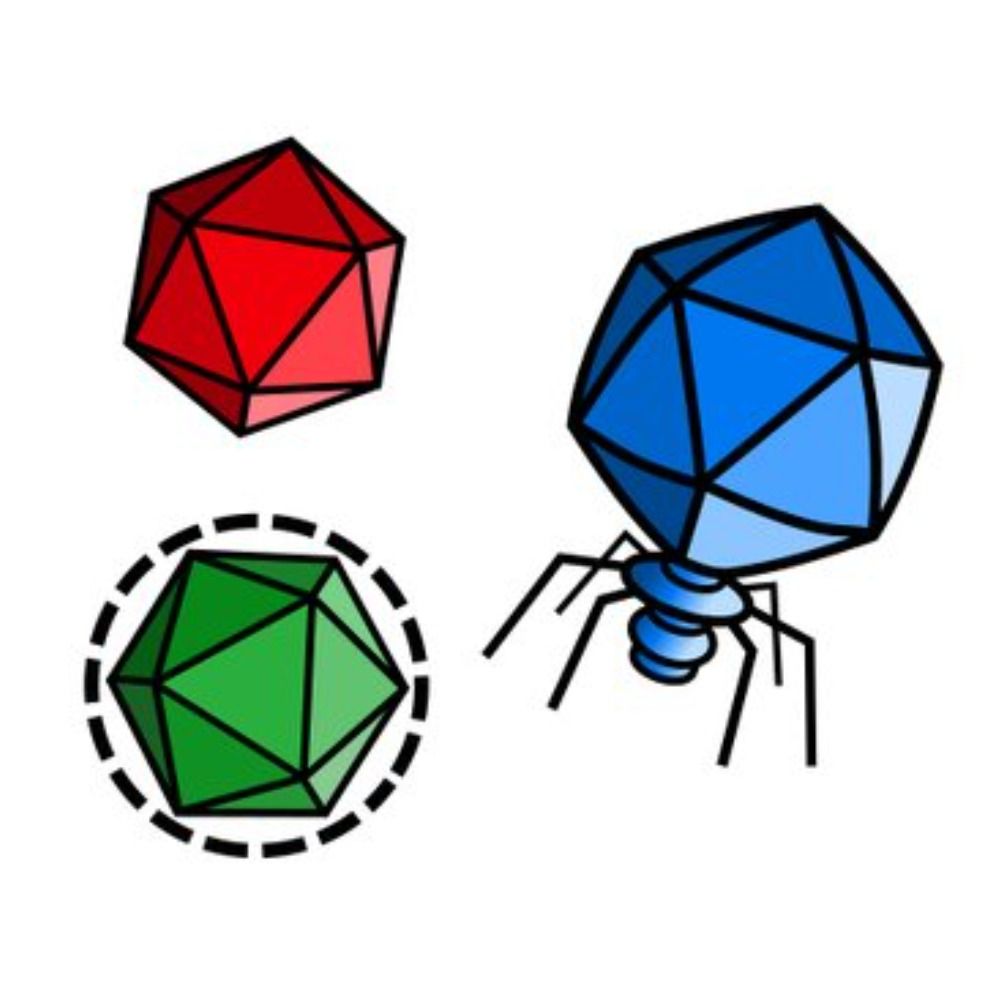
We (with Clement Coclet, not on Bsky) had the chance to work on a broad "state of viromics" review. We tried to use this to give an overview of how the field changed over the last ~ 15 years, and also what we think are some of the major remaining challenges. Full-text access at -> rdcu.be/excHt
July 22, 2025 at 3:06 PM
We (with Clement Coclet, not on Bsky) had the chance to work on a broad "state of viromics" review. We tried to use this to give an overview of how the field changed over the last ~ 15 years, and also what we think are some of the major remaining challenges. Full-text access at -> rdcu.be/excHt
Reposted by AA (Adjie) Pratama

A family of linear plasmid phages that detect a quorum-sensing autoinducer exists in multiple bacterial species https://www.biorxiv.org/content/10.1101/2025.07.30.667625v1
July 30, 2025 at 10:16 PM
A family of linear plasmid phages that detect a quorum-sensing autoinducer exists in multiple bacterial species https://www.biorxiv.org/content/10.1101/2025.07.30.667625v1
Reposted by AA (Adjie) Pratama

🚨 New preprint 🚨
My phage annotation tool, Phynteny, finally has a preprint and a brand new version powered by a cool AI transformer architecture and protein language models! #phagesky
www.biorxiv.org/content/10.1...
My phage annotation tool, Phynteny, finally has a preprint and a brand new version powered by a cool AI transformer architecture and protein language models! #phagesky
www.biorxiv.org/content/10.1...

Synteny-aware functional annotation of bacteriophage genomes with Phynteny
Accurate genome annotation is fundamental to decoding viral diversity and understanding bacteriophage biology; yet, the majority of bacteriophage genes remain functionally uncharacterised. Bacteriopha...
www.biorxiv.org
July 30, 2025 at 6:01 AM
🚨 New preprint 🚨
My phage annotation tool, Phynteny, finally has a preprint and a brand new version powered by a cool AI transformer architecture and protein language models! #phagesky
www.biorxiv.org/content/10.1...
My phage annotation tool, Phynteny, finally has a preprint and a brand new version powered by a cool AI transformer architecture and protein language models! #phagesky
www.biorxiv.org/content/10.1...
“Hidden viral players: Diversity and ecological roles of viruses in groundwater Microbiomes”
We uncover how viruses shape groundwater microbial communities and ecosystem function.
www.biorxiv.org/content/10.1...
We uncover how viruses shape groundwater microbial communities and ecosystem function.
www.biorxiv.org/content/10.1...
Hidden viral players: Diversity and ecological roles of viruses in groundwater microbiomes
Groundwater ecosystems harbor diverse microbial communities adapted to energy-limited, light-deprived conditions, yet the role of viruses in these environments remains poorly understood. Here, we anal...
www.biorxiv.org
June 2, 2025 at 2:51 PM
“Hidden viral players: Diversity and ecological roles of viruses in groundwater Microbiomes”
We uncover how viruses shape groundwater microbial communities and ecosystem function.
www.biorxiv.org/content/10.1...
We uncover how viruses shape groundwater microbial communities and ecosystem function.
www.biorxiv.org/content/10.1...
Reposted by AA (Adjie) Pratama

Phages as treatment for infections are coming. Lots of steps to get right first though.
@cmijournal.bsky.social #IDSky #ClinMicro
www.clinicalmicrobiologyandinfection.com/article/S119...
@cmijournal.bsky.social #IDSky #ClinMicro
www.clinicalmicrobiologyandinfection.com/article/S119...
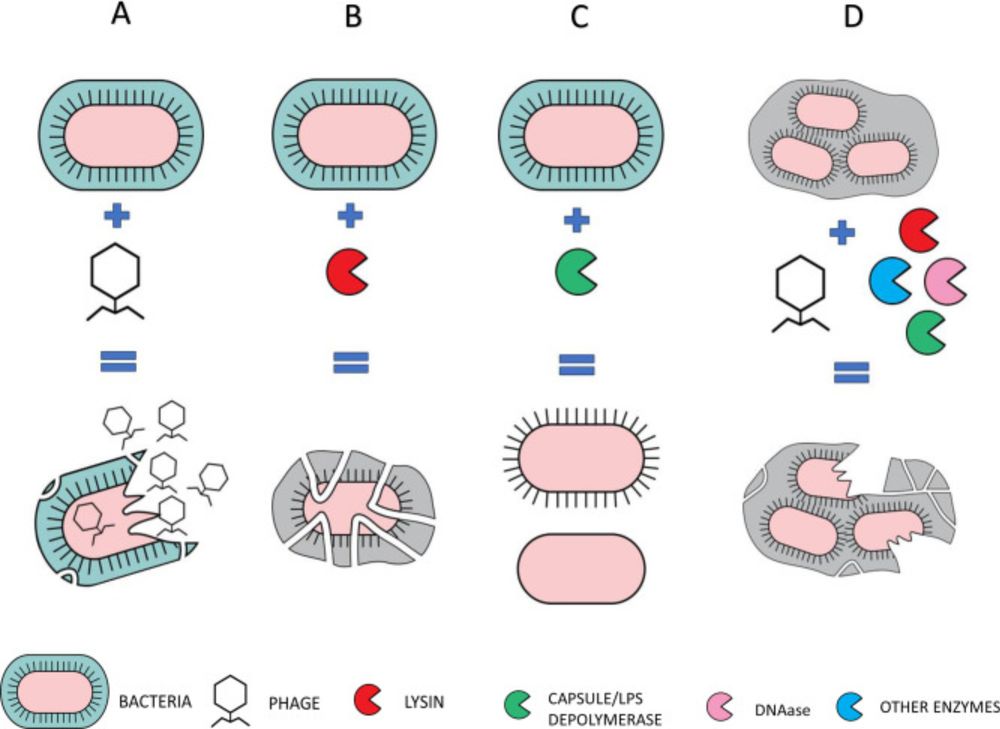
Phages and phage-borne enzymes as new antibacterial agents
Persistent and resistant infections caused by bacteria are increasing in numbers and
pose a treatment challenge to the medical community and public health. However, solutions
with new agents that will...
www.clinicalmicrobiologyandinfection.com
May 13, 2025 at 12:26 PM
Phages as treatment for infections are coming. Lots of steps to get right first though.
@cmijournal.bsky.social #IDSky #ClinMicro
www.clinicalmicrobiologyandinfection.com/article/S119...
@cmijournal.bsky.social #IDSky #ClinMicro
www.clinicalmicrobiologyandinfection.com/article/S119...
Reposted by AA (Adjie) Pratama

New paper out by former postdoc and Humboldt fellow, Luís Fernando Amato-Lourenço et al. with work done in Berlin community gardens
Environmental factors influence airborne microplastic deposition in the soil of urban allotment gardens
www.sciencedirect.com/science/arti...
Environmental factors influence airborne microplastic deposition in the soil of urban allotment gardens
www.sciencedirect.com/science/arti...

Environmental factors influence airborne microplastic deposition in the soil of urban allotment gardens
The widespread contamination of urban soils by airborne microplastics (MPs) is an emerging environmental concern, particularly in urban allotment gard…
www.sciencedirect.com
May 14, 2025 at 2:11 AM
New paper out by former postdoc and Humboldt fellow, Luís Fernando Amato-Lourenço et al. with work done in Berlin community gardens
Environmental factors influence airborne microplastic deposition in the soil of urban allotment gardens
www.sciencedirect.com/science/arti...
Environmental factors influence airborne microplastic deposition in the soil of urban allotment gardens
www.sciencedirect.com/science/arti...
Reposted by AA (Adjie) Pratama
Enabling next-generation anaerobic cultivation through biotechnology to advance functional microbiome research www.nature.com/articles/s41... #jcampubs
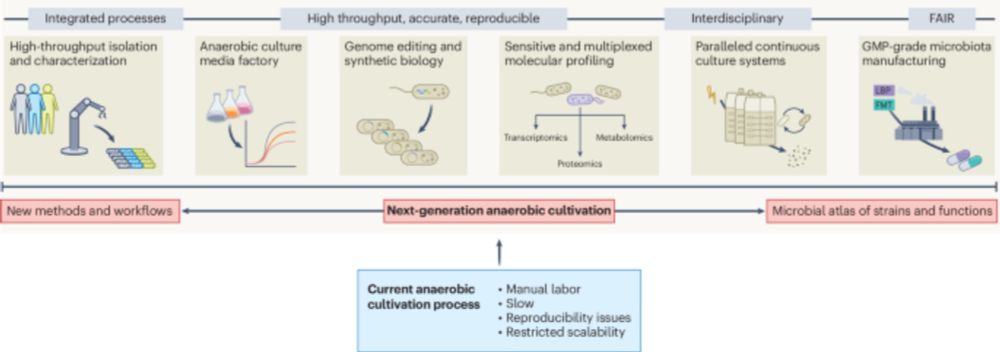
Enabling next-generation anaerobic cultivation through biotechnology to advance functional microbiome research - Nature Biotechnology
Overcoming key hurdles for the development of next-generation anaerobic cultivation methods could have major impacts on microbial community research and applications.
www.nature.com
April 29, 2025 at 5:06 PM
Enabling next-generation anaerobic cultivation through biotechnology to advance functional microbiome research www.nature.com/articles/s41... #jcampubs
Reposted by AA (Adjie) Pratama

New paper out!
We discovered a tiny archaeon with the smallest known archaeal genome — only 238 kbp!
Candidatus Sukunaarchaeum mirabile has almost no recognizable metabolic pathways and may rely heavily on a host to survive.
It also represents a novel, deep-branching lineage in the archaeal tree.
We discovered a tiny archaeon with the smallest known archaeal genome — only 238 kbp!
Candidatus Sukunaarchaeum mirabile has almost no recognizable metabolic pathways and may rely heavily on a host to survive.
It also represents a novel, deep-branching lineage in the archaeal tree.

A cellular entity retaining only its replicative core: Hidden archaeal lineage with an ultra-reduced genome https://www.biorxiv.org/content/10.1101/2025.05.02.651781v1
May 3, 2025 at 5:08 AM
New paper out!
We discovered a tiny archaeon with the smallest known archaeal genome — only 238 kbp!
Candidatus Sukunaarchaeum mirabile has almost no recognizable metabolic pathways and may rely heavily on a host to survive.
It also represents a novel, deep-branching lineage in the archaeal tree.
We discovered a tiny archaeon with the smallest known archaeal genome — only 238 kbp!
Candidatus Sukunaarchaeum mirabile has almost no recognizable metabolic pathways and may rely heavily on a host to survive.
It also represents a novel, deep-branching lineage in the archaeal tree.
Reposted by AA (Adjie) Pratama

Another position within the PHYVIR project 😁.
Are you looking for an interesting Postdoc (45 month!) on marine viral ecology? Check out the ad below.
workingat.nioz.nl/o/postdoc-po...
Are you looking for an interesting Postdoc (45 month!) on marine viral ecology? Check out the ad below.
workingat.nioz.nl/o/postdoc-po...

NIOZ - Postdoc position (45 months):“Marine phytoplankton – virus interactions and loss rates from small to ocean scale”
The Department of Marine Microbiology and Biogeochemistry (MMB; principal investigator and PHYVIR project coordinator Prof. Dr. Corina Brussaard) of NIOZ is looking for a talented and dedicated Postdo
workingat.nioz.nl
May 3, 2025 at 6:40 AM
Another position within the PHYVIR project 😁.
Are you looking for an interesting Postdoc (45 month!) on marine viral ecology? Check out the ad below.
workingat.nioz.nl/o/postdoc-po...
Are you looking for an interesting Postdoc (45 month!) on marine viral ecology? Check out the ad below.
workingat.nioz.nl/o/postdoc-po...