



Albert Vill
@acvill.bsky.social
Reposted by Albert Vill

🐝🦠 New paper: rdcu.be/eOf7A
Phages may drive microbial diversity, yet we often don’t even know how phages & bacteria correlate in nature. Our new study tackles this in the honeybee gut, thanks to the great work of PhD student @malickndiaye.bsky.social at @dmf-unil.bsky.social @fbm-unil.bsky.social
Phages may drive microbial diversity, yet we often don’t even know how phages & bacteria correlate in nature. Our new study tackles this in the honeybee gut, thanks to the great work of PhD student @malickndiaye.bsky.social at @dmf-unil.bsky.social @fbm-unil.bsky.social

Phage diversity mirrors bacterial strain diversity in the honey bee gut microbiota - Nature Communications
Authors analyse paired viral and bacterial shotgun metagenomics data from individual honeybee guts, revealing modular, nested phage–bacteria networks, with viral diversity mirroring bacterial strain c...
www.nature.com
November 4, 2025 at 8:36 PM
🐝🦠 New paper: rdcu.be/eOf7A
Phages may drive microbial diversity, yet we often don’t even know how phages & bacteria correlate in nature. Our new study tackles this in the honeybee gut, thanks to the great work of PhD student @malickndiaye.bsky.social at @dmf-unil.bsky.social @fbm-unil.bsky.social
Phages may drive microbial diversity, yet we often don’t even know how phages & bacteria correlate in nature. Our new study tackles this in the honeybee gut, thanks to the great work of PhD student @malickndiaye.bsky.social at @dmf-unil.bsky.social @fbm-unil.bsky.social
Reposted by Albert Vill

DYK most P. aeruginosa carry filamentous phage(s) that don't need to kill the cell to reproduce?
We 👉🏻@nanamikubota.bsky.social show that these Pf phages can go ROGUE.
"Filamentous cheater phages drive bacterial and phage populations to lower fitness"
🔗 authors.elsevier.com/c/1lt5I3QW8S...
We 👉🏻@nanamikubota.bsky.social show that these Pf phages can go ROGUE.
"Filamentous cheater phages drive bacterial and phage populations to lower fitness"
🔗 authors.elsevier.com/c/1lt5I3QW8S...

October 2, 2025 at 3:55 PM
DYK most P. aeruginosa carry filamentous phage(s) that don't need to kill the cell to reproduce?
We 👉🏻@nanamikubota.bsky.social show that these Pf phages can go ROGUE.
"Filamentous cheater phages drive bacterial and phage populations to lower fitness"
🔗 authors.elsevier.com/c/1lt5I3QW8S...
We 👉🏻@nanamikubota.bsky.social show that these Pf phages can go ROGUE.
"Filamentous cheater phages drive bacterial and phage populations to lower fitness"
🔗 authors.elsevier.com/c/1lt5I3QW8S...
Reposted by Albert Vill

How do you long-read sequence metagenomes? I would argue it starts with the right sample storage & DNA extraction, to enable efficient @nanoporetech.com /@pacbio.bsky.social sequencing, which we investigated in our new paper: www.biorxiv.org/content/10.1...
Massive thanks to Klara for driving this
Massive thanks to Klara for driving this

September 9, 2025 at 3:35 PM
How do you long-read sequence metagenomes? I would argue it starts with the right sample storage & DNA extraction, to enable efficient @nanoporetech.com /@pacbio.bsky.social sequencing, which we investigated in our new paper: www.biorxiv.org/content/10.1...
Massive thanks to Klara for driving this
Massive thanks to Klara for driving this
Reposted by Albert Vill
Thrilled to share our two latest papers with the @tcostalab.bsky.social
lab! In the first, we uncover a new mechanism of satellite transfer: cf-PICIs hijack tails from diverse phages to spread across species.
@imperialcollegeldn.bsky.social
www.cell.com/cell/fulltex...
lab! In the first, we uncover a new mechanism of satellite transfer: cf-PICIs hijack tails from diverse phages to spread across species.
@imperialcollegeldn.bsky.social
www.cell.com/cell/fulltex...

Chimeric infective particles expand species boundaries in phage-inducible chromosomal island mobilization
Capsid-forming PICIs (cf-PICIs) produce their own capsids and exploit phage tails
from unrelated species to transfer their DNA across bacterial hosts. This tail piracy
enables broad dissemination and ...
www.cell.com
September 9, 2025 at 5:05 PM
Thrilled to share our two latest papers with the @tcostalab.bsky.social
lab! In the first, we uncover a new mechanism of satellite transfer: cf-PICIs hijack tails from diverse phages to spread across species.
@imperialcollegeldn.bsky.social
www.cell.com/cell/fulltex...
lab! In the first, we uncover a new mechanism of satellite transfer: cf-PICIs hijack tails from diverse phages to spread across species.
@imperialcollegeldn.bsky.social
www.cell.com/cell/fulltex...
Reposted by Albert Vill
How can we understand the earliest events in evolution of eukaryotic immunity? @yao-li.bsky.social reports incredible molecular fossils of complete bacterial-like operons in eukaryotes that illuminate how animal immunity was first acquired from anti-phage defense
www.biorxiv.org/content/10.1...
www.biorxiv.org/content/10.1...

September 5, 2025 at 10:13 AM
How can we understand the earliest events in evolution of eukaryotic immunity? @yao-li.bsky.social reports incredible molecular fossils of complete bacterial-like operons in eukaryotes that illuminate how animal immunity was first acquired from anti-phage defense
www.biorxiv.org/content/10.1...
www.biorxiv.org/content/10.1...
Reposted by Albert Vill
🚨 New preprint 🚨
My phage annotation tool, Phynteny, finally has a preprint and a brand new version powered by a cool AI transformer architecture and protein language models! #phagesky
www.biorxiv.org/content/10.1...
My phage annotation tool, Phynteny, finally has a preprint and a brand new version powered by a cool AI transformer architecture and protein language models! #phagesky
www.biorxiv.org/content/10.1...

Synteny-aware functional annotation of bacteriophage genomes with Phynteny
Accurate genome annotation is fundamental to decoding viral diversity and understanding bacteriophage biology; yet, the majority of bacteriophage genes remain functionally uncharacterised. Bacteriopha...
www.biorxiv.org
July 30, 2025 at 6:01 AM
🚨 New preprint 🚨
My phage annotation tool, Phynteny, finally has a preprint and a brand new version powered by a cool AI transformer architecture and protein language models! #phagesky
www.biorxiv.org/content/10.1...
My phage annotation tool, Phynteny, finally has a preprint and a brand new version powered by a cool AI transformer architecture and protein language models! #phagesky
www.biorxiv.org/content/10.1...
Reposted by Albert Vill
⭐NAR Breakthrough!⭐
🧬 Sun et al. just dropped a high-throughput method to track all #tRNA #modifications across cells & tissues using #massspec.
Read the full article here: doi.org/10.1093/nar/...
#NARBreakthrough #RNA #tRNA #epitranscriptomics #systemsbiology #therapeuticdiscovery.
🧬 Sun et al. just dropped a high-throughput method to track all #tRNA #modifications across cells & tissues using #massspec.
Read the full article here: doi.org/10.1093/nar/...
#NARBreakthrough #RNA #tRNA #epitranscriptomics #systemsbiology #therapeuticdiscovery.
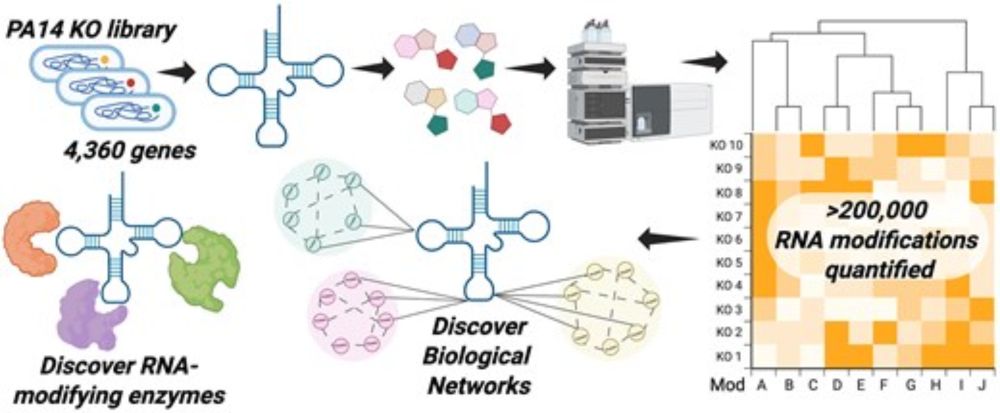
tRNA modification profiling reveals epitranscriptome regulatory networks in Pseudomonas aeruginosa
Abstract. Transfer RNA (tRNA) modifications have emerged as critical post-transcriptional regulators of gene expression affecting diverse biological and di
doi.org
July 28, 2025 at 8:12 AM
⭐NAR Breakthrough!⭐
🧬 Sun et al. just dropped a high-throughput method to track all #tRNA #modifications across cells & tissues using #massspec.
Read the full article here: doi.org/10.1093/nar/...
#NARBreakthrough #RNA #tRNA #epitranscriptomics #systemsbiology #therapeuticdiscovery.
🧬 Sun et al. just dropped a high-throughput method to track all #tRNA #modifications across cells & tissues using #massspec.
Read the full article here: doi.org/10.1093/nar/...
#NARBreakthrough #RNA #tRNA #epitranscriptomics #systemsbiology #therapeuticdiscovery.
Reposted by Albert Vill
I am so incredibly excited to share our latest work, on the exploration of #RNA secondary structure ensembles and discovery of RNA regulatory structural switches in bacteria and human cells, just out in
@natbiotech.nature.com: nature.com/articles/s41.... A short tread! (1/n)
@natbiotech.nature.com: nature.com/articles/s41.... A short tread! (1/n)
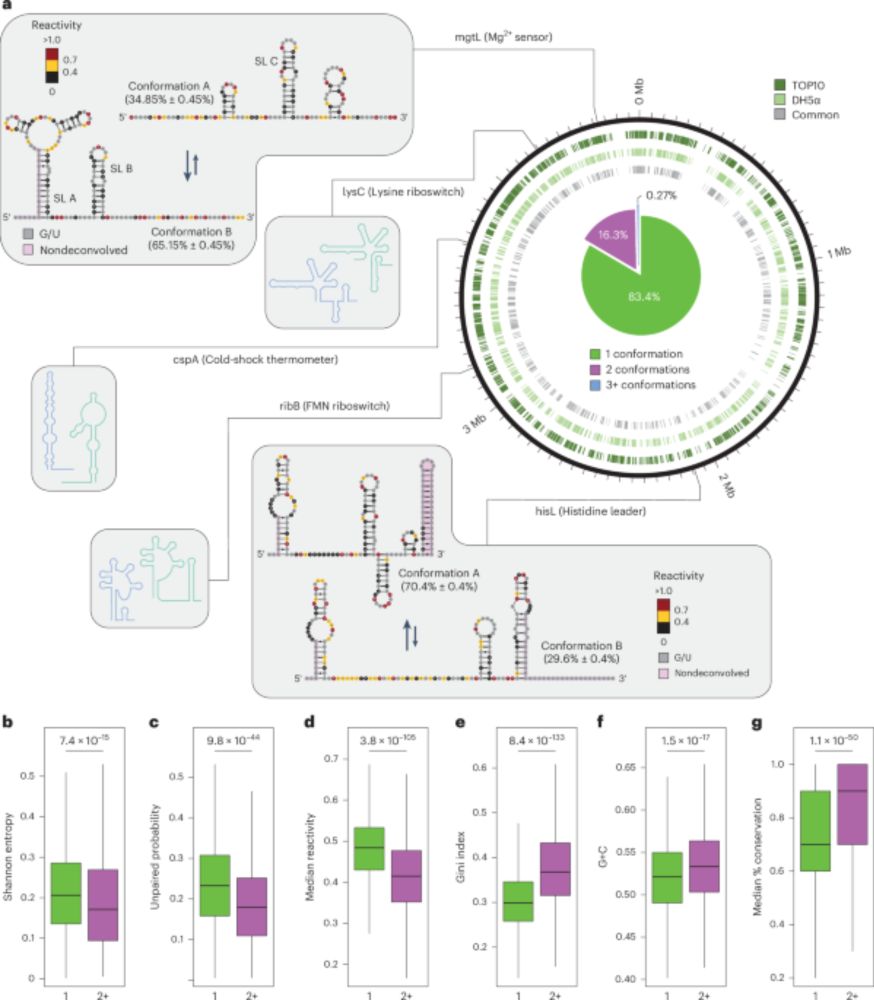
Identification of conserved RNA regulatory switches in living cells using RNA secondary structure ensemble mapping and covariation analysis - Nature Biotechnology
Transcriptome-scale maps of RNA secondary structure ensembles in living cells detect candidate RNA structural switches.
nature.com
July 27, 2025 at 5:03 PM
I am so incredibly excited to share our latest work, on the exploration of #RNA secondary structure ensembles and discovery of RNA regulatory structural switches in bacteria and human cells, just out in
@natbiotech.nature.com: nature.com/articles/s41.... A short tread! (1/n)
@natbiotech.nature.com: nature.com/articles/s41.... A short tread! (1/n)
Reposted by Albert Vill

We believe that its phages are the key players!
By targeting these dominant bacteria, these phages create opportunities for other bacterial species to re-colonize, ultimately helping to regain diversity in the gut!
By targeting these dominant bacteria, these phages create opportunities for other bacterial species to re-colonize, ultimately helping to regain diversity in the gut!
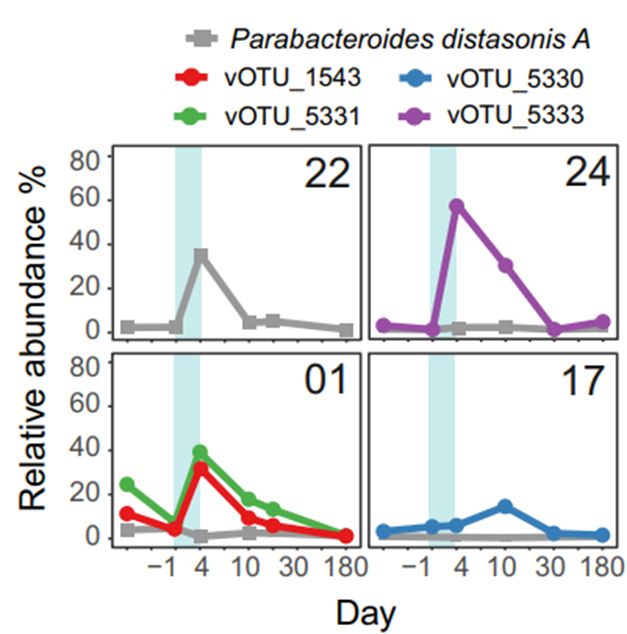
July 28, 2025 at 8:41 AM
We believe that its phages are the key players!
By targeting these dominant bacteria, these phages create opportunities for other bacterial species to re-colonize, ultimately helping to regain diversity in the gut!
By targeting these dominant bacteria, these phages create opportunities for other bacterial species to re-colonize, ultimately helping to regain diversity in the gut!
Reposted by Albert Vill
Excited 🥳 to share our latest work on gut phages!
Big thanks to @epcrocha.bsky.social, Erick D, Camille d'H, @fplazaonate.bsky.social, Quentin LB, and all others involved for support and contributions! 🙌
Out in Cell Reports @cp-cellreports.bsky.social
doi.org/10.1016/j.ce...
Here's what we found 🤓
Big thanks to @epcrocha.bsky.social, Erick D, Camille d'H, @fplazaonate.bsky.social, Quentin LB, and all others involved for support and contributions! 🙌
Out in Cell Reports @cp-cellreports.bsky.social
doi.org/10.1016/j.ce...
Here's what we found 🤓
July 28, 2025 at 8:41 AM
Excited 🥳 to share our latest work on gut phages!
Big thanks to @epcrocha.bsky.social, Erick D, Camille d'H, @fplazaonate.bsky.social, Quentin LB, and all others involved for support and contributions! 🙌
Out in Cell Reports @cp-cellreports.bsky.social
doi.org/10.1016/j.ce...
Here's what we found 🤓
Big thanks to @epcrocha.bsky.social, Erick D, Camille d'H, @fplazaonate.bsky.social, Quentin LB, and all others involved for support and contributions! 🙌
Out in Cell Reports @cp-cellreports.bsky.social
doi.org/10.1016/j.ce...
Here's what we found 🤓
Reposted by Albert Vill

Fold first, ask later: structure-informed function annotation of Pseudomonas phage proteins
Structural predictions to improve #phage genome annotation!
@hannelorelongin.bsky.social @gbouras13.bsky.social y.social @susiegriggo.bsky.social @veravannoort.bsky.social
www.biorxiv.org/content/10.1...
Structural predictions to improve #phage genome annotation!
@hannelorelongin.bsky.social @gbouras13.bsky.social y.social @susiegriggo.bsky.social @veravannoort.bsky.social
www.biorxiv.org/content/10.1...

Fold first, ask later: structure-informed function annotation of Pseudomonas phage proteins
Phages, the viruses of bacteria, harbor an incredibly diverse repertoire of proteins capable of manipulating their bacterial hosts, inspiring many medical and biotechnological applications. However, t...
www.biorxiv.org
July 22, 2025 at 12:27 AM
Fold first, ask later: structure-informed function annotation of Pseudomonas phage proteins
Structural predictions to improve #phage genome annotation!
@hannelorelongin.bsky.social @gbouras13.bsky.social y.social @susiegriggo.bsky.social @veravannoort.bsky.social
www.biorxiv.org/content/10.1...
Structural predictions to improve #phage genome annotation!
@hannelorelongin.bsky.social @gbouras13.bsky.social y.social @susiegriggo.bsky.social @veravannoort.bsky.social
www.biorxiv.org/content/10.1...
Reposted by Albert Vill

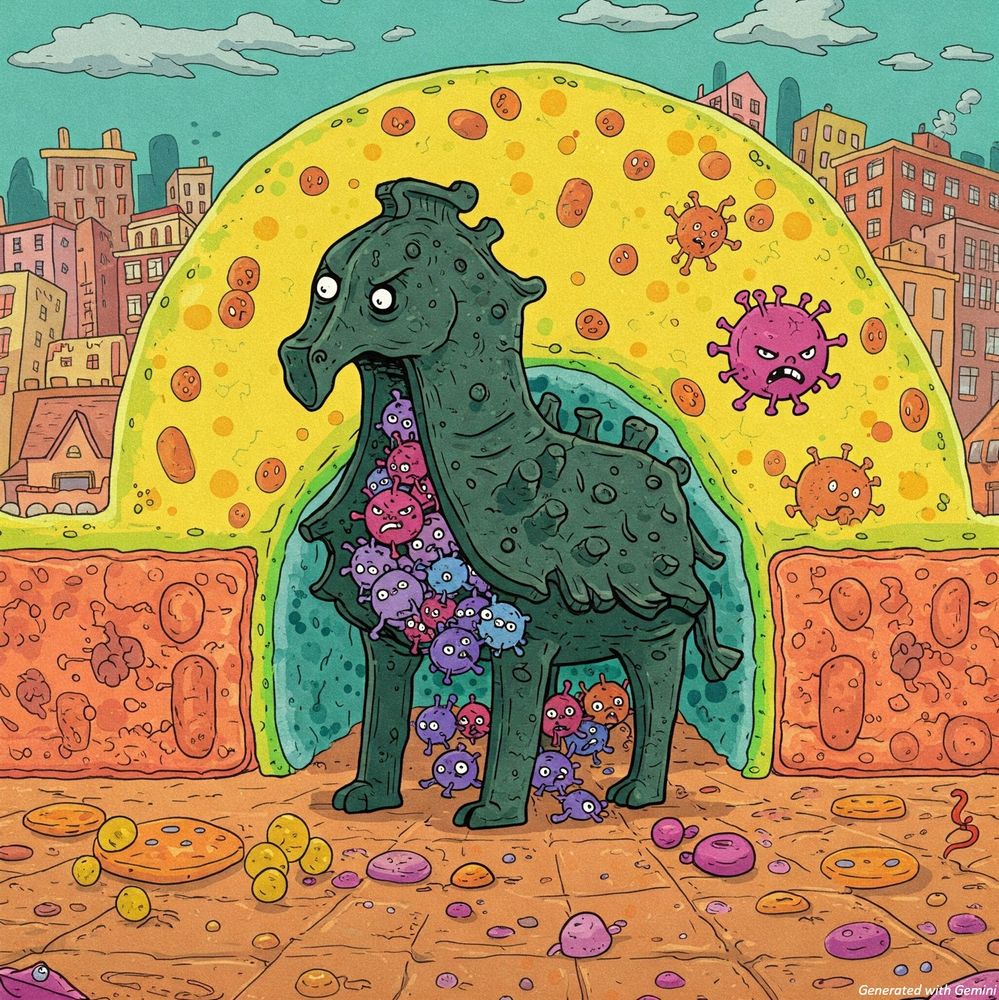
⚠️ Discovery of a new mode of viral transmission:
Deltaviruses spread through a viral Trojan Horse !
These viral satellites that do not encode their own glycoproteins, are in fact physically encapsulated within their helper virus particles!
www.biorxiv.org/content/10.1...
A thread 1/14
Deltaviruses spread through a viral Trojan Horse !
These viral satellites that do not encode their own glycoproteins, are in fact physically encapsulated within their helper virus particles!
www.biorxiv.org/content/10.1...
A thread 1/14
May 10, 2025 at 8:12 AM
⚠️ Discovery of a new mode of viral transmission:
Deltaviruses spread through a viral Trojan Horse !
These viral satellites that do not encode their own glycoproteins, are in fact physically encapsulated within their helper virus particles!
www.biorxiv.org/content/10.1...
A thread 1/14
Deltaviruses spread through a viral Trojan Horse !
These viral satellites that do not encode their own glycoproteins, are in fact physically encapsulated within their helper virus particles!
www.biorxiv.org/content/10.1...
A thread 1/14
Reposted by Albert Vill
Do people in the same household share strains when they have the same species?
How many cells transmit when a strain is shared?
Can strain composition be dynamic when species composition is stable?
We answer these and related questions for the facial skin microbiome in our latest paper.
🧵[1/10]
How many cells transmit when a strain is shared?
Can strain composition be dynamic when species composition is stable?
We answer these and related questions for the facial skin microbiome in our latest paper.
🧵[1/10]

May 1, 2025 at 6:41 PM
Do people in the same household share strains when they have the same species?
How many cells transmit when a strain is shared?
Can strain composition be dynamic when species composition is stable?
We answer these and related questions for the facial skin microbiome in our latest paper.
🧵[1/10]
How many cells transmit when a strain is shared?
Can strain composition be dynamic when species composition is stable?
We answer these and related questions for the facial skin microbiome in our latest paper.
🧵[1/10]
Reposted by Albert Vill
YaleNews @yale.edu covered our recent paper on measuring virus attachment 🦠🔬🤩
@paulturnerlab.bsky.social @emonetlab.bsky.social
news.yale.edu/2025/04/15/n...
#MicroSky #PhageSky #Microscopy #Fluorescence
@paulturnerlab.bsky.social @emonetlab.bsky.social
news.yale.edu/2025/04/15/n...
#MicroSky #PhageSky #Microscopy #Fluorescence

New tool offers insights into virus-cell interactions
A method developed by Yale scientists helps reveal how antibacterial agents interact with their host cells — a process that could boost a host of applications that benefit society.
news.yale.edu
April 17, 2025 at 1:35 PM
YaleNews @yale.edu covered our recent paper on measuring virus attachment 🦠🔬🤩
@paulturnerlab.bsky.social @emonetlab.bsky.social
news.yale.edu/2025/04/15/n...
#MicroSky #PhageSky #Microscopy #Fluorescence
@paulturnerlab.bsky.social @emonetlab.bsky.social
news.yale.edu/2025/04/15/n...
#MicroSky #PhageSky #Microscopy #Fluorescence
Reposted by Albert Vill
Preprint out! Bacteria w/ hyper-replicative filamentous phage lead to overnight emergence of cheater phages. Bacteria w/ both phages can outcompete wildtype, then rapidly lose phage via a phage Tragedy of the Commons
@shellyscrib.bsky.social @vscooper.micropopbio.org www.biorxiv.org/content/10.1...
@shellyscrib.bsky.social @vscooper.micropopbio.org www.biorxiv.org/content/10.1...

Filamentous cheater phages drive bacterial and phage populations to lower fitness
Many bacteria carry phage genome(s) in their chromosome (i.e., prophage), and this intertwines the fitness of the bacterium and the phage. Most Pseudomonas aeruginosa strains carry filamentous phages ...
www.biorxiv.org
April 2, 2025 at 12:41 PM
Preprint out! Bacteria w/ hyper-replicative filamentous phage lead to overnight emergence of cheater phages. Bacteria w/ both phages can outcompete wildtype, then rapidly lose phage via a phage Tragedy of the Commons
@shellyscrib.bsky.social @vscooper.micropopbio.org www.biorxiv.org/content/10.1...
@shellyscrib.bsky.social @vscooper.micropopbio.org www.biorxiv.org/content/10.1...
Reposted by Albert Vill
Excited to share our latest, out today in @naturemicrobiol.bsky.social Bacteriocin production facilitates nosocomial emergence of vancomycin-resistant Enterococcus faecium www.nature.com/articles/s41... @idpittstop.bsky.social
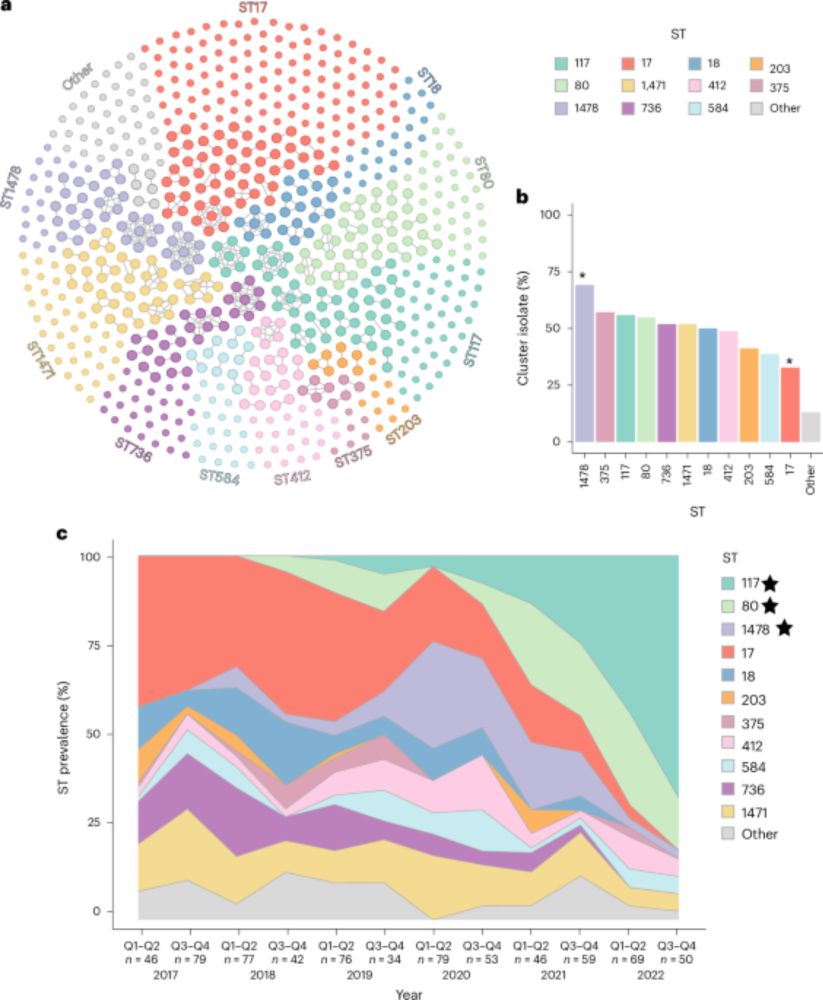
Bacteriocin production facilitates nosocomial emergence of vancomycin-resistant Enterococcus faecium - Nature Microbiology
Genomic and functional analyses of healthcare-associated vancomycin-resistant Enterococcus faecium reveal that bacteriocin T8 is enriched in emergent lineages and provides a competitive advantage in v...
www.nature.com
March 21, 2025 at 1:46 PM
Excited to share our latest, out today in @naturemicrobiol.bsky.social Bacteriocin production facilitates nosocomial emergence of vancomycin-resistant Enterococcus faecium www.nature.com/articles/s41... @idpittstop.bsky.social
Reposted by Albert Vill

Please join us in welcoming UBC-Zoology’s newest Assistant Professor: Asher Leeks! @asherleeks.bsky.social
Today is Asher’s first day as an Assistant Professor of Evolution in the Department of Zoology and the @ubcbiodiversity.bsky.social @science.ubc.ca
Welcome Asher! 🙌🏽
asherleeks.com
Today is Asher’s first day as an Assistant Professor of Evolution in the Department of Zoology and the @ubcbiodiversity.bsky.social @science.ubc.ca
Welcome Asher! 🙌🏽
asherleeks.com

March 3, 2025 at 7:01 PM
Please join us in welcoming UBC-Zoology’s newest Assistant Professor: Asher Leeks! @asherleeks.bsky.social
Today is Asher’s first day as an Assistant Professor of Evolution in the Department of Zoology and the @ubcbiodiversity.bsky.social @science.ubc.ca
Welcome Asher! 🙌🏽
asherleeks.com
Today is Asher’s first day as an Assistant Professor of Evolution in the Department of Zoology and the @ubcbiodiversity.bsky.social @science.ubc.ca
Welcome Asher! 🙌🏽
asherleeks.com
Reposted by Albert Vill

Reposted by Albert Vill
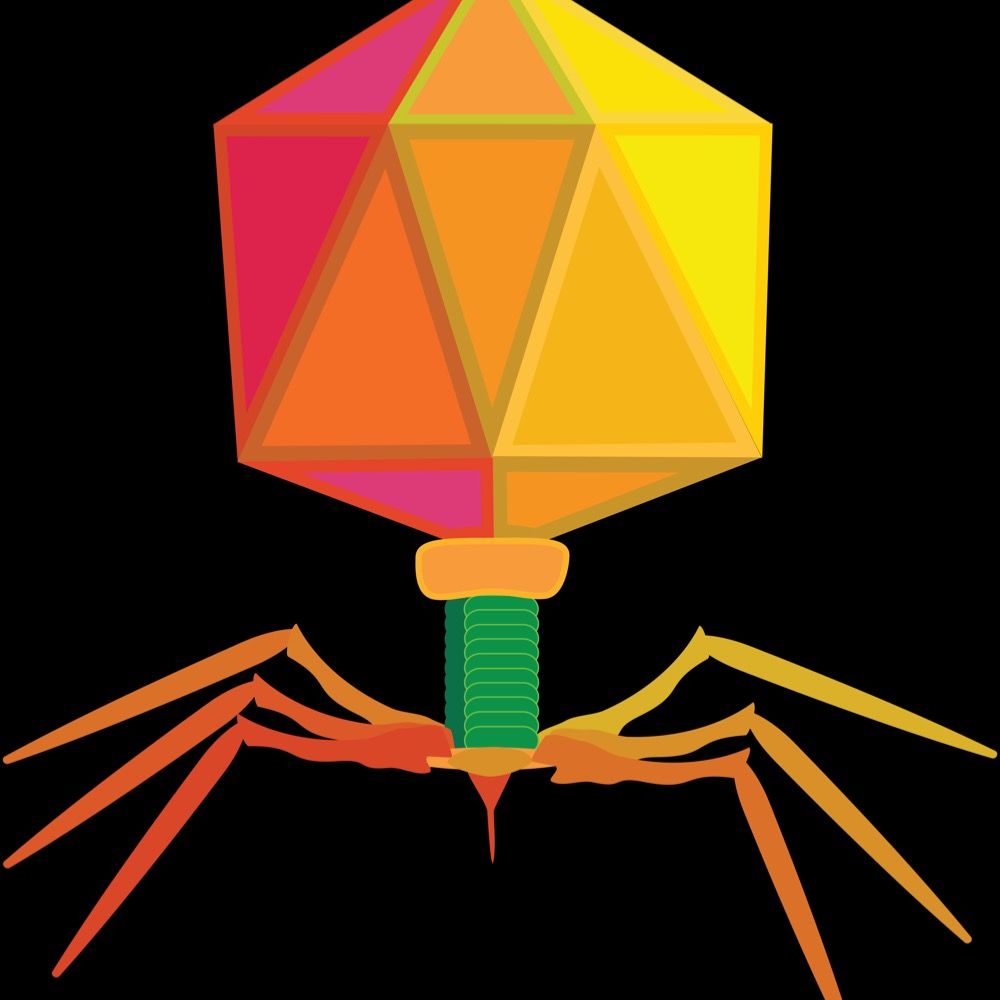
Microscopic phage adsorption assay: High-throughput quantification of virus particle attachment to host bacterial cells.
DOI: 10.1073/pnas.2410905121
https://pubmed.ncbi.nlm.nih.gov/39700139/
DOI: 10.1073/pnas.2410905121
https://pubmed.ncbi.nlm.nih.gov/39700139/

Microscopic phage adsorption assay: High-throughput quantification of virus particle attachment to host bacterial cells - PubMed
Phages, viruses of bacteria, play a pivotal role in Earth's biosphere and hold great promise as therapeutic and diagnostic tools in combating infectious diseases. Attachment of phages to bacterial cells is a crucial initial step of the interaction. The classic assay to quantify the dynamics of phage …
pubmed.ncbi.nlm.nih.gov
February 20, 2025 at 9:40 PM
Microscopic phage adsorption assay: High-throughput quantification of virus particle attachment to host bacterial cells.
DOI: 10.1073/pnas.2410905121
https://pubmed.ncbi.nlm.nih.gov/39700139/
DOI: 10.1073/pnas.2410905121
https://pubmed.ncbi.nlm.nih.gov/39700139/
Reposted by Albert Vill

Delighted to share this paper out via Virus Evolution:
academic.oup.com/ve/advance-a...
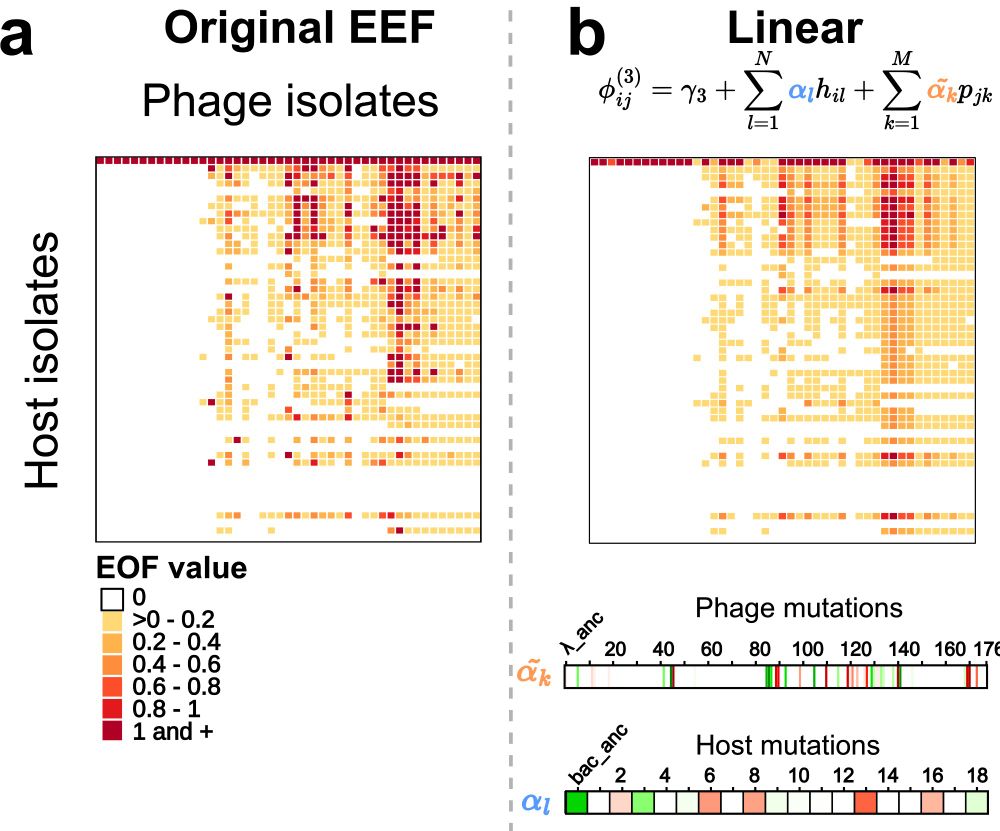
in which we develop and assess a quantitative method to infer phage and bacterial mutations driving changes in infection phenotypes arising in coevolutionary dynamics.
a 🧵 about people (and some science)
academic.oup.com/ve/advance-a...
in which we develop and assess a quantitative method to infer phage and bacterial mutations driving changes in infection phenotypes arising in coevolutionary dynamics.
a 🧵 about people (and some science)
December 2, 2024 at 2:44 PM
Delighted to share this paper out via Virus Evolution:
academic.oup.com/ve/advance-a...
in which we develop and assess a quantitative method to infer phage and bacterial mutations driving changes in infection phenotypes arising in coevolutionary dynamics.
a 🧵 about people (and some science)
academic.oup.com/ve/advance-a...
in which we develop and assess a quantitative method to infer phage and bacterial mutations driving changes in infection phenotypes arising in coevolutionary dynamics.
a 🧵 about people (and some science)
Reposted by Albert Vill
Excited to share my preprint describing a new microbiome analysis method, PHLAME, for detecting strain-level associations in difficult sample types. 🧵
www.biorxiv.org/content/10.1...
This work was done with my great coauthors and my amazing advisor @contaminatedsci.bsky.social
www.biorxiv.org/content/10.1...
This work was done with my great coauthors and my amazing advisor @contaminatedsci.bsky.social

Intraspecies associations from strain-rich metagenome samples
Genetically distinct strains of a species can vary widely in phenotype, reducing the utility of species-resolved microbiome measurements for detecting associations with health or disease. While metage...
www.biorxiv.org
February 11, 2025 at 11:06 PM
Excited to share my preprint describing a new microbiome analysis method, PHLAME, for detecting strain-level associations in difficult sample types. 🧵
www.biorxiv.org/content/10.1...
This work was done with my great coauthors and my amazing advisor @contaminatedsci.bsky.social
www.biorxiv.org/content/10.1...
This work was done with my great coauthors and my amazing advisor @contaminatedsci.bsky.social
Reposted by Albert Vill

Using cryogenic electron microscopy methods to gain insight into structure and initial host attachment of the flagellotropic bacteriophage 7-7-1 https://www.biorxiv.org/content/10.1101/2025.01.29.635402v1
January 30, 2025 at 2:19 AM
Using cryogenic electron microscopy methods to gain insight into structure and initial host attachment of the flagellotropic bacteriophage 7-7-1 https://www.biorxiv.org/content/10.1101/2025.01.29.635402v1
Reposted by Albert Vill
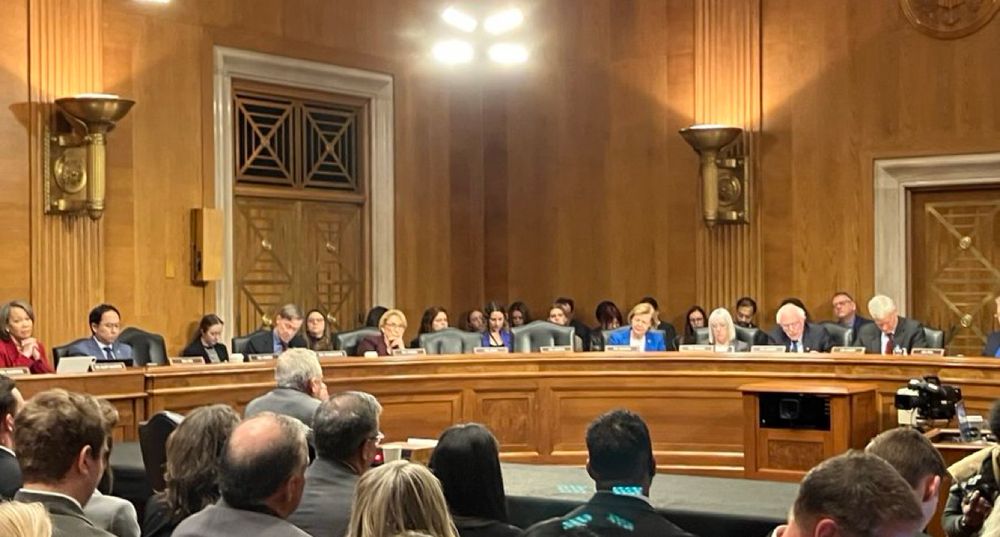
⚠️RFK Jr just told the US Senate that he does not know if COVID vaccines saved millions of lives.
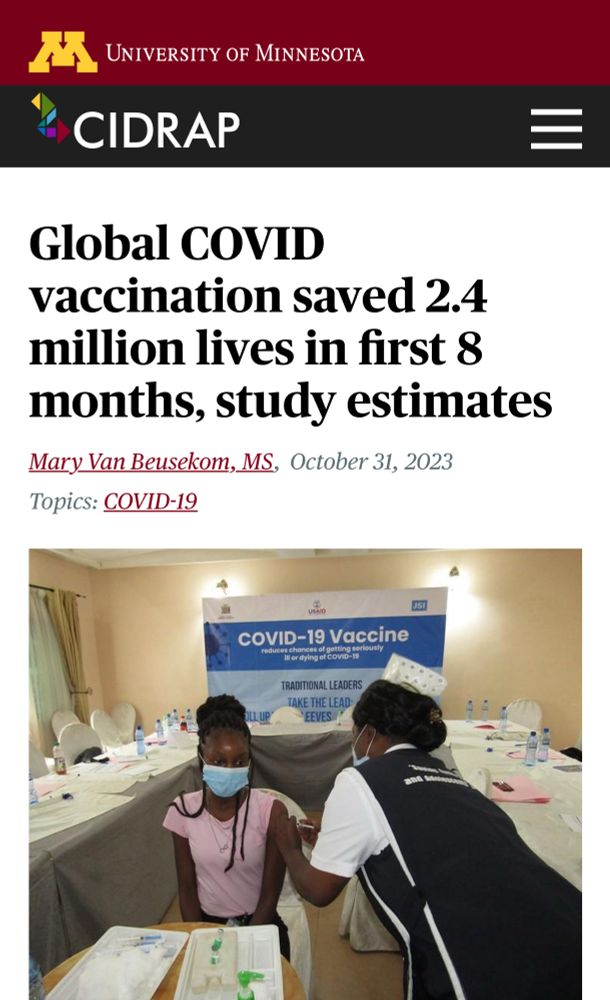
2.4 million lives were saved by the COVID vaccines in the first 8 months alone.
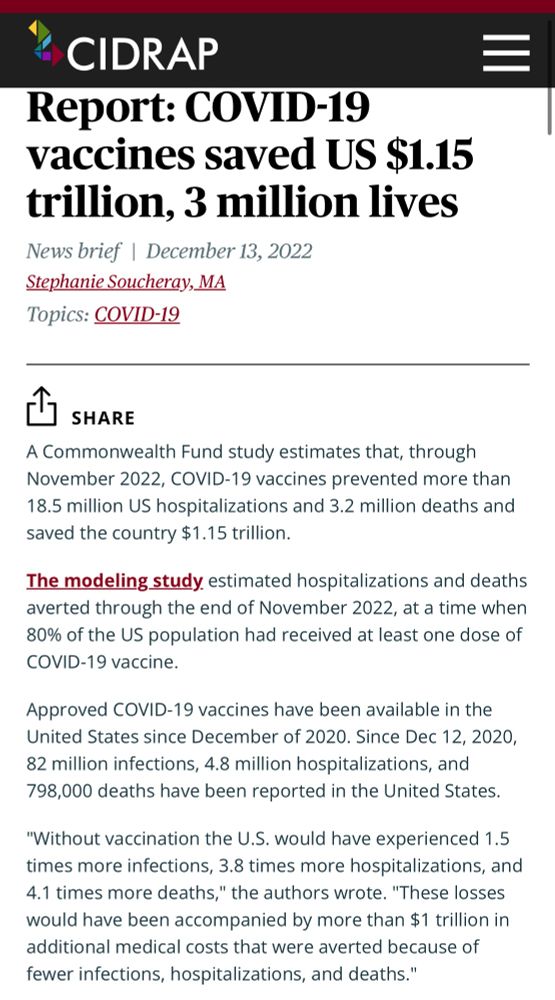
COVID vaccines prevented >18.5 million US hospitalizations, 3.2 million deaths and saved $1.15 trillion in the US alone
2.4 million lives were saved by the COVID vaccines in the first 8 months alone.
COVID vaccines prevented >18.5 million US hospitalizations, 3.2 million deaths and saved $1.15 trillion in the US alone
January 30, 2025 at 4:26 PM
⚠️RFK Jr just told the US Senate that he does not know if COVID vaccines saved millions of lives.
2.4 million lives were saved by the COVID vaccines in the first 8 months alone.
COVID vaccines prevented >18.5 million US hospitalizations, 3.2 million deaths and saved $1.15 trillion in the US alone
2.4 million lives were saved by the COVID vaccines in the first 8 months alone.
COVID vaccines prevented >18.5 million US hospitalizations, 3.2 million deaths and saved $1.15 trillion in the US alone
Reposted by Albert Vill

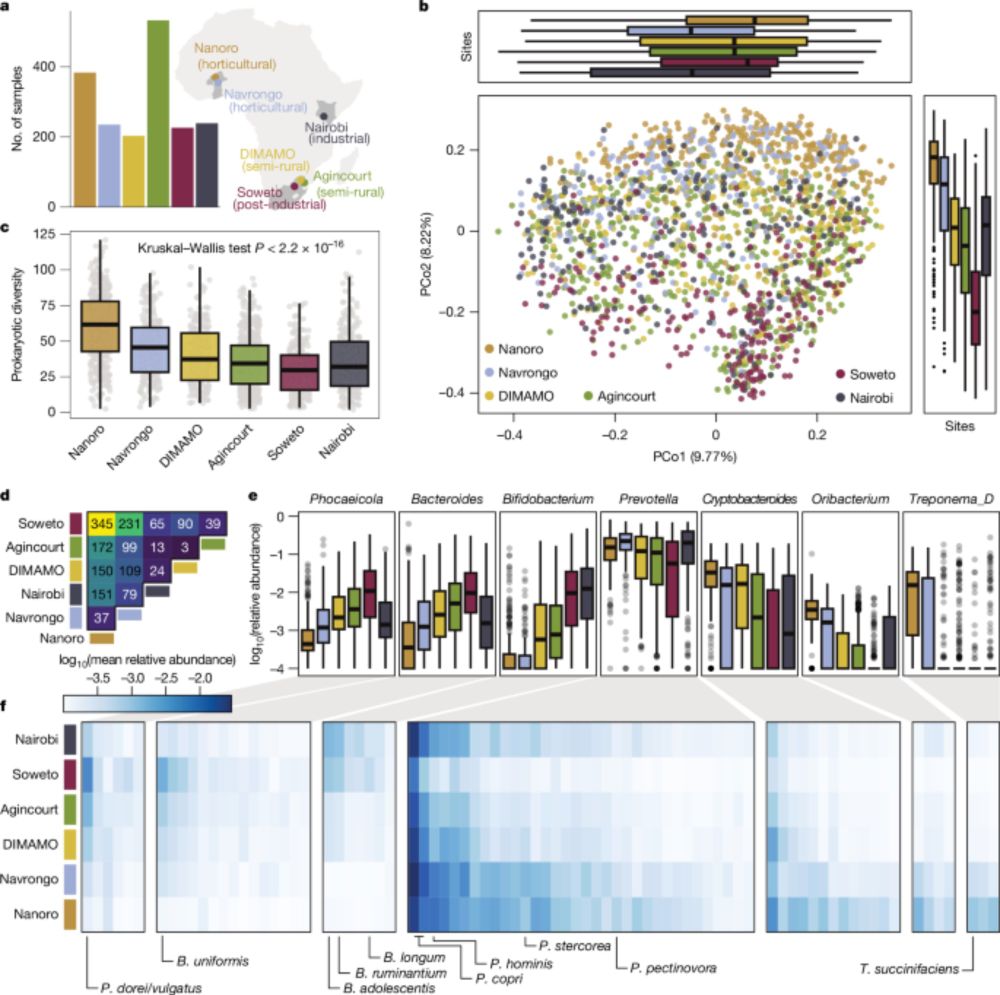
Out now in @nature.com: Gut microbiome diversity across African populations - a valuable resource for further research and foundational for global health equity. 🧪
www.nature.com/articles/s41...
www.nature.com/articles/s41...
Expanding the human gut microbiome atlas of Africa - Nature
A cross-sectional study from four African countries shows the importance of investigating the gut microbiome in previously under-represented populations and provides a framework for equitable microbio...
www.nature.com
January 30, 2025 at 3:21 PM
Out now in @nature.com: Gut microbiome diversity across African populations - a valuable resource for further research and foundational for global health equity. 🧪
www.nature.com/articles/s41...
www.nature.com/articles/s41...
Reposted by Albert Vill

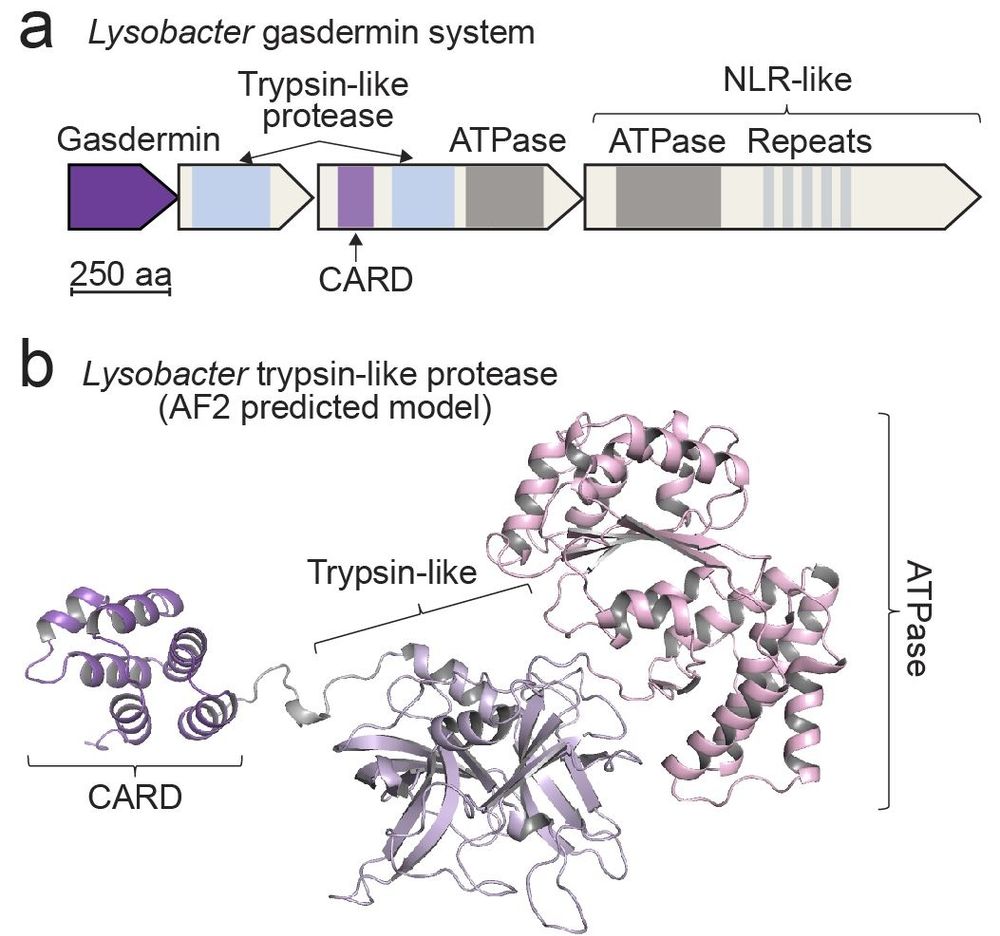
Our paper out @Nature: CARD domains mediate anti-phage defense in bacterial gasdermin systems
CARDs are essential for caspase recruitment during human inflammasome activation. We now find them in bacterial immune systems
Congrats Tana Wein! Thank you Kranzusch lab!
www.nature.com/articles/s41...
CARDs are essential for caspase recruitment during human inflammasome activation. We now find them in bacterial immune systems
Congrats Tana Wein! Thank you Kranzusch lab!
www.nature.com/articles/s41...
January 30, 2025 at 3:40 AM
Our paper out @Nature: CARD domains mediate anti-phage defense in bacterial gasdermin systems
CARDs are essential for caspase recruitment during human inflammasome activation. We now find them in bacterial immune systems
Congrats Tana Wein! Thank you Kranzusch lab!
www.nature.com/articles/s41...
CARDs are essential for caspase recruitment during human inflammasome activation. We now find them in bacterial immune systems
Congrats Tana Wein! Thank you Kranzusch lab!
www.nature.com/articles/s41...