


Abs Dey
@absdey.bsky.social
Cognitive Scientist.
Learning about computational models of human behavior—still wading in the shallow end of the pool.
Learning about computational models of human behavior—still wading in the shallow end of the pool.
Reposted by Abs Dey

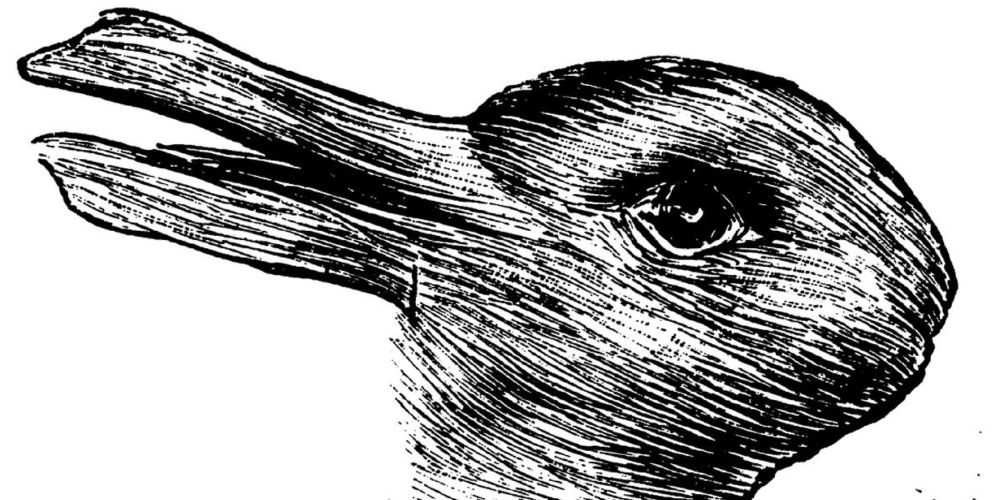
New post! "A Tale of Two Science Reform Movements," in which I compare the recent #Metascience2025 and #SIPS2025 conferences, and find that I am much more at home at one than the other. getsyeducated.substack.com/p/a-tale-of-...
A Tale of Two Science Reform Movements
Reflections from meetings of Metascience 2025 and the Society for the Improvement of Psychological Science
getsyeducated.substack.com
July 5, 2025 at 1:00 PM
New post! "A Tale of Two Science Reform Movements," in which I compare the recent #Metascience2025 and #SIPS2025 conferences, and find that I am much more at home at one than the other. getsyeducated.substack.com/p/a-tale-of-...
Super beginner friendly intro to how LLMs work! Even I understood it :)
Essential tools for writing better code: Large language models - Better Code, Better Science: Chapter 2, Part 2
russpoldrack.substack.com/p/essential-...
russpoldrack.substack.com/p/essential-...

Essential tools for writing better code: Large language models
Better Code, Better Science: Chapter 2, Part 2
russpoldrack.substack.com
May 29, 2025 at 7:22 PM
Super beginner friendly intro to how LLMs work! Even I understood it :)
Reposted by Abs Dey

Thanks to everybody who chimed in!
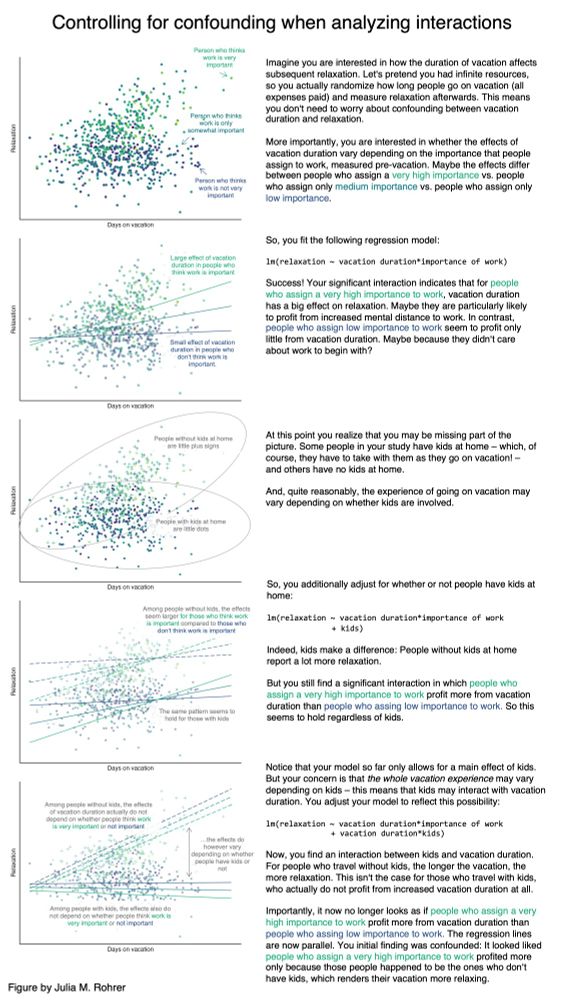
I arrived at the conclusion that (1) there's a lot of interesting stuff about interactions and (2) the figure I was looking for does not exist.
So, I made it myself! Here's a simple illustration of how to control for confounding in interactions:>
I arrived at the conclusion that (1) there's a lot of interesting stuff about interactions and (2) the figure I was looking for does not exist.
So, I made it myself! Here's a simple illustration of how to control for confounding in interactions:>
May 11, 2025 at 5:34 AM
Thanks to everybody who chimed in!
I arrived at the conclusion that (1) there's a lot of interesting stuff about interactions and (2) the figure I was looking for does not exist.
So, I made it myself! Here's a simple illustration of how to control for confounding in interactions:>
I arrived at the conclusion that (1) there's a lot of interesting stuff about interactions and (2) the figure I was looking for does not exist.
So, I made it myself! Here's a simple illustration of how to control for confounding in interactions:>
If my basic math is right, the question is now:
This asteroid vs 1 million men.
This asteroid vs 1 million men.

I’ve checked this and they just compared the height of a gorilla to the diameter of the asteroid.
But it’s the volume of a gorilla and the volume of the asteroid that matter.
A 23m asteroid could fit something like 20,000 gorillas if it were spherical. So let’s say 10,000, since it’s not.
But it’s the volume of a gorilla and the volume of the asteroid that matter.
A 23m asteroid could fit something like 20,000 gorillas if it were spherical. So let’s say 10,000, since it’s not.

Get back to me when you find a gorilla the size of twelve and a half asteroids
May 22, 2025 at 10:18 AM
If my basic math is right, the question is now:
This asteroid vs 1 million men.
This asteroid vs 1 million men.
Reposted by Abs Dey

It’s fun starting a new hobby with ADHD because I never know if I’ve found a new lifelong passion or if I’m going to spend $2000 on stuff and immediately lose all interest
February 12, 2025 at 1:30 PM
It’s fun starting a new hobby with ADHD because I never know if I’ve found a new lifelong passion or if I’m going to spend $2000 on stuff and immediately lose all interest
Reposted by Abs Dey
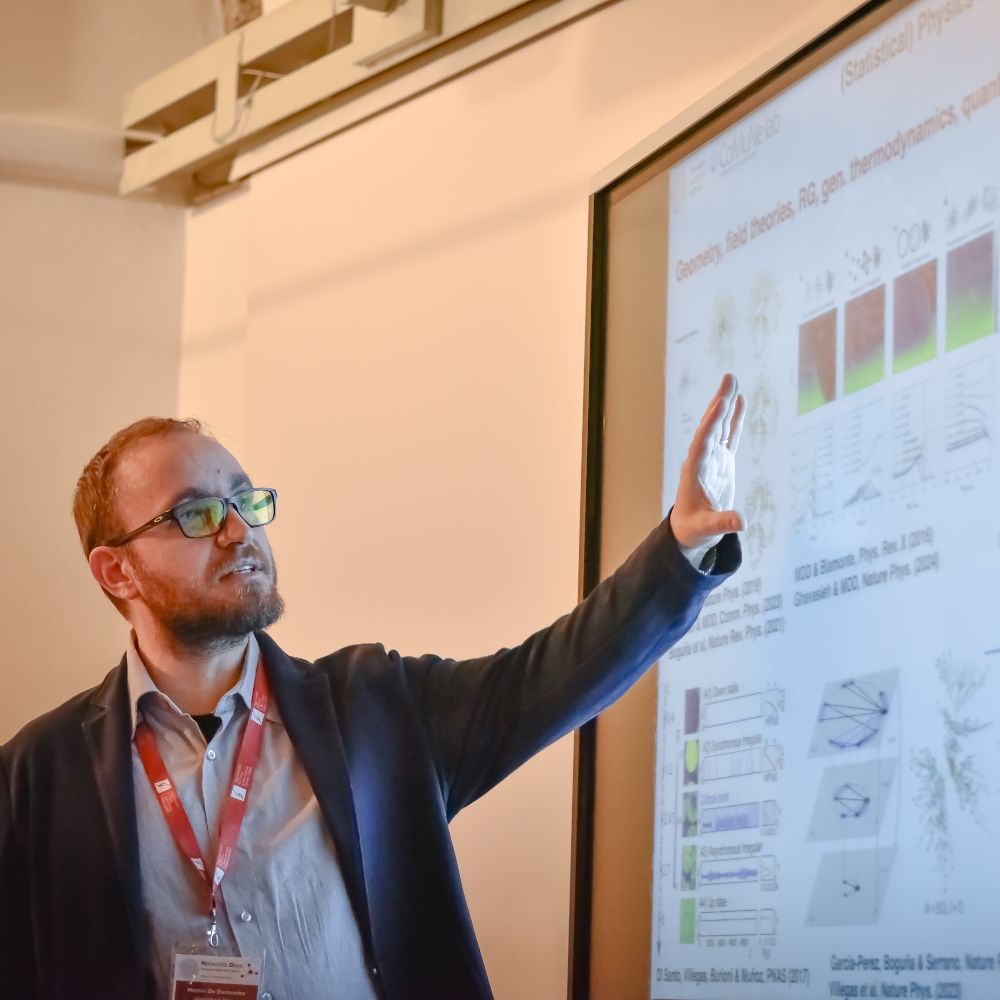
A cool discussion w/ some colleagues from the #NeuroSky community has triggered a new #ComplexityThoughts 👀
Regardless if you work w/ 🧠 or 🧬🧫, often we attack inverse problems in 🧪 w/ methods hiding tons of assumptions. I write about the case of #ComplexNetworks 👇
open.substack.com/pub/manlius/...
Regardless if you work w/ 🧠 or 🧬🧫, often we attack inverse problems in 🧪 w/ methods hiding tons of assumptions. I write about the case of #ComplexNetworks 👇
open.substack.com/pub/manlius/...

November 22, 2024 at 4:04 PM
A cool discussion w/ some colleagues from the #NeuroSky community has triggered a new #ComplexityThoughts 👀
Regardless if you work w/ 🧠 or 🧬🧫, often we attack inverse problems in 🧪 w/ methods hiding tons of assumptions. I write about the case of #ComplexNetworks 👇
open.substack.com/pub/manlius/...
Regardless if you work w/ 🧠 or 🧬🧫, often we attack inverse problems in 🧪 w/ methods hiding tons of assumptions. I write about the case of #ComplexNetworks 👇
open.substack.com/pub/manlius/...
Reposted by Abs Dey
Behind the first door of the 100% CI advent calendar is a new blog post! In which I hand out unsolicited writing advice -- with a focus on writing about technical topics in an accessible manner, but most of it is fairly general: www.the100.ci/2024/12/01/w...

Writing about technical topics in an accessible manner
A wise man – I’m quite sure it was Brian Wansink – once pointed out that it is impossible to both read and write a lot. So, maybe reading a post about how to write just steals time from the more urgen...
www.the100.ci
December 1, 2024 at 2:10 PM
Behind the first door of the 100% CI advent calendar is a new blog post! In which I hand out unsolicited writing advice -- with a focus on writing about technical topics in an accessible manner, but most of it is fairly general: www.the100.ci/2024/12/01/w...
Reposted by Abs Dey
In 2023, Harvard Business School suspended a star professor over charges of research misconduct.
As it happens, one of her papers also had funny data from a *different* B-school superstar -- a "mad, fraudulent unicorn,” per @jamesheathers.bsky.social... (1/3)
www.theatlantic.com/magazine/arc...
As it happens, one of her papers also had funny data from a *different* B-school superstar -- a "mad, fraudulent unicorn,” per @jamesheathers.bsky.social... (1/3)
www.theatlantic.com/magazine/arc...

The Fraudulent Science of Success
Business schools are in the grips of a scandal that threatens to undermine their most influential research—and the credibility of an entire field.
www.theatlantic.com
November 19, 2024 at 4:20 PM
In 2023, Harvard Business School suspended a star professor over charges of research misconduct.
As it happens, one of her papers also had funny data from a *different* B-school superstar -- a "mad, fraudulent unicorn,” per @jamesheathers.bsky.social... (1/3)
www.theatlantic.com/magazine/arc...
As it happens, one of her papers also had funny data from a *different* B-school superstar -- a "mad, fraudulent unicorn,” per @jamesheathers.bsky.social... (1/3)
www.theatlantic.com/magazine/arc...
Reposted by Abs Dey

Thanks to the work of Ria Hoekstra and the gang, you can now formally compare n=1 idiographic network models with each other, using measurement invariance testing well understood from SEM.
Accepted in Psych Methods.
osf.io/preprints/ps...
Accepted in Psych Methods.
osf.io/preprints/ps...
OSF
osf.io
December 5, 2023 at 11:40 AM
Thanks to the work of Ria Hoekstra and the gang, you can now formally compare n=1 idiographic network models with each other, using measurement invariance testing well understood from SEM.
Accepted in Psych Methods.
osf.io/preprints/ps...
Accepted in Psych Methods.
osf.io/preprints/ps...
Reposted by Abs Dey

The response time paradox in functional magnetic resonance imaging analyses www.nature.com/articles/s41... - our latest fly in the ointment of fMRI interpretation

The response time paradox in functional magnetic resonance imaging analyses - Nature Human Behaviour
Mumford et al. examine how response time differences can lead to confounds in functional MRI analyses, and they propose a new time-series model to account for response time effects.
www.nature.com
November 23, 2023 at 7:10 PM
The response time paradox in functional magnetic resonance imaging analyses www.nature.com/articles/s41... - our latest fly in the ointment of fMRI interpretation