


Yasemin Baris
@yaseminbaris1.bsky.social
Postdoctoral Researcher @NynkeDekkerLab @UniofOxford @KavliOxford Ph.D. @MRC_LMB @Yeeles_Lab @Cambridge_Uni / DNA replication &replication stress enthusiast 🧬
Reposted by Yasemin Baris
We are recruiting a postdoctoral fellow to study mechanisms of DNA replication stress using single-molecule imaging tools. If you are excited about microscopy, replisome dynamics, and genome stability, we’d love to hear from you.
Application deadline: 24 December
www.crick.ac.uk/careers-stud...
Application deadline: 24 December
www.crick.ac.uk/careers-stud...
Postdoctoral Fellow - H Yardimci Lab
www.crick.ac.uk
November 25, 2025 at 11:55 AM
We are recruiting a postdoctoral fellow to study mechanisms of DNA replication stress using single-molecule imaging tools. If you are excited about microscopy, replisome dynamics, and genome stability, we’d love to hear from you.
Application deadline: 24 December
www.crick.ac.uk/careers-stud...
Application deadline: 24 December
www.crick.ac.uk/careers-stud...
Reposted by Yasemin Baris
Thrilled to share that the final piece of my PhD work is now on bioRxiv! biorxiv.org/content/10.1... With support from @nvidia and the @NSF, we used AlphaFold to screen 1.6M+ protein pairs, revealing thousands of potential novel PPIs. All data can be viewed at predictomes.org/hp

Proteome-wide in silico screening for human protein-protein interactions
Protein-protein interactions (PPIs) drive virtually all biological processes, yet most PPIs have not been identified and even more remain structurally unresolved. We developed a two-step computational...
biorxiv.org
November 12, 2025 at 9:26 PM
Thrilled to share that the final piece of my PhD work is now on bioRxiv! biorxiv.org/content/10.1... With support from @nvidia and the @NSF, we used AlphaFold to screen 1.6M+ protein pairs, revealing thousands of potential novel PPIs. All data can be viewed at predictomes.org/hp
Reposted by Yasemin Baris

Our paper in Science is out! @souravagrawal.bsky.social, @rlynn.bsky.social, @susvirkar.bsky.social, and the rest of the team show human RPA is a telomerase processivity factor essential for telomere maintenance. This reshapes our thinking about telomerase regulation. www.science.org/doi/10.1126/...

Human RPA is an essential telomerase processivity factor for maintaining telomeres
Telomerase counteracts telomere shortening by repeatedly adding DNA repeats to chromosome ends. We identified the replication protein A (RPA) heterotrimer as a telomerase processivity factor critical ...
www.science.org
October 30, 2025 at 10:07 PM
Our paper in Science is out! @souravagrawal.bsky.social, @rlynn.bsky.social, @susvirkar.bsky.social, and the rest of the team show human RPA is a telomerase processivity factor essential for telomere maintenance. This reshapes our thinking about telomerase regulation. www.science.org/doi/10.1126/...
Reposted by Yasemin Baris

An enormous thanks to @wellcometrust and everyone who’s helped along the way
📢 PhD position open now 🎓– apply here 👉
www.bioch.ox.ac.uk/supervisors-...
🧪 Postdoc adverts coming 2026!
📢 PhD position open now 🎓– apply here 👉
www.bioch.ox.ac.uk/supervisors-...
🧪 Postdoc adverts coming 2026!

Supervisors and Projects
www.bioch.ox.ac.uk
October 14, 2025 at 11:09 AM
An enormous thanks to @wellcometrust and everyone who’s helped along the way
📢 PhD position open now 🎓– apply here 👉
www.bioch.ox.ac.uk/supervisors-...
🧪 Postdoc adverts coming 2026!
📢 PhD position open now 🎓– apply here 👉
www.bioch.ox.ac.uk/supervisors-...
🧪 Postdoc adverts coming 2026!
Reposted by Yasemin Baris
What controls how/when growing RNA unblocks the "door" to exit RNA polymerase? Brilliant duo Anna Wang and Abhishek Majumder led a study in my lab - now out in NAR - on this. *Sequence* matters a lot! Read on... Super smFRET/dynamics work as well. Excited! academic.oup.com/nar/article/...

The displacement of the σ70 finger in initial transcription is highly heterogeneous and promoter-dependent
Abstract. Most bacterial sigma factors (σ) contain a highly conserved structural module, the ‘σ-finger’, which forms a loop that protrudes towards the RNA
academic.oup.com
September 16, 2025 at 9:40 PM
What controls how/when growing RNA unblocks the "door" to exit RNA polymerase? Brilliant duo Anna Wang and Abhishek Majumder led a study in my lab - now out in NAR - on this. *Sequence* matters a lot! Read on... Super smFRET/dynamics work as well. Excited! academic.oup.com/nar/article/...
Reposted by Yasemin Baris
Very exciting new technology manuscript from @alicepyne.bsky.social lab!
High-res AFM + AI pipeline quantifies complex DNA topology. t.co/qxD7o7ASl6
Very happy to contribute with @singlemoleculenev.bsky.social plasmids replicating past barriers in Xenopus egg extract.
Congratulation everyone!
High-res AFM + AI pipeline quantifies complex DNA topology. t.co/qxD7o7ASl6
Very happy to contribute with @singlemoleculenev.bsky.social plasmids replicating past barriers in Xenopus egg extract.
Congratulation everyone!
https://doi.org/10.1038/s41467-025-60559-x
t.co
July 11, 2025 at 12:18 PM
Very exciting new technology manuscript from @alicepyne.bsky.social lab!
High-res AFM + AI pipeline quantifies complex DNA topology. t.co/qxD7o7ASl6
Very happy to contribute with @singlemoleculenev.bsky.social plasmids replicating past barriers in Xenopus egg extract.
Congratulation everyone!
High-res AFM + AI pipeline quantifies complex DNA topology. t.co/qxD7o7ASl6
Very happy to contribute with @singlemoleculenev.bsky.social plasmids replicating past barriers in Xenopus egg extract.
Congratulation everyone!
Reposted by Yasemin Baris
It is finally out 👍😀. Great job of the team (mostly absent from Bsky) and @m-saponaro.bsky.social
CDK-driven phosphorylation of TRAIP is essential for mitotic replisome disassembly and MiDAS url: academic.oup.com/nar/article/...
CDK-driven phosphorylation of TRAIP is essential for mitotic replisome disassembly and MiDAS url: academic.oup.com/nar/article/...
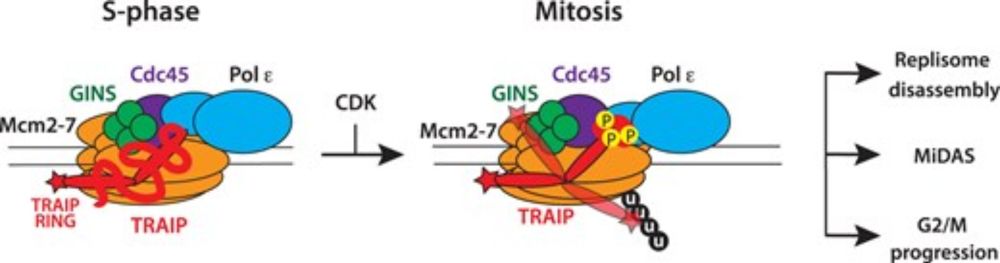
CDK-driven phosphorylation of TRAIP is essential for mitotic replisome disassembly and MiDAS
Abstract. Disassembly of the replication machinery (replisome) from chromatin is an active process driven by two ubiquitin ligases Cul2LRR1 and TRAIP, whic
academic.oup.com
July 10, 2025 at 2:55 PM
It is finally out 👍😀. Great job of the team (mostly absent from Bsky) and @m-saponaro.bsky.social
CDK-driven phosphorylation of TRAIP is essential for mitotic replisome disassembly and MiDAS url: academic.oup.com/nar/article/...
CDK-driven phosphorylation of TRAIP is essential for mitotic replisome disassembly and MiDAS url: academic.oup.com/nar/article/...
Reposted by Yasemin Baris
Postdoc positions open in my lab (Francis Crick Institute) to study
1. initiation of DNA replication.
2. chromatin replication/epigenetic inheritance.
Great for biochemists, biophysicists and cryo-EM/cryo-tomography scientists.
Deadline 3 August 2025.
crick.wd3.myworkdayjobs.com/External/job...
1. initiation of DNA replication.
2. chromatin replication/epigenetic inheritance.
Great for biochemists, biophysicists and cryo-EM/cryo-tomography scientists.
Deadline 3 August 2025.
crick.wd3.myworkdayjobs.com/External/job...
June 20, 2025 at 9:38 AM
Postdoc positions open in my lab (Francis Crick Institute) to study
1. initiation of DNA replication.
2. chromatin replication/epigenetic inheritance.
Great for biochemists, biophysicists and cryo-EM/cryo-tomography scientists.
Deadline 3 August 2025.
crick.wd3.myworkdayjobs.com/External/job...
1. initiation of DNA replication.
2. chromatin replication/epigenetic inheritance.
Great for biochemists, biophysicists and cryo-EM/cryo-tomography scientists.
Deadline 3 August 2025.
crick.wd3.myworkdayjobs.com/External/job...
Reposted by Yasemin Baris
Delighted to share that the results of my main postdoc project are now published in @nature.com
🔗 doi.org/10.1038/s415...
🔗 doi.org/10.1038/s415...
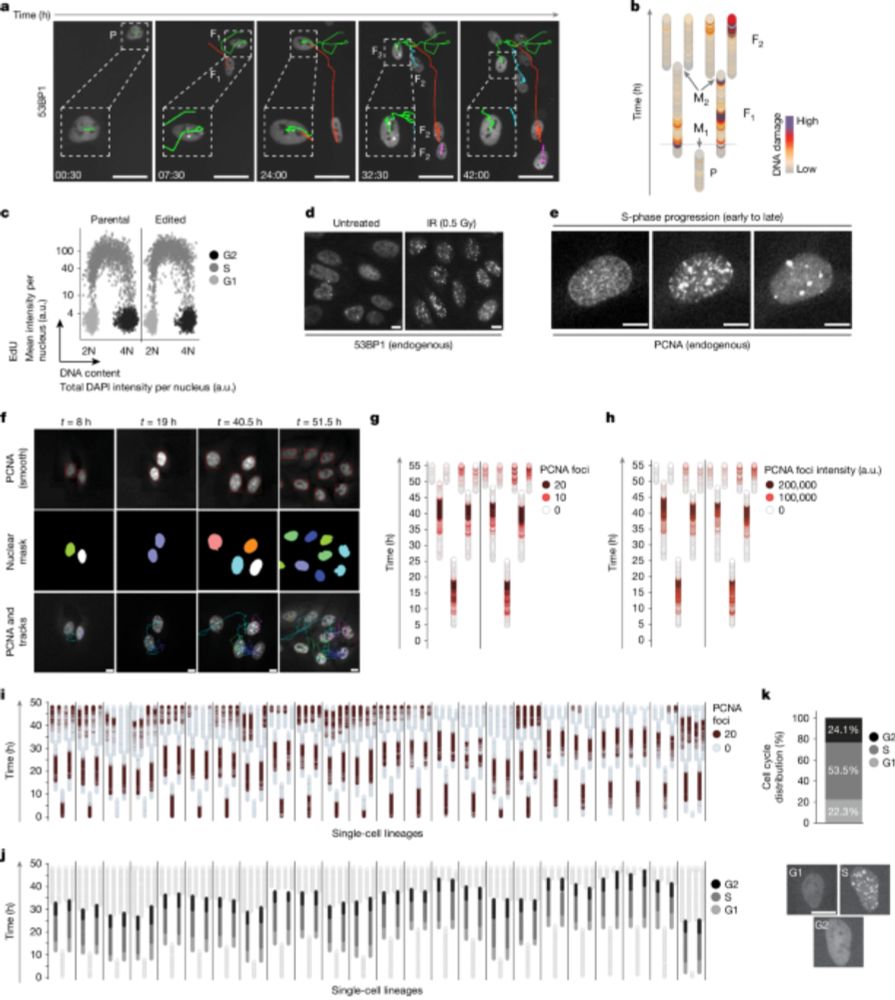
Multigenerational cell tracking of DNA replication and heritable DNA damage - Nature
A multigenerational single-cell tracking approach provides a framework to dissect phenotypic plasticity at the single-cell level, offering insights into cellular processes that may resemble early even...
doi.org
May 21, 2025 at 3:27 PM
Delighted to share that the results of my main postdoc project are now published in @nature.com
🔗 doi.org/10.1038/s415...
🔗 doi.org/10.1038/s415...
Amazing work!
🔬 New from the Farnung Lab: We established a fully in vitro reconstituted chromatin replication system and report the first cryo-EM snapshots of the human replisome engaging nucleosomes. Brilliant work by @felixsteinruecke.bsky.social with support from @jonmarkert.bsky.social! tinyurl.com/replisome
April 6, 2025 at 8:17 PM
Amazing work!
Reposted by Yasemin Baris
🔬 New from the Farnung Lab: We established a fully in vitro reconstituted chromatin replication system and report the first cryo-EM snapshots of the human replisome engaging nucleosomes. Brilliant work by @felixsteinruecke.bsky.social with support from @jonmarkert.bsky.social! tinyurl.com/replisome
April 6, 2025 at 9:45 AM
🔬 New from the Farnung Lab: We established a fully in vitro reconstituted chromatin replication system and report the first cryo-EM snapshots of the human replisome engaging nucleosomes. Brilliant work by @felixsteinruecke.bsky.social with support from @jonmarkert.bsky.social! tinyurl.com/replisome
Reposted by Yasemin Baris
I ❤️ this new paper on RAD52 at replication forks, just published @nature.com. Cryo-EM reveals a unique double-ring structure that blocks reversal of replication forks.
www.nature.com/articles/s41...
www.nature.com/articles/s41...
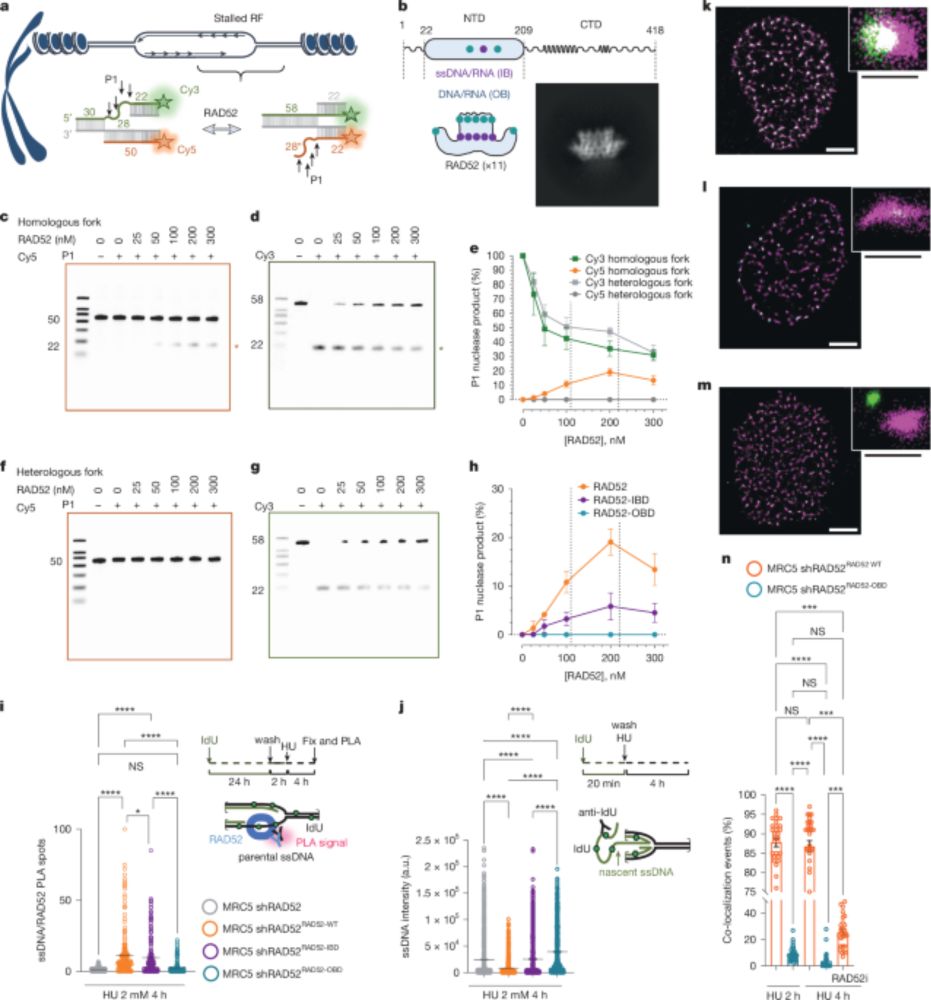
The RAD52 double-ring remodels replication forks restricting fork reversal - Nature
A head-to-head double-ring complex of the human multifunctional DNA repair protein RAD52 mediates protection of stalled replication forks during replication stress, protecting them from reversal by SM...
www.nature.com
April 3, 2025 at 11:58 PM
I ❤️ this new paper on RAD52 at replication forks, just published @nature.com. Cryo-EM reveals a unique double-ring structure that blocks reversal of replication forks.
www.nature.com/articles/s41...
www.nature.com/articles/s41...
Reposted by Yasemin Baris
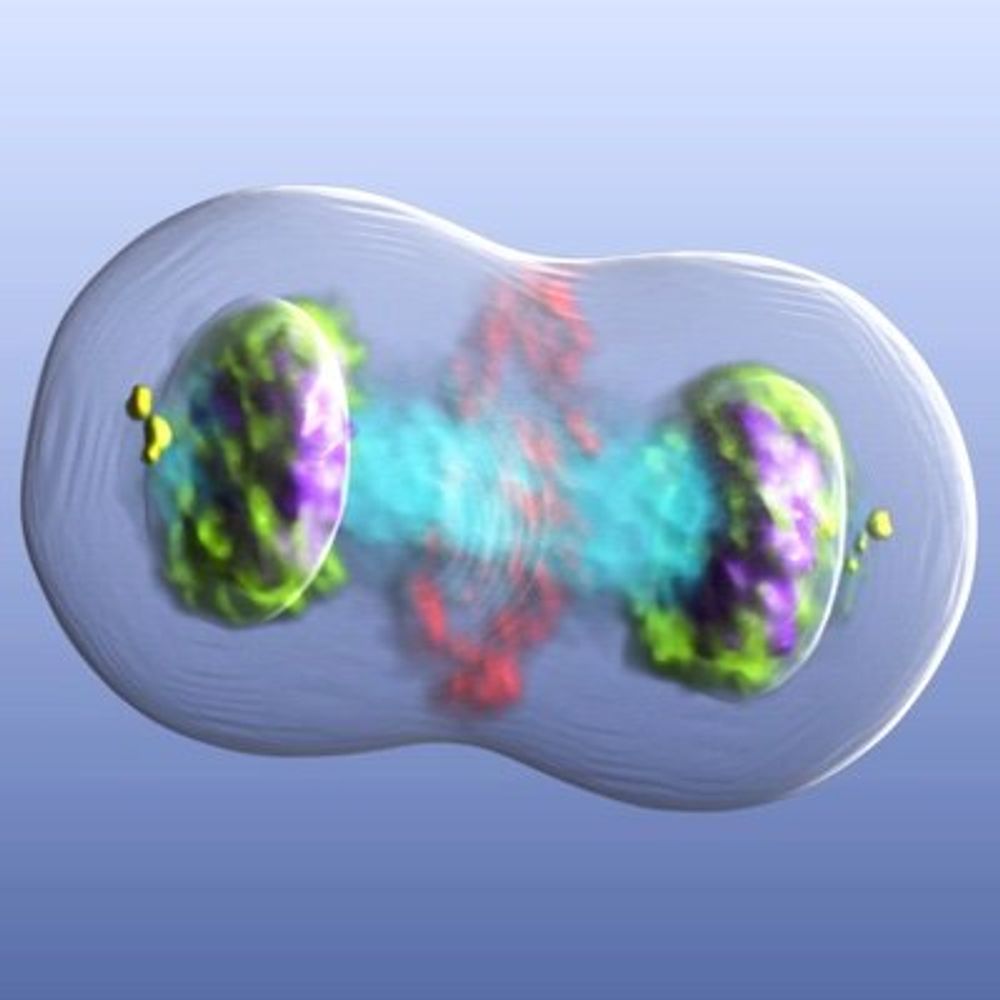
Our new findings on how chromosomes get ready for cell division are now published in @cellpress.bsky.social!
Congratulations, Kai, @andibrunner.bsky.social and everyone else involved! 🤩
www.sciencedirect.com/science/arti...
Congratulations, Kai, @andibrunner.bsky.social and everyone else involved! 🤩
www.sciencedirect.com/science/arti...
March 24, 2025 at 3:29 PM
Our new findings on how chromosomes get ready for cell division are now published in @cellpress.bsky.social!
Congratulations, Kai, @andibrunner.bsky.social and everyone else involved! 🤩
www.sciencedirect.com/science/arti...
Congratulations, Kai, @andibrunner.bsky.social and everyone else involved! 🤩
www.sciencedirect.com/science/arti...
Reposted by Yasemin Baris
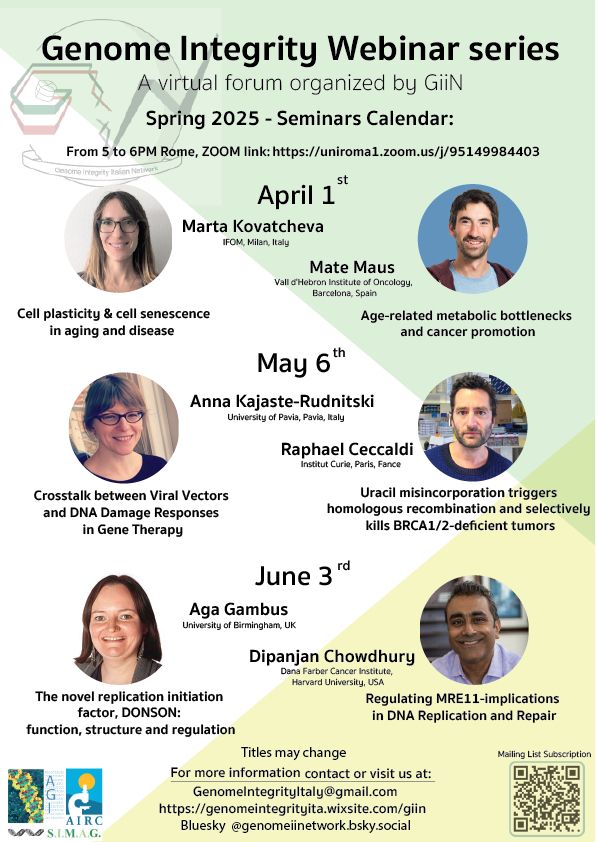
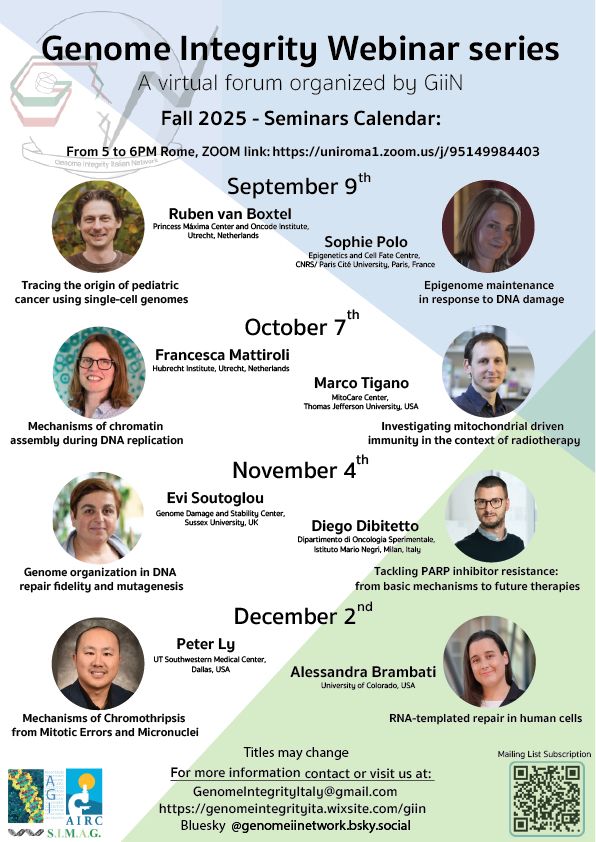
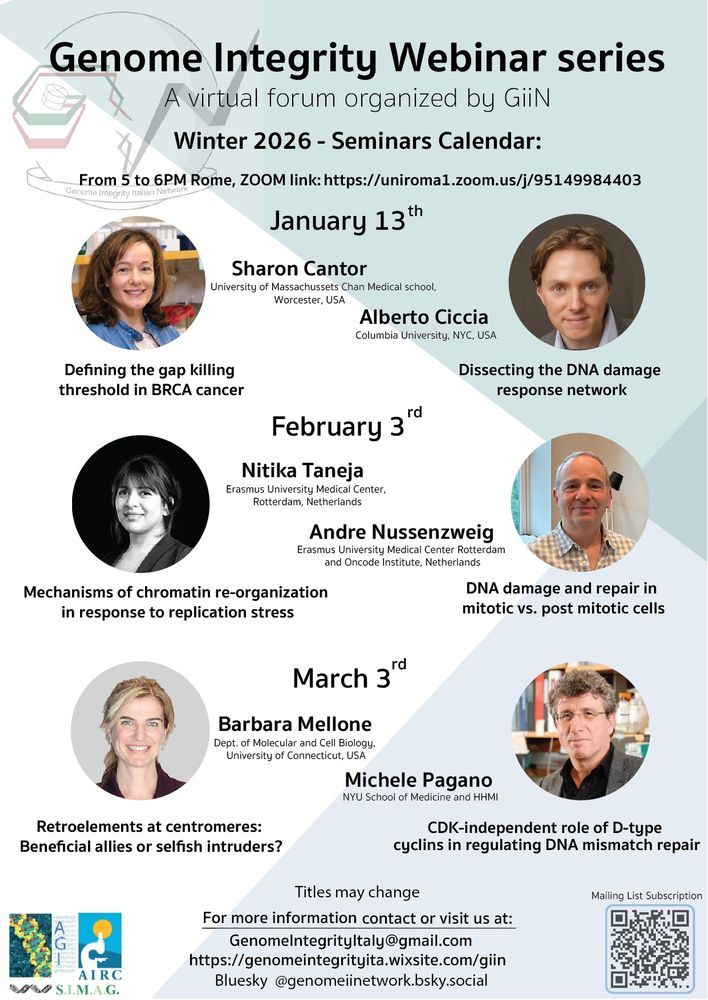
Exciting seminar series from Genome integrity italian Network (GiiN), chaired by myself and Raffaella Di Micco! Short talks (2x30’), at convenient time for EU/USA attendees. Big shots and raising stars in an expanding field. See flyers + link to receive email alerts. Please repost to your network!👇
March 17, 2025 at 9:58 PM
Exciting seminar series from Genome integrity italian Network (GiiN), chaired by myself and Raffaella Di Micco! Short talks (2x30’), at convenient time for EU/USA attendees. Big shots and raising stars in an expanding field. See flyers + link to receive email alerts. Please repost to your network!👇
Reposted by Yasemin Baris
🧬⛓️ Our latest preprint examines the fate of collapsed forks in vertebrates 🐸 and our colleagues in @heathmurraylab.bsky.social asked similar questions in bacteria 🦠 to reveal how evolution shapes the response to fork collapse (see🧵)
www.biorxiv.org/content/10.1...
www.biorxiv.org/content/10.1...
www.biorxiv.org/content/10.1...
www.biorxiv.org/content/10.1...
Resolution of collapsed forks is separate from completion of DNA synthesis
Replication fork collapse at single-strand DNA breaks (SSBs) poses a serious threat to genome stability. Using Xenopus egg extracts, we show that a replication fork encountering an SSB on either the l...
www.biorxiv.org
March 10, 2025 at 11:18 PM
🧬⛓️ Our latest preprint examines the fate of collapsed forks in vertebrates 🐸 and our colleagues in @heathmurraylab.bsky.social asked similar questions in bacteria 🦠 to reveal how evolution shapes the response to fork collapse (see🧵)
www.biorxiv.org/content/10.1...
www.biorxiv.org/content/10.1...
www.biorxiv.org/content/10.1...
www.biorxiv.org/content/10.1...
Reposted by Yasemin Baris
How do replisomes walk on DNA? And what happens when they run into a G-quadruplex? @sahilbatra.bsky.social and @benallwein.bsky.social provide unexpected insight in our latest paper with Richard Hite @mskcancercenter.bsky.social @science.org www.science.org/doi/10.1126/.... Congrats to all authors!
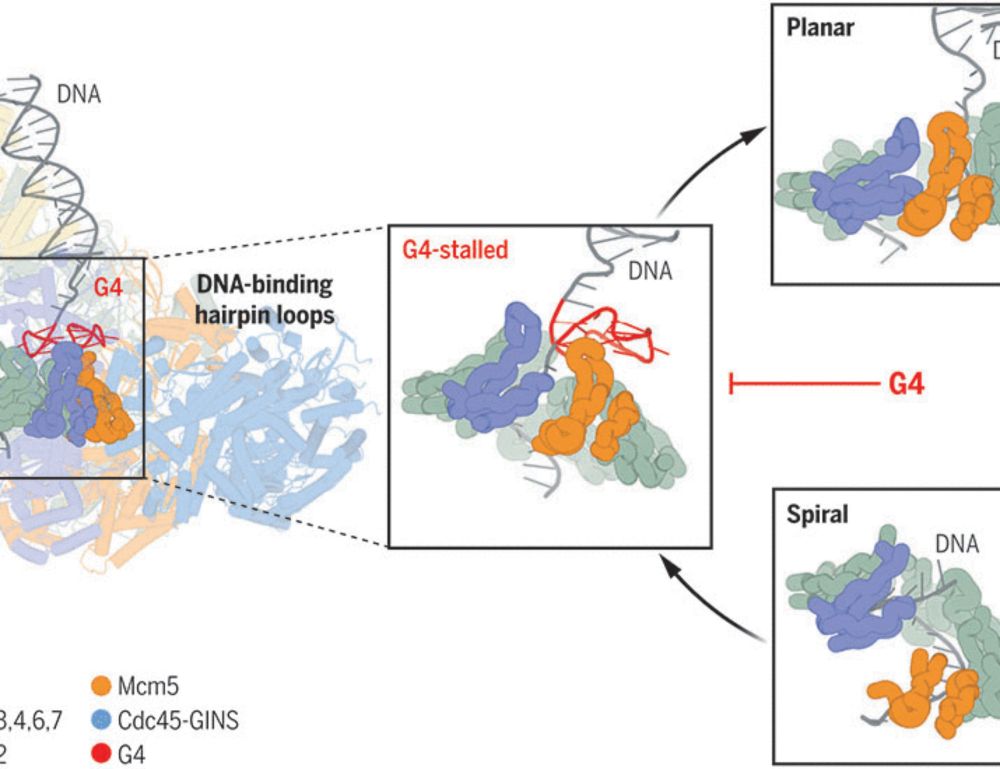
G-quadruplex–stalled eukaryotic replisome structure reveals helical inchworm DNA translocation
DNA G-quadruplexes (G4s) are non–B-form DNA secondary structures that threaten genome stability by impeding DNA replication. To elucidate how G4s induce replication fork arrest, we characterized fork ...
www.science.org
March 6, 2025 at 9:30 PM
How do replisomes walk on DNA? And what happens when they run into a G-quadruplex? @sahilbatra.bsky.social and @benallwein.bsky.social provide unexpected insight in our latest paper with Richard Hite @mskcancercenter.bsky.social @science.org www.science.org/doi/10.1126/.... Congrats to all authors!
Reposted by Yasemin Baris
A new PhD position is available in my lab to explore DNA replication mechanisms using single-molecule approaches. Apply by 19th of March:
www.crick.ac.uk/careers-stud...
www.crick.ac.uk/careers-stud...
Yardimci Lab | Single-molecule visualisation of the eukaryotic replication machinery
www.crick.ac.uk
March 4, 2025 at 11:39 AM
A new PhD position is available in my lab to explore DNA replication mechanisms using single-molecule approaches. Apply by 19th of March:
www.crick.ac.uk/careers-stud...
www.crick.ac.uk/careers-stud...
Reposted by Yasemin Baris

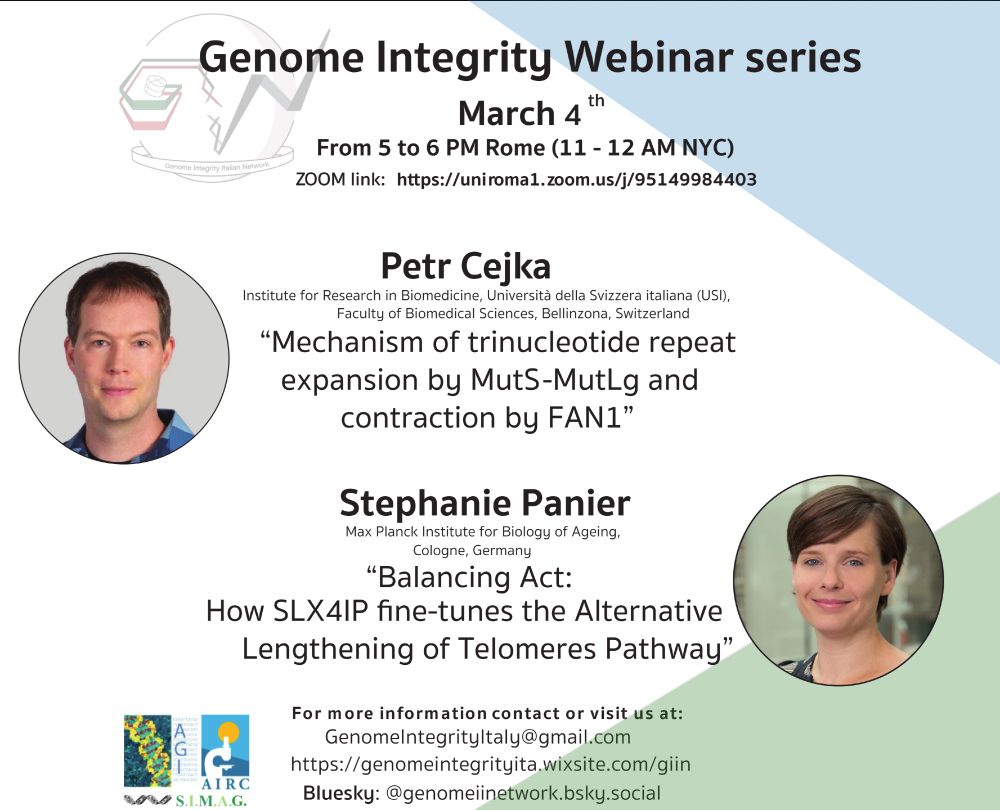
It's time for a new exciting GIIN webinar!🧬
Tomorrow @cejkalab.bsky.social and @spanier55.bsky.social will showcase their works.
Join the GIIN community tomorrow (March 4th) from 5 PM (Rome time) on Zoom uniroma1.zoom.us/j/95149984403
Tomorrow @cejkalab.bsky.social and @spanier55.bsky.social will showcase their works.
Join the GIIN community tomorrow (March 4th) from 5 PM (Rome time) on Zoom uniroma1.zoom.us/j/95149984403
March 3, 2025 at 2:37 PM
It's time for a new exciting GIIN webinar!🧬
Tomorrow @cejkalab.bsky.social and @spanier55.bsky.social will showcase their works.
Join the GIIN community tomorrow (March 4th) from 5 PM (Rome time) on Zoom uniroma1.zoom.us/j/95149984403
Tomorrow @cejkalab.bsky.social and @spanier55.bsky.social will showcase their works.
Join the GIIN community tomorrow (March 4th) from 5 PM (Rome time) on Zoom uniroma1.zoom.us/j/95149984403
Reposted by Yasemin Baris
SAVE THE DATE! The next EMBO | EMBL Symposium on 'DNA replication and genome maintenance: from basic biology to disease' will be held October 20-23, 2026.
Organized by Helle Ulrich (IMB), Johannes Walter (Harvard) and Anja Groth (Danish Cancer Institute).
www.embl.org/about/info/c...
Organized by Helle Ulrich (IMB), Johannes Walter (Harvard) and Anja Groth (Danish Cancer Institute).
www.embl.org/about/info/c...
DNA replication and genome maintenance: from basic biology to disease
www.embl.org
February 26, 2025 at 3:22 PM
SAVE THE DATE! The next EMBO | EMBL Symposium on 'DNA replication and genome maintenance: from basic biology to disease' will be held October 20-23, 2026.
Organized by Helle Ulrich (IMB), Johannes Walter (Harvard) and Anja Groth (Danish Cancer Institute).
www.embl.org/about/info/c...
Organized by Helle Ulrich (IMB), Johannes Walter (Harvard) and Anja Groth (Danish Cancer Institute).
www.embl.org/about/info/c...
Beautiful work!
🥳Just published @nature.com. Over 25 years after the discovery of SPO11 as the enzyme responsible for initiating meiotic recombination, we finally succeeded in reconstituting its DNA cleavage activity.🧵
www.nature.com/articles/s41...
www.nature.com/articles/s41...
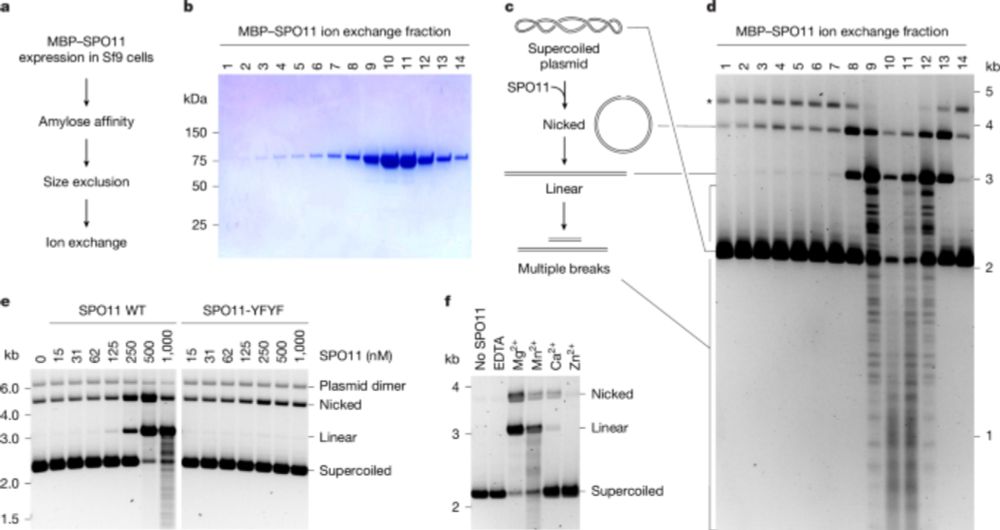
SPO11 dimers are sufficient to catalyse DNA double-strand breaks in vitro - Nature
A biochemical system recapitulates the hallmarks of meiotic double-strand break formation, with mouse SPO11 catalysing break formation in the absence of any partners and remaining covalently atta...
www.nature.com
February 19, 2025 at 5:35 PM
Beautiful work!
Reposted by Yasemin Baris
scary but fascinating - cells have a degradation pathway that hunts down C-terminal scars (amides!) on damaged proteins. just wow. chemical biology plus CRISPR at its best. big congrats to all authors!
www.nature.com/articles/s41...
www.nature.com/articles/s41...
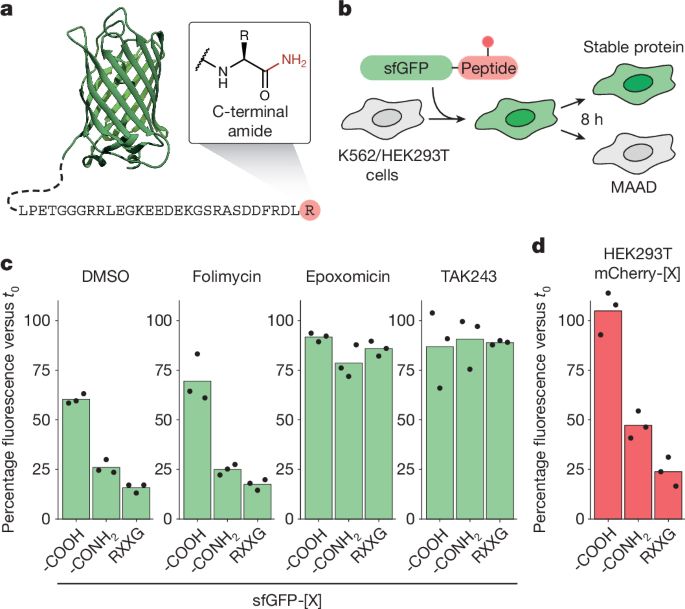
C-terminal amides mark proteins for degradation via SCF–FBXO31 - Nature
SCF–FBXO31 scans proteins for C-terminal amidation and marks them for subsequent proteasomal degradation.
www.nature.com
January 29, 2025 at 5:57 PM
scary but fascinating - cells have a degradation pathway that hunts down C-terminal scars (amides!) on damaged proteins. just wow. chemical biology plus CRISPR at its best. big congrats to all authors!
www.nature.com/articles/s41...
www.nature.com/articles/s41...
Reposted by Yasemin Baris
The first seminar of 2025 is only 2 days away! Have you registered yet?
us06web.zoom.us/webinar/regi...
us06web.zoom.us/webinar/regi...
January 27, 2025 at 9:28 PM
The first seminar of 2025 is only 2 days away! Have you registered yet?
us06web.zoom.us/webinar/regi...
us06web.zoom.us/webinar/regi...
Reposted by Yasemin Baris
Opening for a senior postdoc in our single-molecule DNA replication lab! Deadline January 15, 2025!
December 12, 2024 at 9:16 PM
Opening for a senior postdoc in our single-molecule DNA replication lab! Deadline January 15, 2025!
Reposted by Yasemin Baris
The first paper from our lab is online! A wonderful collaboration with @scottbscience.bsky.social lab. We discover that Pol II is extensively regulated by Ubiquitin at the beginning of the transcription cycle!
www.cell.com/molecular-ce...
www.cell.com/molecular-ce...
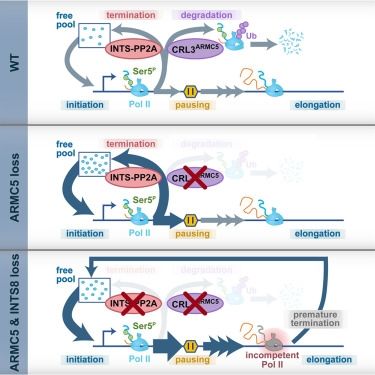
CRL3ARMC5 ubiquitin ligase and Integrator phosphatase form parallel mechanisms to control early stages of RNA Pol II transcription
Cacioppo, Gillis, Shlamovitz, Zeller, et al. show that CRL3ARMC5 ubiquitylates RNA Pol II at early stages of transcription as part of a major homeostatic RNA Pol II turnover mechanism. CRL3ARMC5 and the Integrator phosphatase act as complementary pathways, monitoring the quantity and quality of RNA Pol II complexes before they are licensed into elongation.
www.cell.com
December 11, 2024 at 5:19 PM
The first paper from our lab is online! A wonderful collaboration with @scottbscience.bsky.social lab. We discover that Pol II is extensively regulated by Ubiquitin at the beginning of the transcription cycle!
www.cell.com/molecular-ce...
www.cell.com/molecular-ce...