


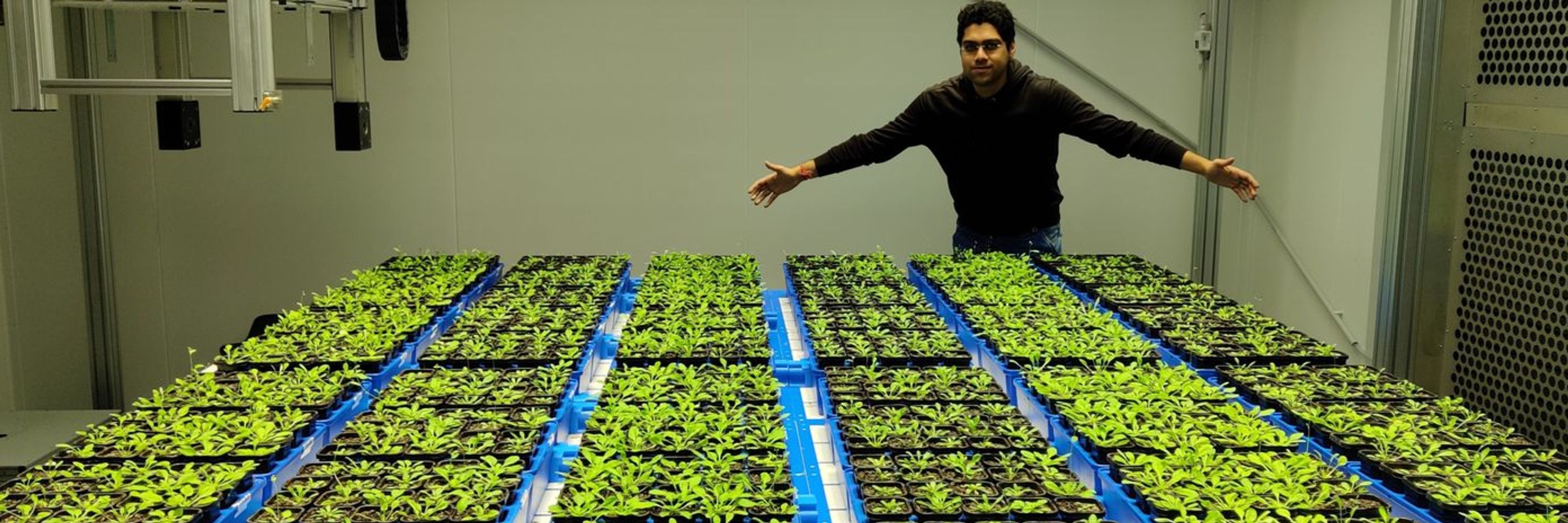

Soham Mukhopadhyay
@sohambio.bsky.social
Plant-Microbe Interaction | Postdoc @Edel's Lab @UniversiteLaval, Canada | Genomics | Aquascaping | Creator of biosearch.chat
Pinned
Soham Mukhopadhyay
@sohambio.bsky.social
· Feb 21
Out in @elife.bsky.social ! 🎉
Thank you @sohambio.bsky.social for your persistence! Also to @asimjaved.bsky.social & @jiaxuwu.bsky.social for your contributions! So excited to keep understanding gall-forming pathogens using these results as a starting point!
elifesciences.org/reviewed-pre...
Thank you @sohambio.bsky.social for your persistence! Also to @asimjaved.bsky.social & @jiaxuwu.bsky.social for your contributions! So excited to keep understanding gall-forming pathogens using these results as a starting point!
elifesciences.org/reviewed-pre...
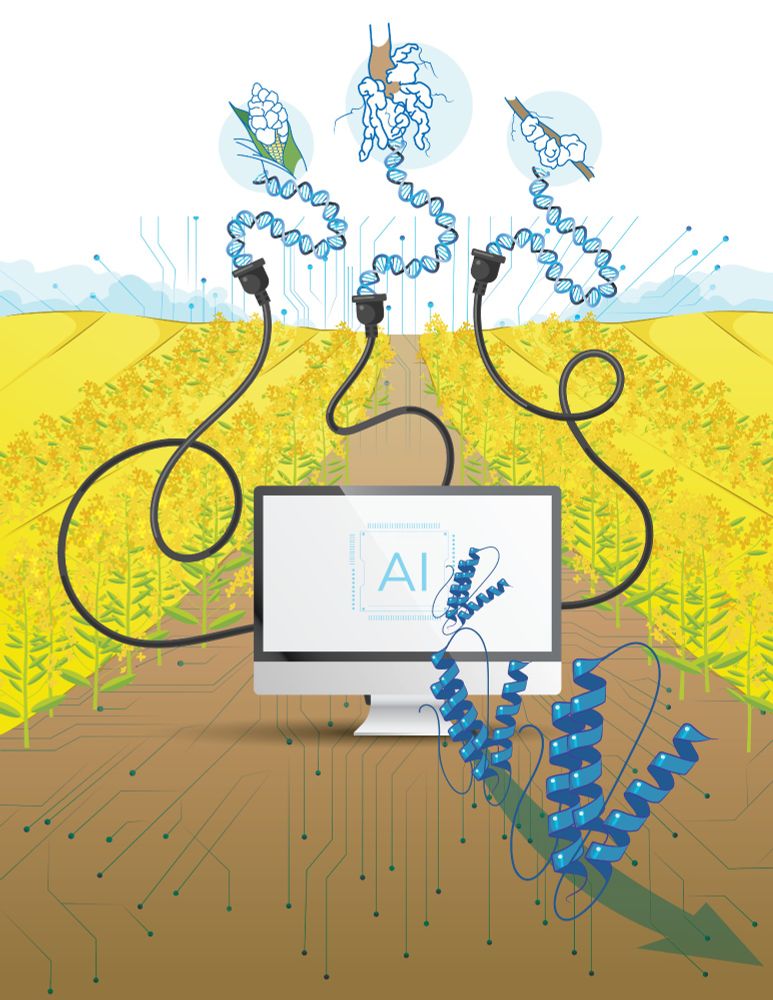
Happy to see our preprint on the structure-guided analysis of the secretome of gall-forming microbes find a home @elife.bsky.social! 🥳 Thank you to my coauthors, especially @edelplopez.bsky.social , for the continuous support and encouragement.
Reposted by Soham Mukhopadhyay

We are thrilled to announce the first official release (v0.1.8) of #𝗯𝗲𝗱𝗱𝗲𝗿, the successor to one of our flagship tool, #𝗯𝗲𝗱𝘁𝗼𝗼𝗹𝘀! Based on ideas we conceived of long ago (!), this was achieved thanks to the dedication of Brent Pedersen.
1/n
1/n
Intro to Bedder – The Quinlan Lab
quinlanlab.org
December 2, 2025 at 2:28 AM
Reposted by Soham Mukhopadhyay
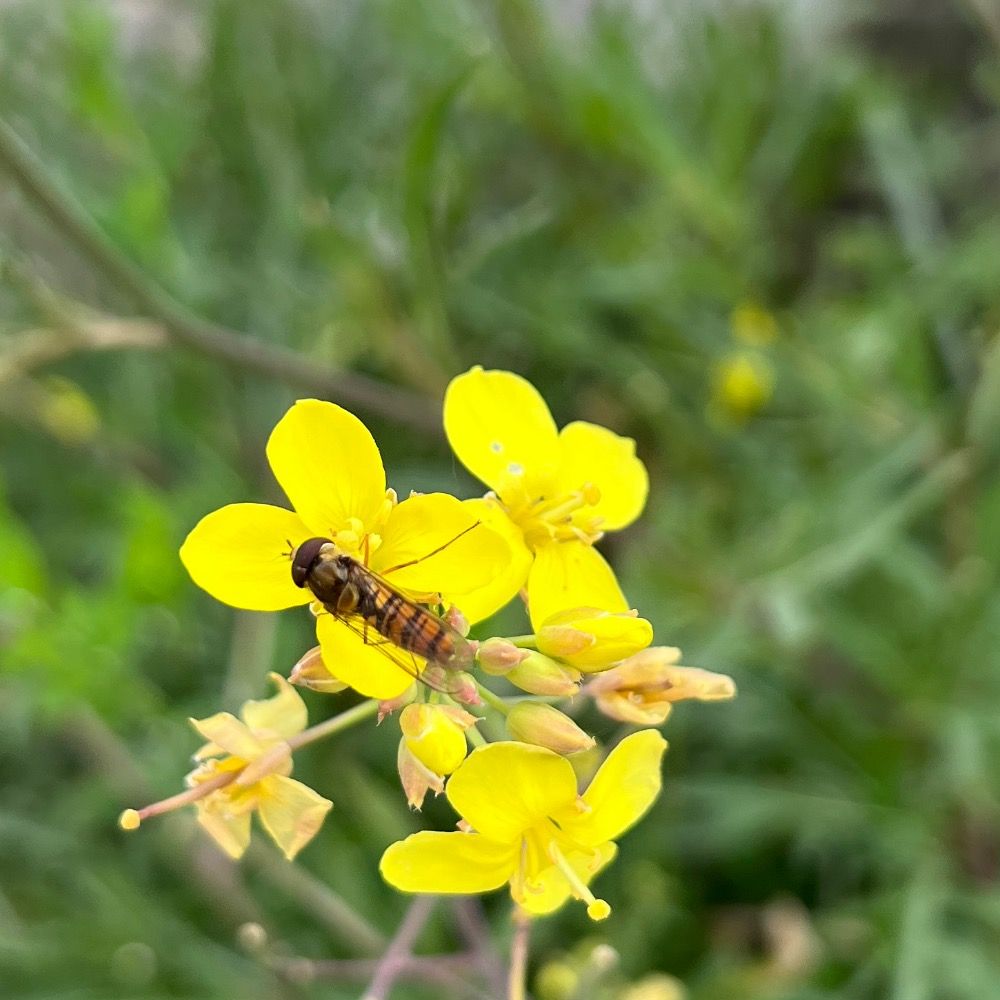
AI model Helixer predicts eukaryotic genes ab initio, directly from a plain text FASTA file.
No RNA-seq.
No protein homology.
No repeats, hints, or curated evidence.
Raw genome → accurate gene models.
Deep learning + HMM, published in @natmethods.nature.com
www.nature.com/articles/s41...
No RNA-seq.
No protein homology.
No repeats, hints, or curated evidence.
Raw genome → accurate gene models.
Deep learning + HMM, published in @natmethods.nature.com
www.nature.com/articles/s41...

Helixer: ab initio prediction of primary eukaryotic gene models combining deep learning and a hidden Markov model - Nature Methods
By leveraging both deep learning and hidden Markov models, Helixer achieves broad taxonomic coverage for ab initio gene annotation of eukaryotic genomes from fungi, plants, vertebrates and invertebrat...
www.nature.com
November 26, 2025 at 6:00 AM
AI model Helixer predicts eukaryotic genes ab initio, directly from a plain text FASTA file.
No RNA-seq.
No protein homology.
No repeats, hints, or curated evidence.
Raw genome → accurate gene models.
Deep learning + HMM, published in @natmethods.nature.com
www.nature.com/articles/s41...
No RNA-seq.
No protein homology.
No repeats, hints, or curated evidence.
Raw genome → accurate gene models.
Deep learning + HMM, published in @natmethods.nature.com
www.nature.com/articles/s41...
Reposted by Soham Mukhopadhyay

gggenomes: A Grammar of Graphics for Comparative Genomics thackl.github.io/gggenomes/ #Rstats

A Grammar of Graphics for Comparative Genomics
An extension of ggplot2 for creating complex genomic maps. It builds on the power of ggplot2 and tidyverse adding new ggplot2-style geoms & positions and dplyr-style verbs to manipulate the…
thackl.github.io
November 18, 2025 at 7:02 PM
gggenomes: A Grammar of Graphics for Comparative Genomics thackl.github.io/gggenomes/ #Rstats
Reposted by Soham Mukhopadhyay

Rewriting the code of plant immunity go.nature.com/475WgV7

October 14, 2025 at 8:25 PM
Rewriting the code of plant immunity go.nature.com/475WgV7
Just when you thought plant galls couldn't be of any more shapes! Such cool findings!
"Dasineura asteriae Reprograms the Flower Gene Expressions of Vegetative Organs to Create Flower-Like Gall in Aster scaber"
onlinelibrary.wiley.com/doi/10.1111/...
"Dasineura asteriae Reprograms the Flower Gene Expressions of Vegetative Organs to Create Flower-Like Gall in Aster scaber"
onlinelibrary.wiley.com/doi/10.1111/...

October 12, 2025 at 4:13 PM
Just when you thought plant galls couldn't be of any more shapes! Such cool findings!
"Dasineura asteriae Reprograms the Flower Gene Expressions of Vegetative Organs to Create Flower-Like Gall in Aster scaber"
onlinelibrary.wiley.com/doi/10.1111/...
"Dasineura asteriae Reprograms the Flower Gene Expressions of Vegetative Organs to Create Flower-Like Gall in Aster scaber"
onlinelibrary.wiley.com/doi/10.1111/...
Reposted by Soham Mukhopadhyay
1/13 Thankfully, both you and your plants have a lot of sophisticated ways to fight off invading pathogens.
In our new preprint, we describe a new way in which animals and plants share a common strategy to ward off harmful bacteria.
www.biorxiv.org/content/10.1...
In our new preprint, we describe a new way in which animals and plants share a common strategy to ward off harmful bacteria.
www.biorxiv.org/content/10.1...

A secreted citrus protease cleaves an outer membrane protein of the Huanglongbing pathogen
Plants secrete a variety of proteases as a defense response during infection by microbial pathogens. However, the relationship between their catalytic activities and antimicrobial functions remains la...
www.biorxiv.org
October 10, 2025 at 2:15 PM
1/13 Thankfully, both you and your plants have a lot of sophisticated ways to fight off invading pathogens.
In our new preprint, we describe a new way in which animals and plants share a common strategy to ward off harmful bacteria.
www.biorxiv.org/content/10.1...
In our new preprint, we describe a new way in which animals and plants share a common strategy to ward off harmful bacteria.
www.biorxiv.org/content/10.1...
Reposted by Soham Mukhopadhyay

New preprint! 🐛 Root-knot nematodes hijack root cells, turning them into feeding sites and making plants very sick. Using a cross-species scRNA-seq approach we mapped this process and show how this knowledge can be used to engineer resistant crops.🌱 A summary🧵 :
www.biorxiv.org/content/10.1...
www.biorxiv.org/content/10.1...

September 10, 2025 at 2:30 PM
New preprint! 🐛 Root-knot nematodes hijack root cells, turning them into feeding sites and making plants very sick. Using a cross-species scRNA-seq approach we mapped this process and show how this knowledge can be used to engineer resistant crops.🌱 A summary🧵 :
www.biorxiv.org/content/10.1...
www.biorxiv.org/content/10.1...
Reposted by Soham Mukhopadhyay

“from so simple a beginning endless forms most beautiful and most wonderful have been, and are being, evolved.”


September 4, 2025 at 9:54 AM
“from so simple a beginning endless forms most beautiful and most wonderful have been, and are being, evolved.”
Reposted by Soham Mukhopadhyay
Check out our new pre-print! ✨
We cloned AvrWTK4, the first wheat powdery mildew effector recognised by a tandem kinase protein, and show that an HMA-like integrated domain in WTK4 acts as pathogen decoy. Discover the whole story on bioRxiv ⬇️
We cloned AvrWTK4, the first wheat powdery mildew effector recognised by a tandem kinase protein, and show that an HMA-like integrated domain in WTK4 acts as pathogen decoy. Discover the whole story on bioRxiv ⬇️

An HMA-like integrated domain in the wheat tandem kinase WTK4 recognises an RNase-like pathogen effector https://www.biorxiv.org/content/10.1101/2025.08.26.672365v1
September 1, 2025 at 4:55 PM
Check out our new pre-print! ✨
We cloned AvrWTK4, the first wheat powdery mildew effector recognised by a tandem kinase protein, and show that an HMA-like integrated domain in WTK4 acts as pathogen decoy. Discover the whole story on bioRxiv ⬇️
We cloned AvrWTK4, the first wheat powdery mildew effector recognised by a tandem kinase protein, and show that an HMA-like integrated domain in WTK4 acts as pathogen decoy. Discover the whole story on bioRxiv ⬇️
Reposted by Soham Mukhopadhyay

Fantastic review on methodological developments in protein structural phylogenetics
academic.oup.com/gbe/article/...
academic.oup.com/gbe/article/...

Protein Structural Phylogenetics
Abstract. Protein structural phylogenetics is an interdisciplinary branch of molecular evolution that (i) uses 3D structural data to trace evolutionary his
academic.oup.com
September 1, 2025 at 11:15 PM
Fantastic review on methodological developments in protein structural phylogenetics
academic.oup.com/gbe/article/...
academic.oup.com/gbe/article/...
a new clubroot susceptibility gene discovered through GWAS

Inactivation of β-1,3-glucan synthase-like 5 confers broad-spectrum resistance to Plasmodiophora brassicae pathotypes in cruciferous plants
www.nature.com/articles/s41...
www.nature.com/articles/s41...

Inactivation of β-1,3-glucan synthase-like 5 confers broad-spectrum resistance to Plasmodiophora brassicae pathotypes in cruciferous plants - Nature Genetics
This study implicates GSL5 inactivation in high, broad-spectrum resistance to the clubroot pathogen Plasmodiophora brassicae in Arabidopsis thaliana, Brassica napus, Brassica oleracea and Brassica rap...
www.nature.com
September 1, 2025 at 12:12 PM
a new clubroot susceptibility gene discovered through GWAS
Reposted by Soham Mukhopadhyay
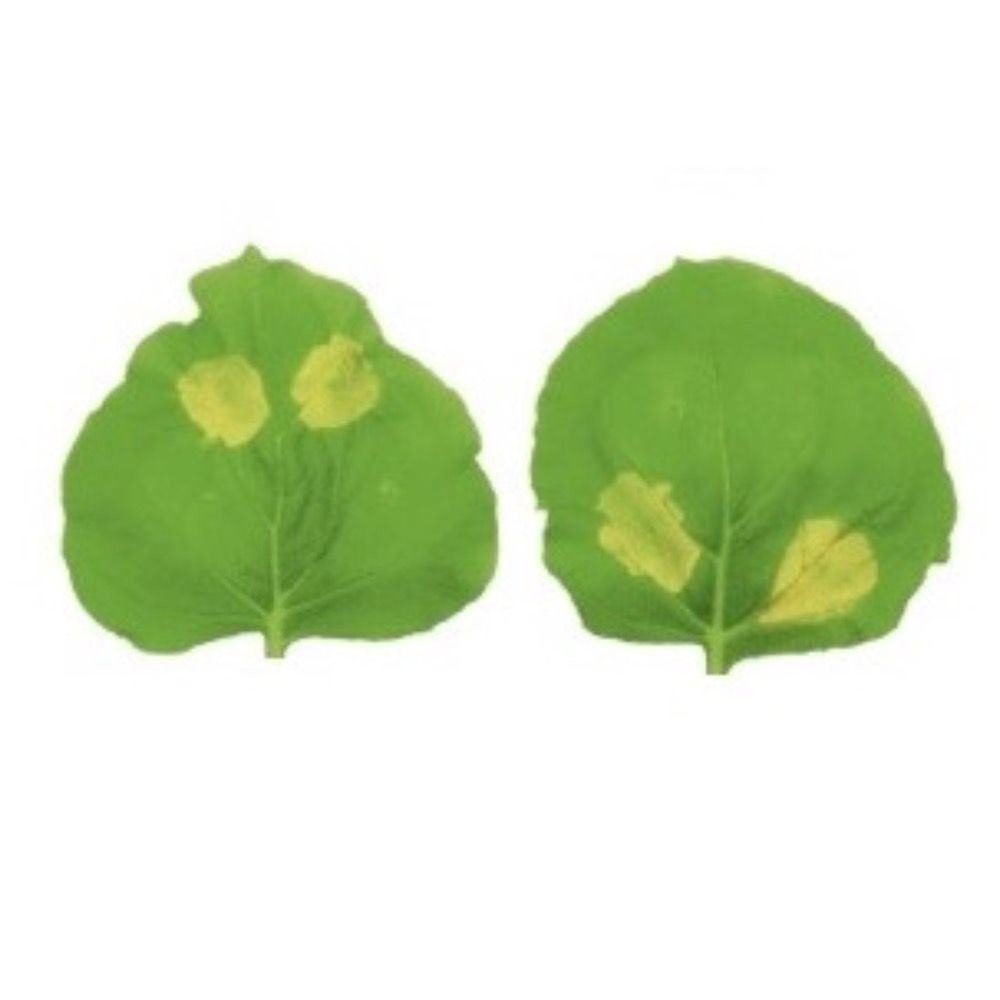
First a pentamer, then a hexamer… now an octamer!
The riddle of the enigmatic CCG10-NLR immune receptor family cracked open 🔥
Congrats Guanghao @GuanghaoGuo He Zhang @mhz1989 Selva @M__Selvaraj et al.
#NLRbiology #plantsci #immunology
The riddle of the enigmatic CCG10-NLR immune receptor family cracked open 🔥
Congrats Guanghao @GuanghaoGuo He Zhang @mhz1989 Selva @M__Selvaraj et al.
#NLRbiology #plantsci #immunology


August 28, 2025 at 12:05 PM
First a pentamer, then a hexamer… now an octamer!
The riddle of the enigmatic CCG10-NLR immune receptor family cracked open 🔥
Congrats Guanghao @GuanghaoGuo He Zhang @mhz1989 Selva @M__Selvaraj et al.
#NLRbiology #plantsci #immunology
The riddle of the enigmatic CCG10-NLR immune receptor family cracked open 🔥
Congrats Guanghao @GuanghaoGuo He Zhang @mhz1989 Selva @M__Selvaraj et al.
#NLRbiology #plantsci #immunology
Today's going exceptionally well 😅. Our paper describing the screening of Arabidopsis natural accessions against a Canadian clubroot pathotype is out now!
What are the odds? 🤯
A second paper out today—this time revealing a new source of clubroot resistance in Arabidopsis! 🌱🛡️
Congratulations Melaine González García (@melainegg.bsky.social) 🎉!
Check it out here 👉 apsjournals.apsnet.org/doi/10.1094/...
A second paper out today—this time revealing a new source of clubroot resistance in Arabidopsis! 🌱🛡️
Congratulations Melaine González García (@melainegg.bsky.social) 🎉!
Check it out here 👉 apsjournals.apsnet.org/doi/10.1094/...

Arabidopsis ecotype screening reveals novel sources of clubroot resistance | Plant Disease
Clubroot, caused by Plasmodiophora brassicae, poses a persistent threat to Brassicaceae crops, particularly in regions where resistant cultivars are under strong selection pressure. To identify new so...
apsjournals.apsnet.org
August 26, 2025 at 9:33 PM
Today's going exceptionally well 😅. Our paper describing the screening of Arabidopsis natural accessions against a Canadian clubroot pathotype is out now!
Glad to see this out! We discussed the confusion around the ever-growing list of clubroot resistance genes and what truly qualifies as the novel ones. The clubroot community needs a consistent nomenclature to keep track of the real progress. @jiaxuwu.bsky.social , @edelplopez.bsky.social

"Déjà Vu in Clubroot Resistance: Same Genes, New Names"
by Edel Pérez-López (@edelplopez.bsky.social) & colleagues
"If we want meaningful progress...we must critically re-evaluate what qualifies as a truly novel R gene."
FREE access till Oct. 15th here:
authors.elsevier.com/a/1lg2acQbJF...
by Edel Pérez-López (@edelplopez.bsky.social) & colleagues
"If we want meaningful progress...we must critically re-evaluate what qualifies as a truly novel R gene."
FREE access till Oct. 15th here:
authors.elsevier.com/a/1lg2acQbJF...

August 26, 2025 at 6:14 PM
Glad to see this out! We discussed the confusion around the ever-growing list of clubroot resistance genes and what truly qualifies as the novel ones. The clubroot community needs a consistent nomenclature to keep track of the real progress. @jiaxuwu.bsky.social , @edelplopez.bsky.social
Reposted by Soham Mukhopadhyay

Happy to see this out! @jiaxuwu.bsky.social, @sohambio.bsky.social & I tackle the growing confusion in clubroot resistance gene naming. We call for a common nomenclature and a shared database to speed up durable resistance 🧬 🥦
Thank you @cp-trendsgenetics.bsky.social for a great editorial process!
Thank you @cp-trendsgenetics.bsky.social for a great editorial process!
"Déjà Vu in Clubroot Resistance: Same Genes, New Names"
by Edel Pérez-López (@edelplopez.bsky.social) & colleagues
"If we want meaningful progress...we must critically re-evaluate what qualifies as a truly novel R gene."
FREE access till Oct. 15th here:
authors.elsevier.com/a/1lg2acQbJF...
by Edel Pérez-López (@edelplopez.bsky.social) & colleagues
"If we want meaningful progress...we must critically re-evaluate what qualifies as a truly novel R gene."
FREE access till Oct. 15th here:
authors.elsevier.com/a/1lg2acQbJF...
August 26, 2025 at 4:55 PM
Happy to see this out! @jiaxuwu.bsky.social, @sohambio.bsky.social & I tackle the growing confusion in clubroot resistance gene naming. We call for a common nomenclature and a shared database to speed up durable resistance 🧬 🥦
Thank you @cp-trendsgenetics.bsky.social for a great editorial process!
Thank you @cp-trendsgenetics.bsky.social for a great editorial process!
Reposted by Soham Mukhopadhyay

📣 NEW PREPRINT 📝
We identified evolutionary origins of many fungal effectors!
We show that fungi secrete lots of antimicrobial proteins, and that some of them were repurposed by plant pathogens for host immune suppression.
www.biorxiv.org/content/10.1...
cc @teamthomma.bsky.social
We identified evolutionary origins of many fungal effectors!
We show that fungi secrete lots of antimicrobial proteins, and that some of them were repurposed by plant pathogens for host immune suppression.
www.biorxiv.org/content/10.1...
cc @teamthomma.bsky.social

Plant-associated fungi co-opt ancient antimicrobials for host manipulation
Evolutionary histories of effector proteins secreted by fungal pathogens to mediate plant colonization remain largely elusive. While most functionally characterized effectors modulate plant immunity, ...
www.biorxiv.org
August 15, 2025 at 7:47 AM
📣 NEW PREPRINT 📝
We identified evolutionary origins of many fungal effectors!
We show that fungi secrete lots of antimicrobial proteins, and that some of them were repurposed by plant pathogens for host immune suppression.
www.biorxiv.org/content/10.1...
cc @teamthomma.bsky.social
We identified evolutionary origins of many fungal effectors!
We show that fungi secrete lots of antimicrobial proteins, and that some of them were repurposed by plant pathogens for host immune suppression.
www.biorxiv.org/content/10.1...
cc @teamthomma.bsky.social
Reposted by Soham Mukhopadhyay

We’re excited to share our latest work on plant pathogen effector protein evolution @biorxivpreprint.bsky.social. With @kamounlab.bsky.social and Abbas Maqbool.
www.biorxiv.org/content/10.1...
www.biorxiv.org/content/10.1...

Rewinding the tape: historical contingency and functional constraints have shaped the evolution of APikL virulence effectors in the blast fungus
Protein evolution is influenced by historical contingencies and functional constraints, but their combined impact on rapidly diversifying pathogen virulence effectors remains poorly understood. Here, ...
www.biorxiv.org
August 13, 2025 at 2:36 PM
We’re excited to share our latest work on plant pathogen effector protein evolution @biorxivpreprint.bsky.social. With @kamounlab.bsky.social and Abbas Maqbool.
www.biorxiv.org/content/10.1...
www.biorxiv.org/content/10.1...
Thanks @plantphys.bsky.social for the highlight! Aquatic plants are beautiful and it's really cool to observe oxygen bubbles being produced realtime during photosynthesis! Pics from my old tank-


August 4, 2025 at 2:58 PM
Thanks @plantphys.bsky.social for the highlight! Aquatic plants are beautiful and it's really cool to observe oxygen bubbles being produced realtime during photosynthesis! Pics from my old tank-
Reposted by Soham Mukhopadhyay
2️⃣ PhD Positions in the lab:
📢 #1: Microbiome Diversity and Evolution in Leafhoppers Across Canada
📢 #2: Morphological Changes in Plant Roots Induced by Plasmodiophorid Effectors
📨 To apply submit :
* A cover letter
* Your curriculum vitae
* Academic transcripts
Applications: edelab2024@gmail.com
📢 #1: Microbiome Diversity and Evolution in Leafhoppers Across Canada
📢 #2: Morphological Changes in Plant Roots Induced by Plasmodiophorid Effectors
📨 To apply submit :
* A cover letter
* Your curriculum vitae
* Academic transcripts
Applications: edelab2024@gmail.com
July 31, 2025 at 1:52 AM
2️⃣ PhD Positions in the lab:
📢 #1: Microbiome Diversity and Evolution in Leafhoppers Across Canada
📢 #2: Morphological Changes in Plant Roots Induced by Plasmodiophorid Effectors
📨 To apply submit :
* A cover letter
* Your curriculum vitae
* Academic transcripts
Applications: edelab2024@gmail.com
📢 #1: Microbiome Diversity and Evolution in Leafhoppers Across Canada
📢 #2: Morphological Changes in Plant Roots Induced by Plasmodiophorid Effectors
📨 To apply submit :
* A cover letter
* Your curriculum vitae
* Academic transcripts
Applications: edelab2024@gmail.com
Reposted by Soham Mukhopadhyay

We wrote a review on the free nucleotide pool as a central playground in human, bacterial, and plant immunity – now out in Nature Reviews in Immunology
www.nature.com/articles/s41...
Was fun to write this piece with Dina Hochhauser!
Here is a thread to explain the premises
1/
www.nature.com/articles/s41...
Was fun to write this piece with Dina Hochhauser!
Here is a thread to explain the premises
1/
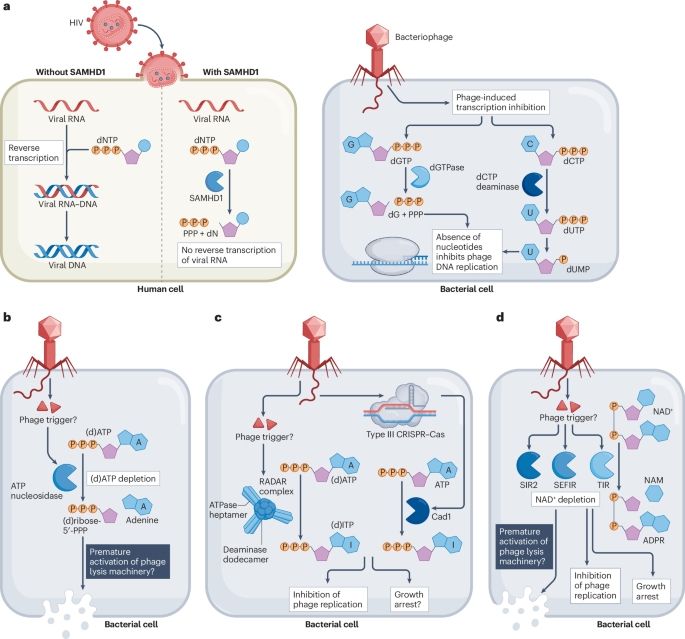
Manipulation of the nucleotide pool in human, bacterial and plant immunity - Nature Reviews Immunology
Modification of the nucleotide pool is emerging as key to innate immunity in animals, plants and bacteria. This Review explains how immune pathways conserved from bacteria to humans manipulate the nuc...
www.nature.com
July 30, 2025 at 6:05 AM
We wrote a review on the free nucleotide pool as a central playground in human, bacterial, and plant immunity – now out in Nature Reviews in Immunology
www.nature.com/articles/s41...
Was fun to write this piece with Dina Hochhauser!
Here is a thread to explain the premises
1/
www.nature.com/articles/s41...
Was fun to write this piece with Dina Hochhauser!
Here is a thread to explain the premises
1/
Reposted by Soham Mukhopadhyay
Wow - an important component of a central human innate immune pathway was discovered based on homology to a bacterial anti-phage defense system
A beautiful example showing how new knowledge on bacterial immunity translates to discoveries important for human health
A beautiful example showing how new knowledge on bacterial immunity translates to discoveries important for human health

🦠🧍♀️From bacterial to human immunity.
We report in @science.org the discovery of a human homolog of SIR2 antiphage proteins that participates in the TLR pathway of animal innate immunity.
Co-led wt @enzopoirier.bsky.social by D. Bonhomme and @hugovaysset.bsky.social
www.science.org/doi/10.1126/...
We report in @science.org the discovery of a human homolog of SIR2 antiphage proteins that participates in the TLR pathway of animal innate immunity.
Co-led wt @enzopoirier.bsky.social by D. Bonhomme and @hugovaysset.bsky.social
www.science.org/doi/10.1126/...
www.science.org
July 25, 2025 at 2:14 PM
Wow - an important component of a central human innate immune pathway was discovered based on homology to a bacterial anti-phage defense system
A beautiful example showing how new knowledge on bacterial immunity translates to discoveries important for human health
A beautiful example showing how new knowledge on bacterial immunity translates to discoveries important for human health
Reposted by Soham Mukhopadhyay

Three back-to-back Salicylic Acid biosynthesis papers 1/3 www.nature.com/articles/s41...
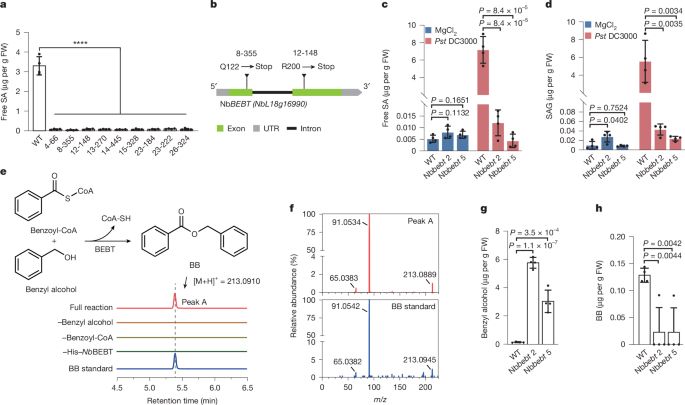
Three-step biosynthesis of salicylic acid from benzoyl-CoA in plants - Nature
The salicylic acid (SA) biosynthesis pathway—involving ligation of benzoyl coenzyme A and benzyl alcohol to give benzyl benzoate; hydroxylation of benzyl benzoate to give benzyl salicylate; and cleava...
www.nature.com
July 23, 2025 at 3:50 PM
Three back-to-back Salicylic Acid biosynthesis papers 1/3 www.nature.com/articles/s41...
Reposted by Soham Mukhopadhyay
Honored to share my journey and more importantly, how we can support the next generation of scientists in navigating the challenges of scientific mobility 🌍
Thank you @cp-trendsmicrobiol.bsky.social for this initiative and for giving visibility to stories that otherwise would have remained hidden 👏
Thank you @cp-trendsmicrobiol.bsky.social for this initiative and for giving visibility to stories that otherwise would have remained hidden 👏

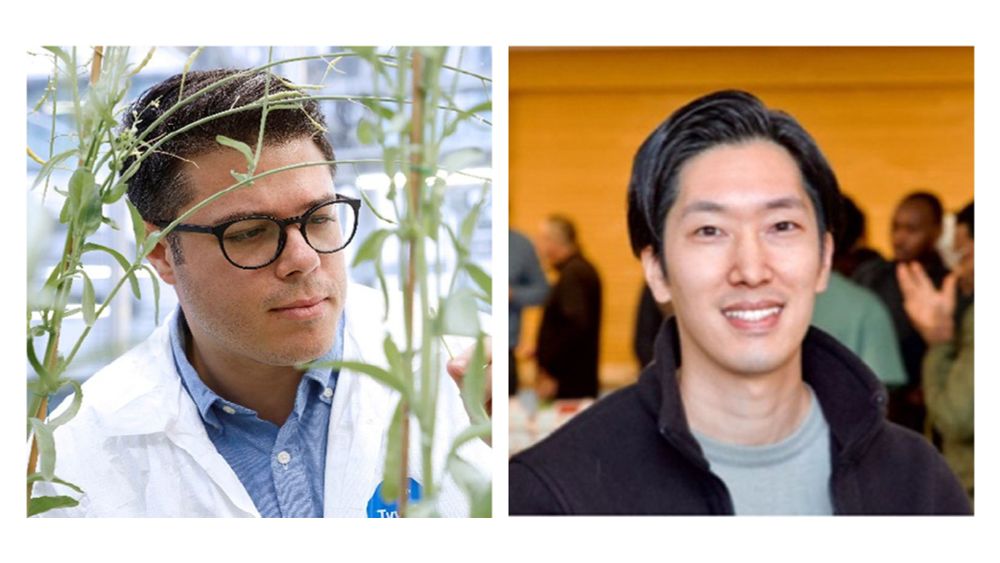
Two more articles in our series on 'Scientific mobility in microbiology' are online now.
Read @edelplopez.bsky.social and @tatsuyanobori.bsky.social's mobility-related experiences and their insights here: authors.elsevier.com/a/1lTnY,L%7E... & authors.elsevier.com/a/1lTnY_,2Ci...
Read @edelplopez.bsky.social and @tatsuyanobori.bsky.social's mobility-related experiences and their insights here: authors.elsevier.com/a/1lTnY,L%7E... & authors.elsevier.com/a/1lTnY_,2Ci...
July 23, 2025 at 9:46 AM
Honored to share my journey and more importantly, how we can support the next generation of scientists in navigating the challenges of scientific mobility 🌍
Thank you @cp-trendsmicrobiol.bsky.social for this initiative and for giving visibility to stories that otherwise would have remained hidden 👏
Thank you @cp-trendsmicrobiol.bsky.social for this initiative and for giving visibility to stories that otherwise would have remained hidden 👏
Reposted by Soham Mukhopadhyay

www.nature.com/articles/s41... Remodelling autoactive NLRs for broad-spectrum immunity in plants
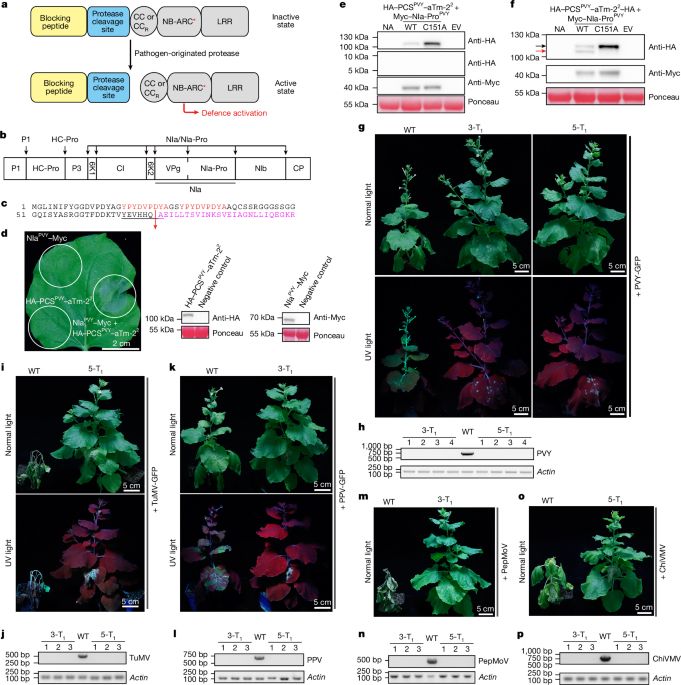
Remodelling autoactive NLRs for broad-spectrum immunity in plants - Nature
Cleavage by pathogen-derived proteases of an engineered chimeric protein activates its plant immune receptor component, enabling broad-spectrum resistance to pathogens in plants.
www.nature.com
July 16, 2025 at 4:00 PM
www.nature.com/articles/s41... Remodelling autoactive NLRs for broad-spectrum immunity in plants
Reposted by Soham Mukhopadhyay

#2025ISMPMI tremendous effector-NLR screen with 1617 plants presented by Yin Yan. Following up new avr-R gene couples.

July 16, 2025 at 2:48 PM
#2025ISMPMI tremendous effector-NLR screen with 1617 plants presented by Yin Yan. Following up new avr-R gene couples.