


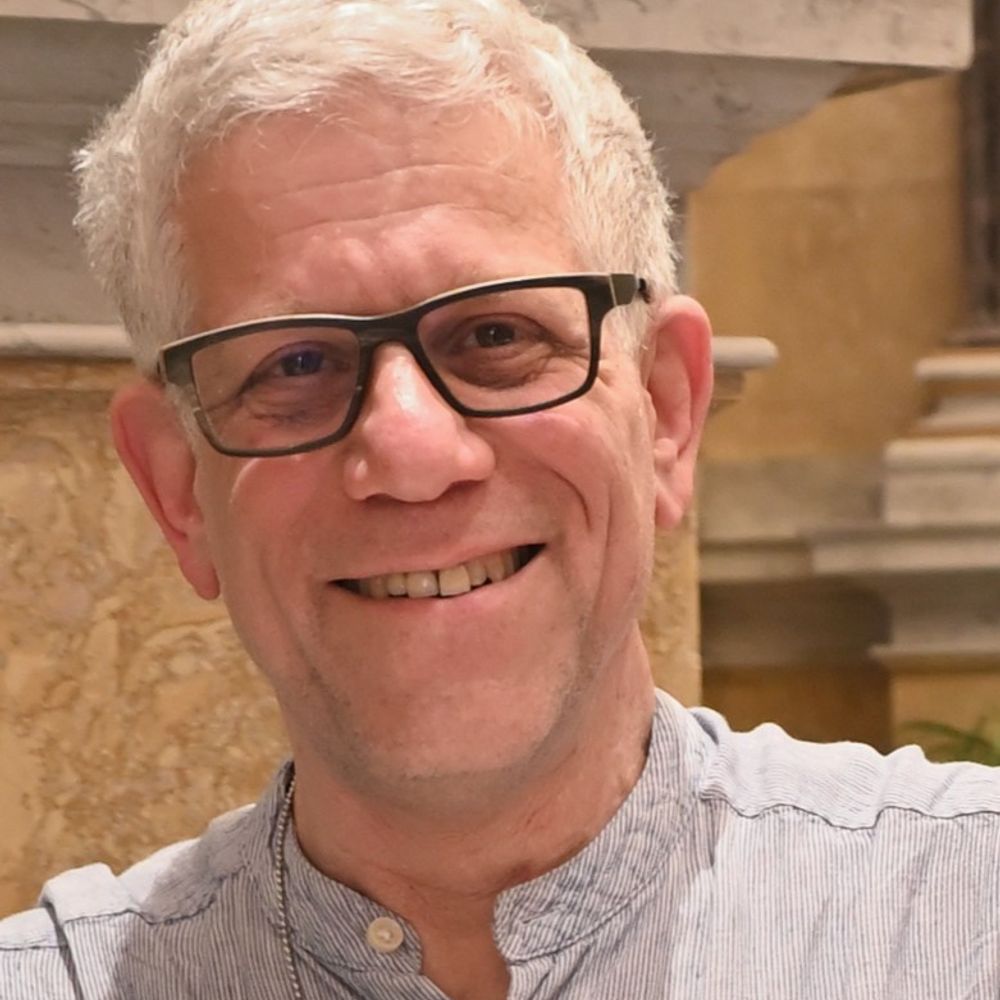
Muki Haklay
banner
mhaklay.bsky.social
Muki Haklay
@mhaklay.bsky.social

Professor at UCL, London; Team Lead at the Learning Planet Institute. Interested in public access, use, and creation of environmental information; citizen science, community science, scientific crowdsourcing or whatever you like to call it. .. more

Muki Haklay FAcSS is Professor of Geographical Information Science at the Department of Geography in University College London (UCL).

Source: Wikipedia
Computer science 35%
Environmental science 26%

Reposted by Muki Haklay

🗓️ #ECSA2026 𝐒𝐢𝐝𝐞 𝐄𝐯𝐞𝐧𝐭𝐬 - Registration Now Open

Join us for ice fishing 🎣, a reindeer farm visit 🦌, a Siilo tour 🏗️, a Finnish sauna 🔥 and much more.

Check the programme and sign up here 👉 https://www.ecsa2026.ngo/programme/#timetable

Mostly good! Wondering how 2026 will turn out with the London/Paris combination (all depends on project proposals that are in evaluation).

Reposted by Muki Haklay

🗓️ The #ECSA2026 𝐂𝐨𝐧𝐟𝐞𝐫𝐞𝐧𝐜𝐞 𝐏𝐫𝐨𝐠𝐫𝐚𝐦𝐦𝐞 is now finalised!
Explore the full timetable on the conference website 👉 https://www.ecsa2026.ngo/programme/#timetable

Plan your stay, choose your sessions, and don’t miss the wide variety of inspiring side events taking place throughout the conference.

Maybe www.comicsbeat.com/graphic-nove... ? (or will that be a gift for you?) and maybe the translation of The Left Hand www.goodreads.com/topic/show/2... ?
Graphic Novel Review: Does Ursula K. Le Guin's A WIZARD OF EARTHSEA work as a comic?
Ursula K. Le Guin's classic fantasy novel, A Wizard of Earthsea, has gotten a comics adaptation via Fred Fordham.
www.comicsbeat.com

Reposted by Muki Haklay

Looking for something special for a curious explorer in your life — or maybe treating yourself this season? 🎁🔭🌊 Check out the SciStarter newsletter! We’ve rounded up tools, all connected to projects that fuel meaningful research. Give a gift that keeps on giving… to science! 💙→ conta.cc/3KrF0SX

Johannes iNat is an interface between people and nature, recording an encounter with nature. Powerful way of thinking about it. There are lots of motivations, but getting an identification is a top motivation. The more present the first response on the system, the longer someone stays. That is core.

Quentin pointing about the use of the data, and not taking up citizen science Dara. CS not always focus on the most policy relevant data. There are challenges of privacy of people and what the data will used for.

AI has potential in helping in data validation, but it should be done carefully. It can amplify benefits but also errors. We can't ignore AI but need to address errors. For example false positives in biodiversity. AI can create them. In iNat, there can be problems in uncurated training data

Also demonstrated how more information about biodiversity can be extracted from existing observations, such as which plants an insect is associated with.

Quentin Groom, citizen scientists are doing work in order to achieve something - giving something back. Example from Montserrat bioblitz, used iNat as a data collection platform. Explaining licencing is difficult and you need to build trust regarding use of data. Bioblitz increases use of the app.

Changing nature is a collaboration between @mfnberlin.bsky.social and MNHN with different focus - anthropocene in Berlin and environment in Paris. There are challenges of challenges in data management and standardisation.

Alicia shares the history of mosaïc, created in 2020 with digital capabilities to develop and support participatory projects. For example SpiPoll, which allows monitoring of pollinators and supports showing the data that was collected, and improved process management.

For iNat, iPhone version is for affluent users and android is where the biodiversity is, but innovations appear first on iPhones because that's the revenue is... 98% are observes, and there is a shortage of identifiers. The AI helps in nudging observers to identify.

Final roundtable on technology and #citizenScience for biodiversity, with Johannes Klein of @inaturalist.bsky.social and Alicia Mansilla-sanchez of Mosaic of MNHN. Johannes notes how iNat as a platform, community, and connecting people to nature through photos.

Sylvie also linked Intuit and Saami youth. This is something that hopefully will have more in Ecsa2026.ngo conference. Framing her research as participatory action research...

Helen Roy shows research on wellbeing benefits of citizen science. Based on the paper The benefits of citizen science and nature‐noticing activities for well‐being, nature connectedness and pro‐nature conservation behaviours - 2023 - People and Nature share.google/1fE5HnvI7Q5G...

A visual representation of community scenario through use of maps.

Sylvie Blangy sharing her expérience in participatory research in Nanavut with Inuit Caribou herders, addressing mining impacts. Community members decided on research priorities, and especially on youth futures #indigenousKnowledge

Helen Roy of the UK Biological Records Centre is sharing #citizenScience for monitoring invasive species, including dealing with yellow legged hornets management.

Alice Couëtil presented a study of citizen science for biodiversity projects in France and in the overseas territories, with set of recommendations.

Raphaëlle Gasc of the union nationale des CPIE "citizen science increase connection of people to their place and the nature around them". Alexandra Villaroel Parda "the history of participatory science in the museum is over a hundred years, and there is a wide range of projects across many areas"

Today at the @mnhn.fr a conference on #citizenscience in biodiversity #participatoryscience
📢New Editor sought📢

We are seeking to appoint a Physical Geography Editor to The Geographical Journal. The GJ publishes work which engages with public issues and policy-relevant agendas.

🗓️Deadline: 7 January 2026

For more information, please see this page: www.rgs.org/about-us/our...
Editor role available at Society journal
Advert for a new Physical Geography Editor for the Geographical Journal.
www.rgs.org

Also mixing the scalebar and the legend - they are called Marginalia in cartography and I can see how a visual similarity synthetic machine will make a hash of it www.e-education.psu.edu/geog486/node...
Marginalia Design | GEOG 486: Cartography and Visualization
www.e-education.psu.edu

Reposted by Muki Haklay

𝐄𝐱𝐜𝐥𝐮𝐬𝐢𝐯𝐞 𝐎𝐟𝐟𝐞𝐫 𝐟𝐨𝐫 𝐖𝐢𝐝𝐞𝐧𝐢𝐧𝐠 𝐂𝐨𝐮𝐧𝐭𝐫𝐢𝐞𝐬!
This year, ECSA invites individuals and organisations from EU Member State Widening countries to join ECSA with a special opportunity:
•𝘕𝘰 𝘮𝘦𝘮𝘣𝘦𝘳𝘴𝘩𝘪𝘱 𝘧𝘦𝘦𝘴 𝘧𝘰𝘳 𝘵𝘩𝘦 𝘳𝘦𝘴𝘵 𝘰𝘧 2025 (𝘕𝘰𝘷𝘦𝘮𝘣𝘦𝘳–𝘋𝘦𝘤𝘦𝘮𝘣𝘦𝘳)
•50% 𝘰𝘧𝘧 2026 𝘮𝘦𝘮𝘣𝘦𝘳𝘴𝘩𝘪𝘱 𝘧𝘦𝘦𝘴
More here: www.ecsa.ngo/widening

Reposted by Muki Haklay

We are in UK Parliament today talking to MPs about the results of our citizen science experiment on nappy/diaper waste. We have clear policy recommendations which are zero cost to reduce the 300,000 nappies/diapers going into the environment every minute globally.

Reposted by Muki Haklay

@ucl.ac.uk Geography is helping Ethiopian communities map food & water resources using satellite imagery, WhatsApp, and local knowledge.

A 4-year project led by Dr Marcos Moreu & Prof Muki Haklay shows how geospatial innovation can drive social impact.

#UCLGeography #Crowdmapping #FoodSecurity
UCL Geography leads innovative crowdmapping project for food security in Ethiopia
UCL Geography is advancing food security in Ethiopia through pioneering crowdmapping methods, led by Dr Marcos Moreu and Professor Muki Haklay.
tinyurl.com

Introductory workshop on citizen science by Gitte Kragh from Arhus University as part of the PATTEN project. Registration: aarhusuniversity.zoom.us/meeting/regi... #SciComm #CitizenScience #CommunityScience

Reposted by Muki Haklay

📣#Survey shout-out!

What makes citizen science trustworthy?

Fill in the survey by AfricaMuseum, designed with IIASA:

🔍 Rate trustworthiness of hypothetical citizen science projects
✅Open to all! Regardless of previous experience with citizen science

The survey: conjointly.online/study/622299...
🚀 Just launched! UCL's Grand Challenge of Transformative Technology Impact Report

Celebrating the work of researchers, innovators & partners from UCL and beyond, the report highlights how innovation can improve lives and benefit humanity.

🔗 https://bit.ly/4niclx3
Launch of the Grand Challenge of Transformative Technology Impact Report
UCL Grand Challenges has launched the Grand Challenge of Transformative Technology Impact Report, celebrating almost a decade of pioneering research and collaboration exploring how innovation and tech...
bit.ly