




Ernesto Rázuri
@lerazuri.bsky.social
Ph.D. in Entomology, interested in Afrotropical & Neotropical caddisflies, manga, and what happens around me.
Reposted by Ernesto Rázuri

Finally new paper on leaf insects out 📄🍃 We had a deeper look into the diversity of Indonesian _Phyllium_ 👀 new species, new phylogeny, new egg morphologies 🪺🍃
with @tbuescher.bsky.social and @zookeys.pensoft.net
🔗 doi.org/10.3897/zook...
with @tbuescher.bsky.social and @zookeys.pensoft.net
🔗 doi.org/10.3897/zook...


October 23, 2025 at 11:55 AM
Finally new paper on leaf insects out 📄🍃 We had a deeper look into the diversity of Indonesian _Phyllium_ 👀 new species, new phylogeny, new egg morphologies 🪺🍃
with @tbuescher.bsky.social and @zookeys.pensoft.net
🔗 doi.org/10.3897/zook...
with @tbuescher.bsky.social and @zookeys.pensoft.net
🔗 doi.org/10.3897/zook...
Reposted by Ernesto Rázuri
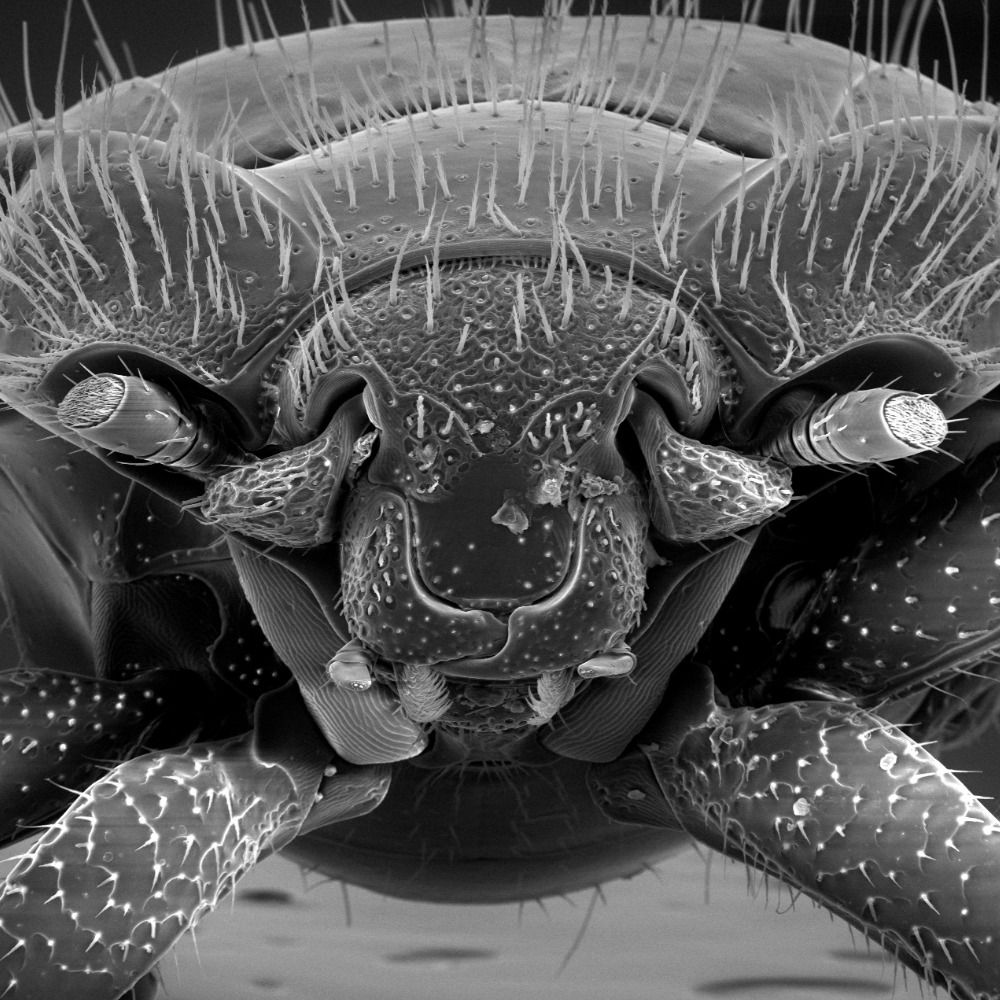
This blurb leaves out the most significant finding: at least 193 species where the whole German fauna of Ceraphronoidea was only known to comprise 36 species. Entomologists consider Europe to be 'well-known'. But, even there, in the darker corners of insect diversity, countless new species lurk.

As part of the "German Barcode of Life" (#GBOL) project, the team collected 2,136 specimens of the previously little-researched superfamily Ceraphronoidea at 18 locations across Baden-Württemberg.
The full study was published in “Biodiversity Data Journal”.
➡️ bdj.pensoft.net/article/1595...
The full study was published in “Biodiversity Data Journal”.
➡️ bdj.pensoft.net/article/1595...

German Barcode of Life reveals unexpected diversity of Ceraphronoidea (Hymenoptera)
Insect populations still experience marked declines globally, contributing to the ongoing biodiversity crisis. Counteracting these declines requires sound taxonomic and ecological knowledge on all lev...
bdj.pensoft.net
September 23, 2025 at 9:43 AM
This blurb leaves out the most significant finding: at least 193 species where the whole German fauna of Ceraphronoidea was only known to comprise 36 species. Entomologists consider Europe to be 'well-known'. But, even there, in the darker corners of insect diversity, countless new species lurk.
Reposted by Ernesto Rázuri

A revised species list of the water beetles in Lake Tonga, Algeria: doi.org/10.3897/zook...
#fauna #taxonomy #beetles
#fauna #taxonomy #beetles

September 17, 2025 at 10:03 AM
A revised species list of the water beetles in Lake Tonga, Algeria: doi.org/10.3897/zook...
#fauna #taxonomy #beetles
#fauna #taxonomy #beetles
Reposted by Ernesto Rázuri

A gecko newly discovered on Madagascar. Animal seems to occur only in a few small scattered fragments of ancient forest. Emphasizes #biodiversity value of even fractions of formerly dominating ecosystems. Imagine what we have lost already irreversibly. doi.org/10.3897/zook...

A new microendemic gecko from the small forest fragments of south-eastern Madagascar (Squamata, Gekkonidae, Paragehyra)
Historically, herpetological research in Madagascar has largely overlooked small forest fragments outside the country protected area network. Despite substantial declines in species diversity compared to large continuous forests, these fragments continue to sustain diverse herpetological communities and frequently harbour microendemic species. We describe a new gecko belonging to the genus Paragehyra, apparently microendemic to small and isolated forest fragments surrounding the Andringitra Massif in south-eastern Madagascar. Paragehyra tsaranoro sp. nov. is different from its congeneric species based on genetic distances in mitochondrial markers (16S and COI), phylogenetic position, and the lack of haplotype sharing at one nuclear locus (POMC). The new species is also distinguishable from its congeners based on a combination of 14 morphological characters. New genetic and morphological data are also provided for the sympatric P. felicitae and we propose a new assessment of its conservation status within the IUCN Red List. Paragehyra tsaranoro sp. nov. and P. felicitae are mostly found in forest fragments managed by local communities (community-managed reserves) outside legally protected areas. This study highlights the importance of community-based management for the conservation of local herpetofauna, particularly in regions heavily impacted by anthropogenic pressure and largely unsuitable for forest-dwelling species. The findings emphasise the importance of conducting research on small forest fragments, as they are essential for completing the inventory of Malagasy herpetofauna.
doi.org
September 7, 2025 at 6:59 AM
A gecko newly discovered on Madagascar. Animal seems to occur only in a few small scattered fragments of ancient forest. Emphasizes #biodiversity value of even fractions of formerly dominating ecosystems. Imagine what we have lost already irreversibly. doi.org/10.3897/zook...
Reposted by Ernesto Rázuri

Here's a subtropical beauty—Vanessa carye—spotted at the Quito Botanical Garden. This butterfly species ranges all the way from Venezuela down to Patagonia #lepidoptera #southamerica #ecuador #insects

August 3, 2025 at 10:53 AM
Here's a subtropical beauty—Vanessa carye—spotted at the Quito Botanical Garden. This butterfly species ranges all the way from Venezuela down to Patagonia #lepidoptera #southamerica #ecuador #insects
Reposted by Ernesto Rázuri

Great to have our caddisfly silk review now included in an issue in Trends in Genetics. And, I might be biased, but that sure is a beautiful cover ;)!

The June issue is live!
Two Opinion articles challenge the way we think about the genomic code, and Reviews cover topics ranging from human handedness to caddisfly silk (the latter of which is featured on the cover, courtesy of @paulbfrandsen.bsky.social).
More here:
www.cell.com/trends/genet...
Two Opinion articles challenge the way we think about the genomic code, and Reviews cover topics ranging from human handedness to caddisfly silk (the latter of which is featured on the cover, courtesy of @paulbfrandsen.bsky.social).
More here:
www.cell.com/trends/genet...

June 13, 2025 at 4:18 PM
Great to have our caddisfly silk review now included in an issue in Trends in Genetics. And, I might be biased, but that sure is a beautiful cover ;)!
Reposted by Ernesto Rázuri

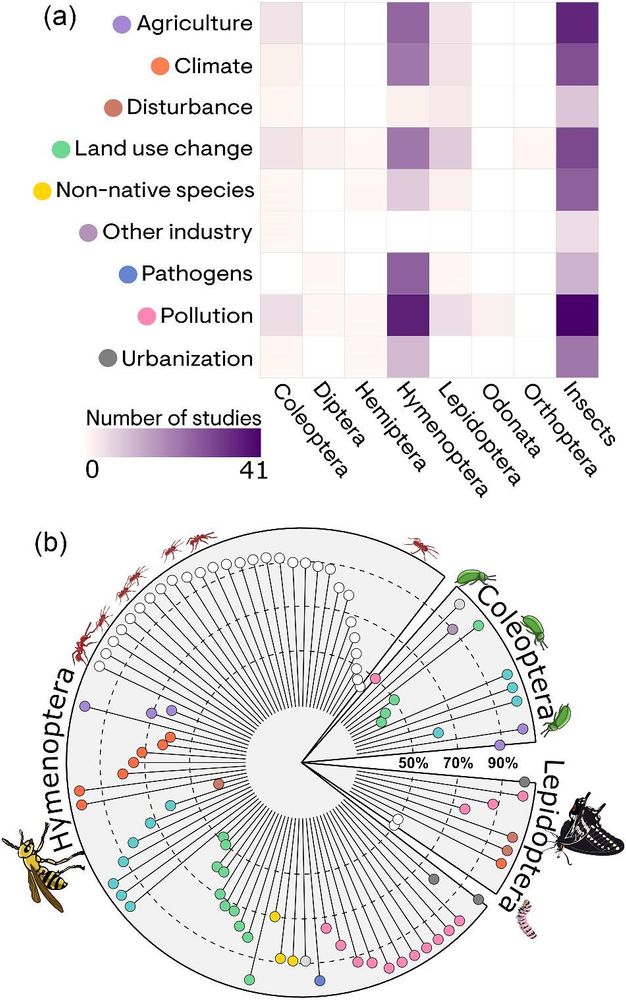
Sill need to digest this new meta-review on insect decline.
Taxonomic bias: lots of research on bee/ant/wasp decline (mainly on a limited range of pollinator taxa). A fair amount on beetles and butterflies/moths. Virtually none on other groups of insects.
🧪 🌎 🪲🪳
academic.oup.com/bioscience/a...
Taxonomic bias: lots of research on bee/ant/wasp decline (mainly on a limited range of pollinator taxa). A fair amount on beetles and butterflies/moths. Virtually none on other groups of insects.
🧪 🌎 🪲🪳
academic.oup.com/bioscience/a...
April 28, 2025 at 4:30 PM
Sill need to digest this new meta-review on insect decline.
Taxonomic bias: lots of research on bee/ant/wasp decline (mainly on a limited range of pollinator taxa). A fair amount on beetles and butterflies/moths. Virtually none on other groups of insects.
🧪 🌎 🪲🪳
academic.oup.com/bioscience/a...
Taxonomic bias: lots of research on bee/ant/wasp decline (mainly on a limited range of pollinator taxa). A fair amount on beetles and butterflies/moths. Virtually none on other groups of insects.
🧪 🌎 🪲🪳
academic.oup.com/bioscience/a...
Reposted by Ernesto Rázuri

A new chapter of the Peruvian Genome Project is out!
We explored the genetic composition and dynamics of individuals living in urban areas. We analyze genome-wide data from 432 urban individuals across 13 regions of Peru, including 346 newly genotyped! (1/6)
We explored the genetic composition and dynamics of individuals living in urban areas. We analyze genome-wide data from 432 urban individuals across 13 regions of Peru, including 346 newly genotyped! (1/6)

Peruvian Population Genomics: Unraveling the Genetic Landscape and Admixture Dynamics of Urban Populations https://www.biorxiv.org/content/10.1101/2025.04.10.648256v1
April 18, 2025 at 3:59 AM
A new chapter of the Peruvian Genome Project is out!
We explored the genetic composition and dynamics of individuals living in urban areas. We analyze genome-wide data from 432 urban individuals across 13 regions of Peru, including 346 newly genotyped! (1/6)
We explored the genetic composition and dynamics of individuals living in urban areas. We analyze genome-wide data from 432 urban individuals across 13 regions of Peru, including 346 newly genotyped! (1/6)
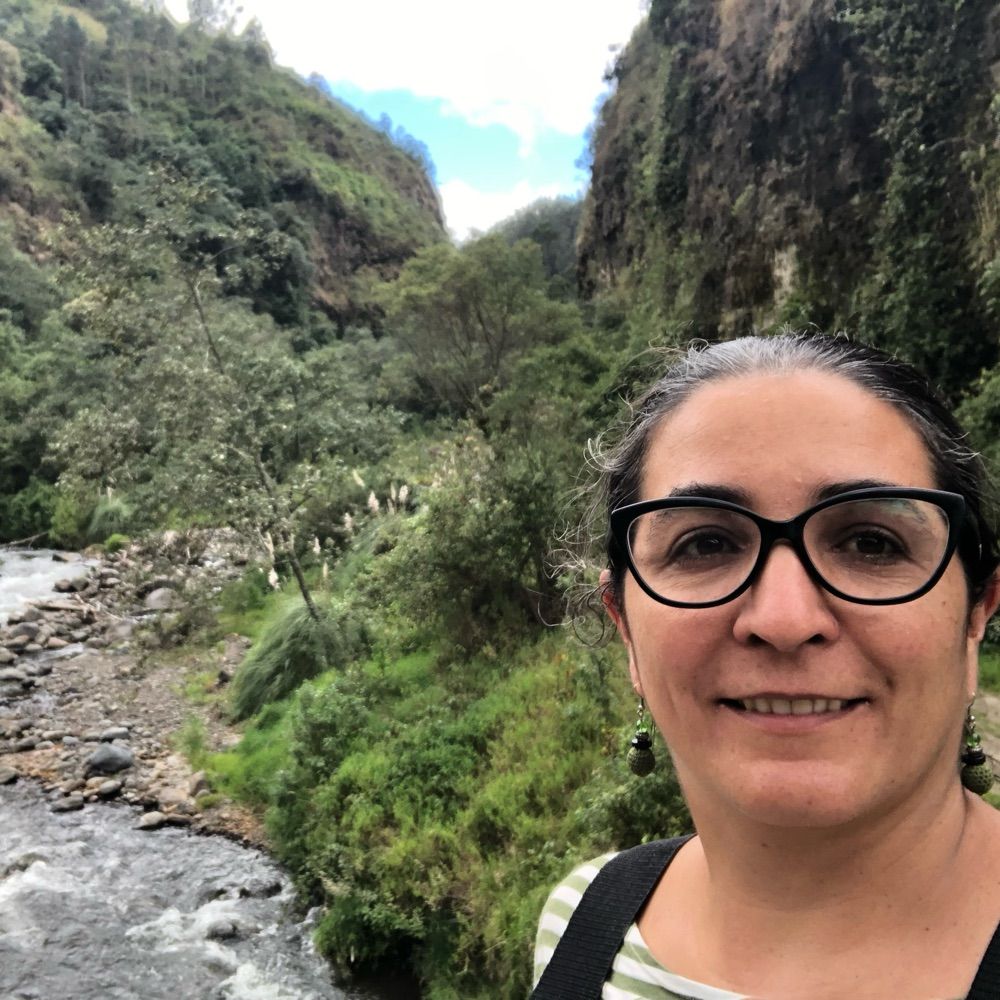
Atopsyche is the largest genus of Hydrobiosidae in South America. The larvae are aquatic predators and highly sensitive to environmental changes. In the Andes, there are several endemic species. Here, we present seven new species and update the species present in Ecuador. @lerazuri.bsky.social
Diversity and distribution of the caddisfly genus Atopsyche Banks, 1905 in Ecuador, with the description of seven new species (Trichoptera: Hydrobiosidae)
Atopsyche is the largest Hydrobiosidae genus on the South American continent. The genus previously included 27 species in Ecuador. In this work, we describe and illustrate seven new species of Atopsyc...
peerj.com
April 14, 2025 at 8:48 PM
Reposted by Ernesto Rázuri

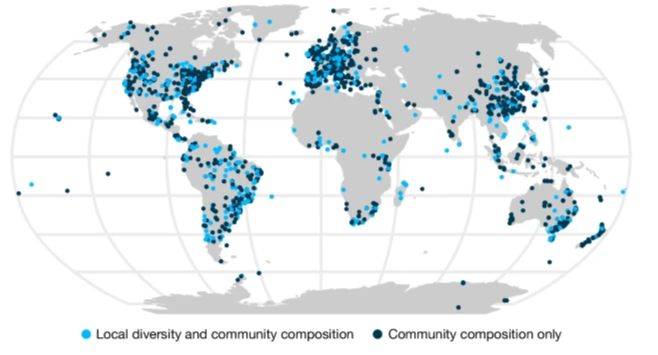
Our study ‘The global human impact on biodiversity’ is out in Nature!
Through an unprecedented synthesis (2133 studies!) we show that humans are not only shrinking species numbers—but reshaping entire communities across the planet. 🌍🌐🐟🌿🪲
www.nature.com/articles/s41...
Through an unprecedented synthesis (2133 studies!) we show that humans are not only shrinking species numbers—but reshaping entire communities across the planet. 🌍🌐🐟🌿🪲
www.nature.com/articles/s41...
March 26, 2025 at 4:31 PM
Our study ‘The global human impact on biodiversity’ is out in Nature!
Through an unprecedented synthesis (2133 studies!) we show that humans are not only shrinking species numbers—but reshaping entire communities across the planet. 🌍🌐🐟🌿🪲
www.nature.com/articles/s41...
Through an unprecedented synthesis (2133 studies!) we show that humans are not only shrinking species numbers—but reshaping entire communities across the planet. 🌍🌐🐟🌿🪲
www.nature.com/articles/s41...
Philopotamus montanus, Kinzig River, Hesse, Germany #insects #caddisfly

March 10, 2025 at 3:30 PM
Philopotamus montanus, Kinzig River, Hesse, Germany #insects #caddisfly
Reposted by Ernesto Rázuri

Have you heard of entoLIVE? It’s a series of free webinars that showcases the research of invertebrate researchers. 70 webinars to date!
We’re recruiting speakers for 2025 so get in touch if you’d like to present your work.
🧪 #entomology #research #science
biologicalrecording.co.uk/entolive/

entoLIVE
entoLIVE webinars bring the latest invertebrate subjects to the wider public. Our expert speakers cover cutting edge science, the latest conservation efforts and the status of British invertebrates…
biologicalrecording.co.uk
November 17, 2024 at 7:50 AM
Have you heard of entoLIVE? It’s a series of free webinars that showcases the research of invertebrate researchers. 70 webinars to date!
We’re recruiting speakers for 2025 so get in touch if you’d like to present your work.
🧪 #entomology #research #science
biologicalrecording.co.uk/entolive/
First attempt at using the Entomoscope to image some African caddisflies. The smaller specimen is a hydroptilid, probably in the genus Orthotrichia, and the second specimen is the leptocerid Trichosetodes anysa. #caddisflies


November 16, 2024 at 6:11 PM
First attempt at using the Entomoscope to image some African caddisflies. The smaller specimen is a hydroptilid, probably in the genus Orthotrichia, and the second specimen is the leptocerid Trichosetodes anysa. #caddisflies