


Gavin Beinart-Smollan
@beismo.bsky.social
Public and digital historian. PhD candidate at NYU. Writing about Yiddish family letters and the Lithuanian Jewish diaspora. Very amateur genealogist.
Reposted by Gavin Beinart-Smollan

Wrote a short piece arguing that higher ed must help steer AI. TLDR: If we outsource this to tech, we outsource our whole business. But rejectionism is basically stalling. If we want to survive, schools themselves must proactively shape AI for education & research. [1/6, unpaywalled at 5/6] +

Opinion | AI Is the Future. Higher Ed Should Shape It.
If we want to stay at the forefront of knowledge production, we must fit technology to our needs.
www.chronicle.com
November 4, 2025 at 7:55 PM
Wrote a short piece arguing that higher ed must help steer AI. TLDR: If we outsource this to tech, we outsource our whole business. But rejectionism is basically stalling. If we want to survive, schools themselves must proactively shape AI for education & research. [1/6, unpaywalled at 5/6] +
Reposted by Gavin Beinart-Smollan

I do take all of Dr Jackson's points but, as an archivist, handwritten text recognition is still an extremely exciting development.
It will allow us to improve our knowledge of our collections and to make them available in ways that can make them more accessible, more useful to more researchers.
It will allow us to improve our knowledge of our collections and to make them available in ways that can make them more accessible, more useful to more researchers.

You know what we won't need once handwriting recognition software has done its thing? Archivists, curators, conservators, catalogers, codicologists, or paleographers. We won't need archives either. We won't need diplomatics, editorial theory, book or media history, or material culture studies 🗃️🧵
November 27, 2025 at 11:44 AM
I do take all of Dr Jackson's points but, as an archivist, handwritten text recognition is still an extremely exciting development.
It will allow us to improve our knowledge of our collections and to make them available in ways that can make them more accessible, more useful to more researchers.
It will allow us to improve our knowledge of our collections and to make them available in ways that can make them more accessible, more useful to more researchers.
Reposted by Gavin Beinart-Smollan

We’re thrilled to launch our new Humans of AI podcast!
Prof. @melissaterras.bsky.social of @transkribus.bsky.social — a cooperative AI platform transforming how libraries, archives, and museums bring history to life.
🎧 share.transistor.fm/s/ce0399b5
📺 youtu.be/qK5x4j7jiuQ
#AI #CulturalHeritage
Prof. @melissaterras.bsky.social of @transkribus.bsky.social — a cooperative AI platform transforming how libraries, archives, and museums bring history to life.
🎧 share.transistor.fm/s/ce0399b5
📺 youtu.be/qK5x4j7jiuQ
#AI #CulturalHeritage
November 4, 2025 at 1:42 PM
We’re thrilled to launch our new Humans of AI podcast!
Prof. @melissaterras.bsky.social of @transkribus.bsky.social — a cooperative AI platform transforming how libraries, archives, and museums bring history to life.
🎧 share.transistor.fm/s/ce0399b5
📺 youtu.be/qK5x4j7jiuQ
#AI #CulturalHeritage
Prof. @melissaterras.bsky.social of @transkribus.bsky.social — a cooperative AI platform transforming how libraries, archives, and museums bring history to life.
🎧 share.transistor.fm/s/ce0399b5
📺 youtu.be/qK5x4j7jiuQ
#AI #CulturalHeritage
This is incredibly cool. read.dukeupress.edu/american-lit...

Literary Forensics as Method: Chemical Analysis, Food Stains, and Readerly Encounters with Nineteenth-Century Cookbooks
Abstract. Much of the study of cookbooks relies on guesswork and reading between the lines that are written down—the type of guesswork that requires cookbooks be read alongside other types of texts ra...
read.dukeupress.edu
October 1, 2025 at 7:48 PM
This is incredibly cool. read.dukeupress.edu/american-lit...
This sums up a lot for me: “Historians have long extolled the “power of the archive.” Little did we know that the engineers would come along and plug it in...
September 7, 2025 at 2:28 AM
This sums up a lot for me: “Historians have long extolled the “power of the archive.” Little did we know that the engineers would come along and plug it in...
Reposted by Gavin Beinart-Smollan
This is btw the trajectory you would expect if you believe LLMs are—not an abstract protean principle called “intelligence”—but a cultural technology that animates the verbal machinery already folded up in libraries, allowing it to run by itself.
This is the world I hope we're getting: One where 1) progress is loosely sigmoid, not because there's any fixed cap, but because the initial overhang of human training data has been exploited, and 2) open models can come close to catching up, because of #1.

August 20, 2025 at 12:15 PM
This is btw the trajectory you would expect if you believe LLMs are—not an abstract protean principle called “intelligence”—but a cultural technology that animates the verbal machinery already folded up in libraries, allowing it to run by itself.
Reposted by Gavin Beinart-Smollan

Here’s my bottom line on the firehose of AI higher ed discourse: for the vast majority for us it’s over. “It” here is not “college” or “teaching”’per se; rather, “it” is the transactional underpinning of those endeavors. Let me explain: 🧵
August 18, 2025 at 6:50 PM
Here’s my bottom line on the firehose of AI higher ed discourse: for the vast majority for us it’s over. “It” here is not “college” or “teaching”’per se; rather, “it” is the transactional underpinning of those endeavors. Let me explain: 🧵
Excited to launch 150yearsofcare.org, a digital exhibition exploring the fascinating history of The Jewish Board, one of New York’s oldest and largest social service agencies. I want to highlight some great resources for teachers and scholars:

July 31, 2025 at 8:45 PM
Excited to launch 150yearsofcare.org, a digital exhibition exploring the fascinating history of The Jewish Board, one of New York’s oldest and largest social service agencies. I want to highlight some great resources for teachers and scholars:
Reposted by Gavin Beinart-Smollan
If you use a model dialogically, it’s effectively guiding you through the free-writing/revision cycle composition teachers recommend.
I get why this mode of use isn’t very visible. All the rhetoric around AI has been that it’s “generative” and does the work for you. Things like the “Dear Sydney” +
I get why this mode of use isn’t very visible. All the rhetoric around AI has been that it’s “generative” and does the work for you. Things like the “Dear Sydney” +
June 18, 2025 at 10:52 AM
If you use a model dialogically, it’s effectively guiding you through the free-writing/revision cycle composition teachers recommend.
I get why this mode of use isn’t very visible. All the rhetoric around AI has been that it’s “generative” and does the work for you. Things like the “Dear Sydney” +
I get why this mode of use isn’t very visible. All the rhetoric around AI has been that it’s “generative” and does the work for you. Things like the “Dear Sydney” +
Reposted by Gavin Beinart-Smollan
Here's a great excerpt from Bernadette Whelan's chapter on rituals of packing & departure in the book "Rituals of Migration: Italians and Irish on the Move" edited by @kevinkenny.bsky.social and @irpinaingiro.bsky.social published this week (June 15) by @nyupress.bsky.social @gihnyu.bsky.social

'A small drop of menstrual fluid might be soaked into a piece of linen and then stitched into a male emigrant’s clothes.'
Rituals of Packing and Departure, by Bernadette Whelan 📕
@nyupress.bsky.social l @gihnyu.bsky.social @kevinkenny.bsky.social
booksirelandmagazine.com/leaving-for-...
Rituals of Packing and Departure, by Bernadette Whelan 📕
@nyupress.bsky.social l @gihnyu.bsky.social @kevinkenny.bsky.social
booksirelandmagazine.com/leaving-for-...
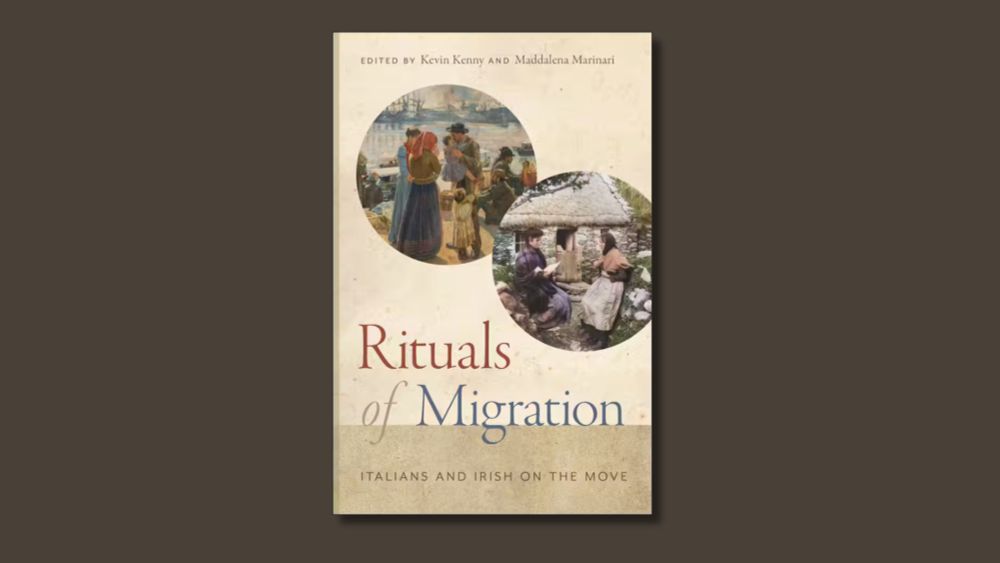
Leaving for America: Rituals of Packing and Departure - Books Ireland
An excerpt from Rituals of Migration: Italians and Irish on the Move (NYU Press).
booksirelandmagazine.com
June 12, 2025 at 12:51 PM
Here's a great excerpt from Bernadette Whelan's chapter on rituals of packing & departure in the book "Rituals of Migration: Italians and Irish on the Move" edited by @kevinkenny.bsky.social and @irpinaingiro.bsky.social published this week (June 15) by @nyupress.bsky.social @gihnyu.bsky.social
Reposted by Gavin Beinart-Smollan

Hidden Heritages - a great resource providing access to digitised Gaelic and Irish folktales. The transcription was done automatically using @transkribus.bsky.social or crowdsourcing. A great example of the use of AI and NLP for the benefits of research and society.
Newly launched- the Decoding Hidden Heritages project brings together over 5,500 Gaelic folktales from Ireland & Scotland, transcribed & made searchable using advanced AI. Congrats to Will Lamb, Bea Alex and wider team!

Decoding Hidden Heritages
Explore the shared linguistic and cultural heritage of Ireland and Scotland
www.hiddenheritages.ai
June 10, 2025 at 6:23 PM
Hidden Heritages - a great resource providing access to digitised Gaelic and Irish folktales. The transcription was done automatically using @transkribus.bsky.social or crowdsourcing. A great example of the use of AI and NLP for the benefits of research and society.
Reposted by Gavin Beinart-Smollan

Interested in hearing about a new alternative to Transkribus and eScriptorium? This Wednesday, from 15:00 to 16:30, there will be a virtual presentation of Calfa Vision by Baptiste Queuche, organized by IMAFO, Austrian Academy of Sciences.See the details: www.oeaw.ac.at/imafo/verans... #htr #atr #dh

Text recognition for non-western languages in manuscripts: presentation of Calfa
Online Lecture on DIGITAL HUMANITIES at IMAFO-HI | by Baptiste Queuche
www.oeaw.ac.at
May 26, 2025 at 11:34 AM
Interested in hearing about a new alternative to Transkribus and eScriptorium? This Wednesday, from 15:00 to 16:30, there will be a virtual presentation of Calfa Vision by Baptiste Queuche, organized by IMAFO, Austrian Academy of Sciences.See the details: www.oeaw.ac.at/imafo/verans... #htr #atr #dh
This is truly a pathbreaking book: a book that answers crucial questions that have gone unanswered for a really long time. Highly recommend, and really looking forward to this talk.

📚 New online book talk!
Join us on 26 March to hear about Polly Zavadivker's new work, A Nation of Refugees: Russia’s Jews in WWI
Sign up now 🔗 wienerholocaustlibrary.org/event/online...
Join us on 26 March to hear about Polly Zavadivker's new work, A Nation of Refugees: Russia’s Jews in WWI
Sign up now 🔗 wienerholocaustlibrary.org/event/online...

March 19, 2025 at 3:23 PM
This is truly a pathbreaking book: a book that answers crucial questions that have gone unanswered for a really long time. Highly recommend, and really looking forward to this talk.
Reposted by Gavin Beinart-Smollan

I visited the Alan Turing Institute and the New Real in London last week for a workshop on "Doing AI Differently." So many interesting talks, and I spoke about my ongoing poetry work with @mellymeldubs.bsky.social, Anna Preus, and Sriharsh Bhyravajjula, which you can view at 2:19 in this recording.

Doing AI Differently: London Workshop
An International Initiative Integrating Humanities into the Core of AI Development. Doing AI Differently is led by The Alan Turing Institute, University of Edinburgh…
vimeo.com
March 17, 2025 at 8:31 AM
I visited the Alan Turing Institute and the New Real in London last week for a workshop on "Doing AI Differently." So many interesting talks, and I spoke about my ongoing poetry work with @mellymeldubs.bsky.social, Anna Preus, and Sriharsh Bhyravajjula, which you can view at 2:19 in this recording.
Reposted by Gavin Beinart-Smollan
Interesting thread on public history, Reddit, and gaming…Didn’t think I’d be putting together those three in a sentence today

Our litmus test is instead whether a discussion is *productive*. In education, productive discussion is enabled by shared training, knowledge, reading and goals.
Put a classroom of history students together in a room and it's reasonable to expect they can have useful (if imperfect) conversations.
Put a classroom of history students together in a room and it's reasonable to expect they can have useful (if imperfect) conversations.
March 6, 2025 at 1:44 PM
Interesting thread on public history, Reddit, and gaming…Didn’t think I’d be putting together those three in a sentence today
“Physical research and critical thinking about the nature of archives and qualitative data just got way more important.” 💯
An additional stage of #archivalsilences due to LLMs: illegible information that isn't even being excluded: it's simply not noticed.
Great piece by @resobscura.bsky.social on the (insurmountable for the foreseeable future) limitations of AI in hist research.
resobscura.substack.com/p/ai-legibil...
Great piece by @resobscura.bsky.social on the (insurmountable for the foreseeable future) limitations of AI in hist research.
resobscura.substack.com/p/ai-legibil...

AI legibility, physical archives, and the future of research
A followup to "The leading AI models are now good historians"
resobscura.substack.com
March 6, 2025 at 2:05 PM
“Physical research and critical thinking about the nature of archives and qualitative data just got way more important.” 💯
Reposted by Gavin Beinart-Smollan

I beg of you, nonfiction writers, breathe life into your prose! Ignore the professor in your brain that's always ready to mark something as too colloquial. Make it read like something written by an actual human you might want to talk to at a party!
March 4, 2025 at 1:05 AM
I beg of you, nonfiction writers, breathe life into your prose! Ignore the professor in your brain that's always ready to mark something as too colloquial. Make it read like something written by an actual human you might want to talk to at a party!
Reposted by Gavin Beinart-Smollan

Reposted by Gavin Beinart-Smollan

A reasonably effective workaround for this problem is for educators to create lessons and lesson plans for people to use as system prompts for the models
Info in prompts almost always overrides info baked into the model weights, unless the model itself has been actively trained for misinformation
Info in prompts almost always overrides info baked into the model weights, unless the model itself has been actively trained for misinformation

One danger of embracing generative AI as a learning device and in language assistance is that you're letting the keepers of that AI have power over what you learn and how you write. It will be programmed with biases, unintentional but often *quite* intentional, that you will unknowingly adopt.
February 20, 2025 at 3:59 PM
A reasonably effective workaround for this problem is for educators to create lessons and lesson plans for people to use as system prompts for the models
Info in prompts almost always overrides info baked into the model weights, unless the model itself has been actively trained for misinformation
Info in prompts almost always overrides info baked into the model weights, unless the model itself has been actively trained for misinformation
Reposted by Gavin Beinart-Smollan
Given the vast volume of unedited manuscripts and the small pool of scholars to transcribe, collate, and edit them, AI models capable of doing a decent job of some of that work--at scale--could be really beneficial. Human eyes and brain are still needed, but more ground can be covered. #philology
This is interesting. "Leading AI Models are now very good historians". It's a total clickbait title as I will expand on below. But several of the challenges put to the models, particularly palaeographical transcription and translation, it seems to perform well. Wills @ Exeter is using it for this.1
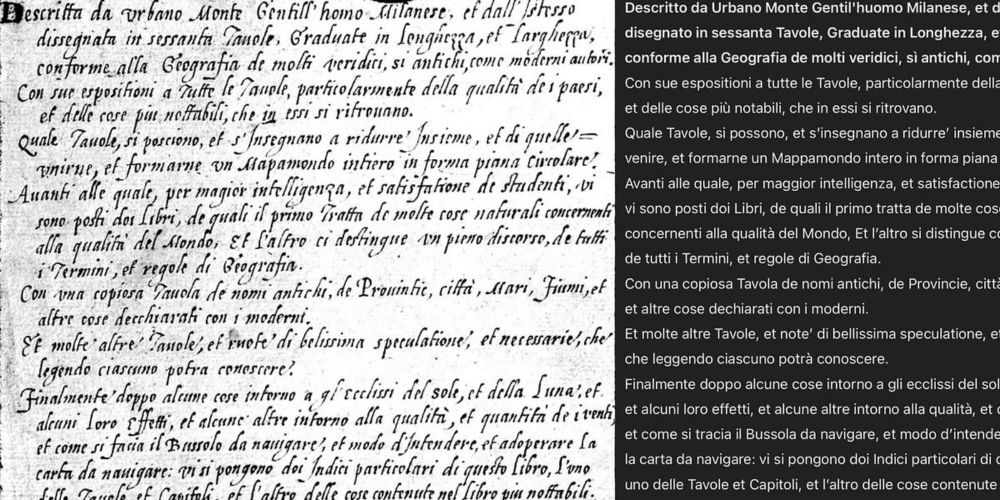
The leading AI models are now very good historians
Three case studies with GPT-4o, o1, and Claude Sonnet 3.5, and what they mean
resobscura.substack.com
February 2, 2025 at 3:42 PM
Given the vast volume of unedited manuscripts and the small pool of scholars to transcribe, collate, and edit them, AI models capable of doing a decent job of some of that work--at scale--could be really beneficial. Human eyes and brain are still needed, but more ground can be covered. #philology
Reposted by Gavin Beinart-Smollan

Imagine — just imagine — Mount Vernon, Monticello, Montpelier, Drayton Hall or Colonial Williamsburg doing this for a day.
Can’t? There you have the core problem with the public history of the United States.
Rudolf Höss’s villa opens to honour Auschwitz victims
www.theguardian.com/world/2025/j...
Can’t? There you have the core problem with the public history of the United States.
Rudolf Höss’s villa opens to honour Auschwitz victims
www.theguardian.com/world/2025/j...

The ‘house next door’: Rudolf Höss's villa opens to honour Auschwitz victims
On the eve of Holocaust Remembrance Day, House 88 with its chilling past has been turned into centre to combat hate
www.theguardian.com
January 26, 2025 at 2:50 PM
Imagine — just imagine — Mount Vernon, Monticello, Montpelier, Drayton Hall or Colonial Williamsburg doing this for a day.
Can’t? There you have the core problem with the public history of the United States.
Rudolf Höss’s villa opens to honour Auschwitz victims
www.theguardian.com/world/2025/j...
Can’t? There you have the core problem with the public history of the United States.
Rudolf Höss’s villa opens to honour Auschwitz victims
www.theguardian.com/world/2025/j...
Reposted by Gavin Beinart-Smollan
Higher education should always have been doing this BUT: now is the time to increase our partnerships with institutions within the communities we serve, demonstrating in everyday ways why universities and colleges matter to cities, states, towns and regions in which they are located (cont'd)

January 27, 2025 at 3:00 PM
Higher education should always have been doing this BUT: now is the time to increase our partnerships with institutions within the communities we serve, demonstrating in everyday ways why universities and colleges matter to cities, states, towns and regions in which they are located (cont'd)
Reposted by Gavin Beinart-Smollan
"The leading AI models are now very good historians" - by Benjamin Breen, a history professor at UC Santa Cruz resobscura.substack.com/p/the-leadin...

The leading AI models are now very good historians
Three case studies with GPT-4o, o1, and Claude Sonnet 3.5, and what they mean
resobscura.substack.com
January 26, 2025 at 10:48 PM
"The leading AI models are now very good historians" - by Benjamin Breen, a history professor at UC Santa Cruz resobscura.substack.com/p/the-leadin...
Reposted by Gavin Beinart-Smollan

It’s #HandwritingDay so I thought I’d share a thread about Renaissance handwritten documents I worked with in the research that led to “Inventing the Renaissance,” and the best and worst scripts I’ve ever seen. 1/?
(Continuing countdown to the release of my *absurdly fat* *absurdly orange* book!)
(Continuing countdown to the release of my *absurdly fat* *absurdly orange* book!)


January 23, 2025 at 10:54 PM
It’s #HandwritingDay so I thought I’d share a thread about Renaissance handwritten documents I worked with in the research that led to “Inventing the Renaissance,” and the best and worst scripts I’ve ever seen. 1/?
(Continuing countdown to the release of my *absurdly fat* *absurdly orange* book!)
(Continuing countdown to the release of my *absurdly fat* *absurdly orange* book!)