



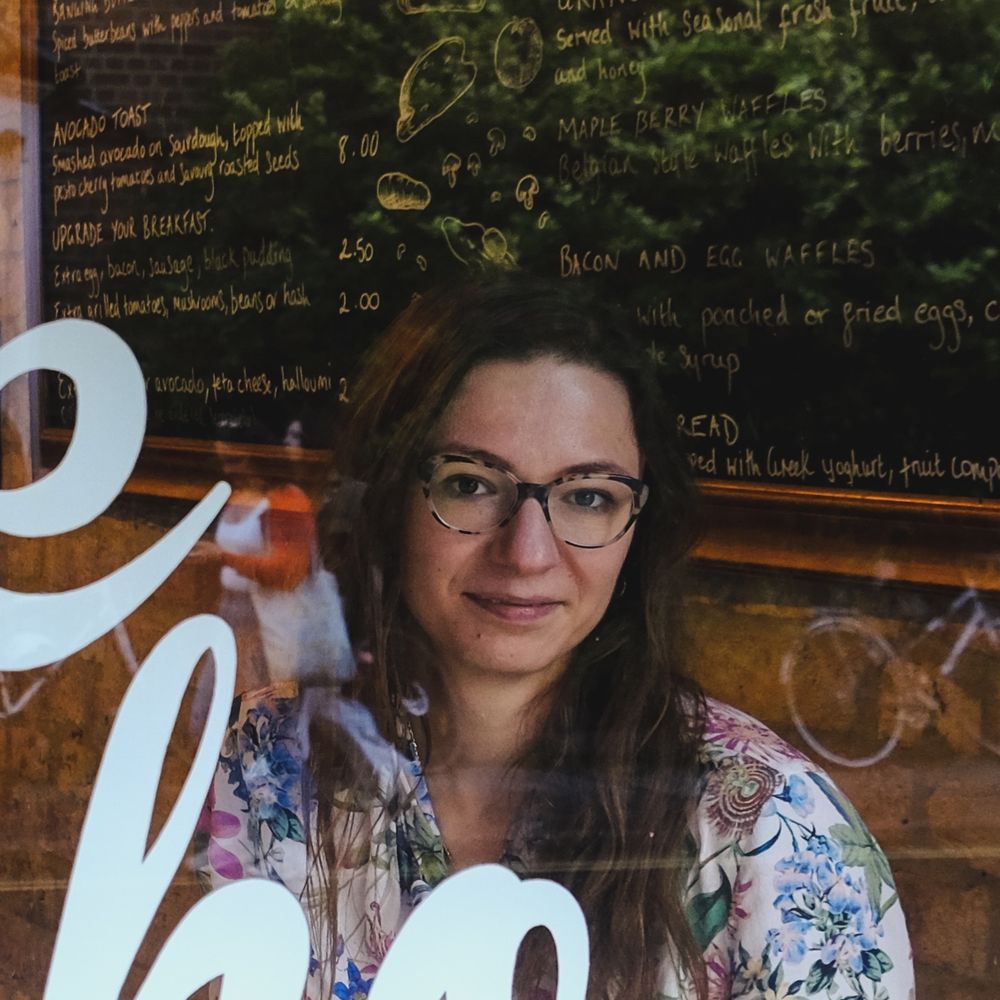
Joanna Krupka
@ashakrupka.bsky.social
Coding Clinician and Postdoc at the Cambridge Stem Cell Institute
Researching #lymphoma, #microproteins, #RNA and #ctDNA 🩸🧬
Bye-Fellow, St Catharine's College, Cambridge
Likes LOTR 🧙🏼♂️and 35mm film cameras 📷
Researching #lymphoma, #microproteins, #RNA and #ctDNA 🩸🧬
Bye-Fellow, St Catharine's College, Cambridge
Likes LOTR 🧙🏼♂️and 35mm film cameras 📷
Pinned
Joanna Krupka
@ashakrupka.bsky.social
· Nov 9

ashakru - Overview
Coding clinician researching lymphoma biology, micropeptides and ctDNA |
Likes LOTR 🧙🏼♂️and 35mm film cameras 📷 - ashakru
github.com
Hi everyone! I used to post primarily on X, but with the recent turmoil, I'll be cross-posting on both sites for now.
I'm a computational clinician researching B-cell lymphomas, microproteins, and ctDNA. You can learn more about my current projects on my GitHub:
github.com/ashakru
I'm a computational clinician researching B-cell lymphomas, microproteins, and ctDNA. You can learn more about my current projects on my GitHub:
github.com/ashakru
What a big conference for #microproteins! Enjoying the #GRC Decoding Microproteins Across Evolution and Disease.

August 20, 2025 at 8:25 AM
What a big conference for #microproteins! Enjoying the #GRC Decoding Microproteins Across Evolution and Disease.
Research into regulatory "backbenches" proteins pays off: fewer adverse effects, higher specificity and the ability to target “undruggable” proteins. Examples: Nav1.7 channel regulator (Regulonix) and glutamate or acetylcholine receptor associated proteins (Rapport Therapeutics).
rdcu.be/ekP3N
rdcu.be/ekP3N

Precision neuroscience
Nature Biotechnology - Developers are recombining or sharpening established drugs, molecules and mechanisms to create a new generation of neurology therapies.
rdcu.be
May 6, 2025 at 7:38 AM
Research into regulatory "backbenches" proteins pays off: fewer adverse effects, higher specificity and the ability to target “undruggable” proteins. Examples: Nav1.7 channel regulator (Regulonix) and glutamate or acetylcholine receptor associated proteins (Rapport Therapeutics).
rdcu.be/ekP3N
rdcu.be/ekP3N
Is there a class struggle in DLBCL? How many subtypes are there? Do we need another classifier? Check out the commentary by Dan Hodson and me on the new probabilistic classifier for DLBCL, just published in @bloodjournal.bsky.social
ashpublications.org/blood/articl...
1/3
ashpublications.org/blood/articl...
1/3

Class struggle in DLBCL
In this issue of Blood, Chapuy et al report on the development of DLBclass,1 a probabilistic, neural network–based classifier that assigns individual cases
ashpublications.org
May 2, 2025 at 11:52 AM
Is there a class struggle in DLBCL? How many subtypes are there? Do we need another classifier? Check out the commentary by Dan Hodson and me on the new probabilistic classifier for DLBCL, just published in @bloodjournal.bsky.social
ashpublications.org/blood/articl...
1/3
ashpublications.org/blood/articl...
1/3
🚨NEW PREPRINT! Excited to share the results of the DIRECT study - a prospective, multisite study of ctDNA in 188 aggressive B‑cell lymphoma patients, involving pre‑treatment risk prediction, genetic profiling, and end‑of‑treatment MRD assessment via phased variants. www.medrxiv.org/content/10.1...

The DIRECT study: A roadmap for ctDNA-based risk prediction, molecular profiling and MRD detection in Diffuse Large B Cell Lymphoma
DIRECT was a prospective, multisite study assessing the feasibility and utility of circulating tumor DNA (ctDNA) in 188 patients with aggressive B-cell non-Hodgkin lymphoma using a lymphoma-customized...
www.medrxiv.org
April 22, 2025 at 8:18 AM
🚨NEW PREPRINT! Excited to share the results of the DIRECT study - a prospective, multisite study of ctDNA in 188 aggressive B‑cell lymphoma patients, involving pre‑treatment risk prediction, genetic profiling, and end‑of‑treatment MRD assessment via phased variants. www.medrxiv.org/content/10.1...
Proprietary software is important for funding tech development, but the availability of open-source drives innovation. Consider, for example, Linux, Llama, Android, or Darwin.
Below, the story of Netscape from Ben Horowitz's "The Hard Thing About Hard Things"
Below, the story of Netscape from Ben Horowitz's "The Hard Thing About Hard Things"

April 16, 2025 at 7:12 PM
Proprietary software is important for funding tech development, but the availability of open-source drives innovation. Consider, for example, Linux, Llama, Android, or Darwin.
Below, the story of Netscape from Ben Horowitz's "The Hard Thing About Hard Things"
Below, the story of Netscape from Ben Horowitz's "The Hard Thing About Hard Things"
Increasing demand for novels in the 19th century in England correlated with improving literacy (60% of men, 40% of women in the 1800s vs. 97% by the 1900s). Reading was no longer an upper-class domain. It's ironic how an objectively positive change was criticized from a normative side.
Back in the early 1800s, when novels started taking off, they faced significant criticism. Some reviews from that era resemble today’s arguments against the widespread use of AI.

April 16, 2025 at 9:50 AM
Increasing demand for novels in the 19th century in England correlated with improving literacy (60% of men, 40% of women in the 1800s vs. 97% by the 1900s). Reading was no longer an upper-class domain. It's ironic how an objectively positive change was criticized from a normative side.
Back in the early 1800s, when novels started taking off, they faced significant criticism. Some reviews from that era resemble today’s arguments against the widespread use of AI.
April 16, 2025 at 6:55 AM
Back in the early 1800s, when novels started taking off, they faced significant criticism. Some reviews from that era resemble today’s arguments against the widespread use of AI.
Human creativity at its best
www.theguardian.com/science/2025...
www.theguardian.com/science/2025...

Biologist whose innovation saved the life of British teenager wins $3m Breakthrough prize
Prof David Liu is among the winners of 2025’s ‘Oscars of science’, with honours also going to researchers for landmark work on multiple sclerosis, particle physics and ‘skinny jabs’
www.theguardian.com
April 6, 2025 at 7:52 AM
Human creativity at its best
www.theguardian.com/science/2025...
www.theguardian.com/science/2025...
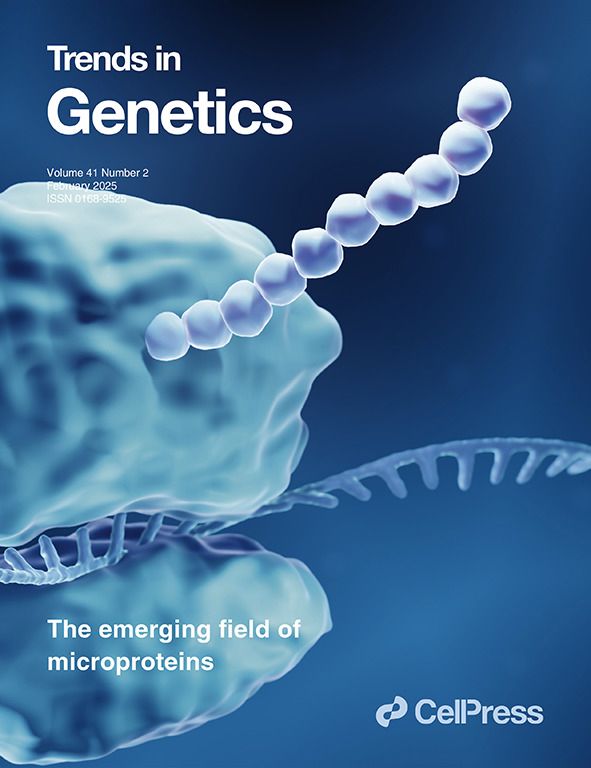
Something sweet for microproteins aficionados!

TiG's February issue is devoted to microproteins and the small ORFs that encode them.
Check it out!
www.cell.com/trends/genet...
Check it out!
www.cell.com/trends/genet...
February 4, 2025 at 10:24 AM
Something sweet for microproteins aficionados!
"The problem of efficient imaging was particularly felt during the early years of the Royal Society"(~1660s). Feeling less guilty about spending hours finding the right plot, colour palette, and composition - it's all at the heart of the Scientific Revolution. publicdomainreview.org/essay/more-l...

“More Lively Counterfaits”: Experimental Imaging at the Birth of Modern Science
From infographics to digital renders, today’s scientists have ready access to a wide array of techniques to help visually communicate their research. It wasn’t always so. Gregorio Astengo explores the...
publicdomainreview.org
February 2, 2025 at 12:00 PM
"The problem of efficient imaging was particularly felt during the early years of the Royal Society"(~1660s). Feeling less guilty about spending hours finding the right plot, colour palette, and composition - it's all at the heart of the Scientific Revolution. publicdomainreview.org/essay/more-l...
"61% of Americans say that astrology provides comfort in uncertain times". People seek explanations and causality, escaping the anxiety of freedom and infinite possibilities. Science was thought to fill that role, but I guess it doesn’t help much with dating.
www.economist.com/culture/2025...
www.economist.com/culture/2025...

Astrology is booming, thanks to technology and younger enthusiasts
Gen Z is full of stargazing users
www.economist.com
January 30, 2025 at 4:31 PM
"61% of Americans say that astrology provides comfort in uncertain times". People seek explanations and causality, escaping the anxiety of freedom and infinite possibilities. Science was thought to fill that role, but I guess it doesn’t help much with dating.
www.economist.com/culture/2025...
www.economist.com/culture/2025...
Last-minute trip to London to see Francis Bacon: Human Presence. A moving and unsettling exhibition at the National Portrait Gallery, exploring complex emotions and the fragility of human existence.


January 18, 2025 at 9:12 PM
Last-minute trip to London to see Francis Bacon: Human Presence. A moving and unsettling exhibition at the National Portrait Gallery, exploring complex emotions and the fragility of human existence.
I really enjoyed this episode! I think biology as a cumulative science feels inefficient because hypothesis generation and exploration often depend on individual intellectual preparedness when interpreting data. Choosing one strategy over another reflects preference rather than methodological rigor.
🔥Today's new episode of the Night Science Podcast is super cool: A hypothesis is a liability! We talk about the interplay between hypothesis-driven and exploratory research, and discuss the insights of previous guests of the podcast. I'm really curious to know what you'll think!

January 15, 2025 at 4:57 PM
I really enjoyed this episode! I think biology as a cumulative science feels inefficient because hypothesis generation and exploration often depend on individual intellectual preparedness when interpreting data. Choosing one strategy over another reflects preference rather than methodological rigor.
From 2020, but still highly relevant - common pitfalls in binding profile analysis. Focused on m6A changes, but similar issues apply to other RNA immunoprecipitation sequencing techniques. www.nature.com/articles/s41...

Limits in the detection of m6A changes using MeRIP/m6A-seq - Scientific Reports
Scientific Reports - Limits in the detection of m6A changes using MeRIP/m6A-seq
www.nature.com
January 14, 2025 at 10:36 PM
From 2020, but still highly relevant - common pitfalls in binding profile analysis. Focused on m6A changes, but similar issues apply to other RNA immunoprecipitation sequencing techniques. www.nature.com/articles/s41...
Unpopular opinion: Biomedical science is over-regulated, slowing progress by focusing too much on hypothetical risks. Many issues stem from sloppy research or individual irresponsibility, which regulations can’t fully prevent.
December 13, 2024 at 5:03 PM
Unpopular opinion: Biomedical science is over-regulated, slowing progress by focusing too much on hypothetical risks. Many issues stem from sloppy research or individual irresponsibility, which regulations can’t fully prevent.
Reposted by Joanna Krupka
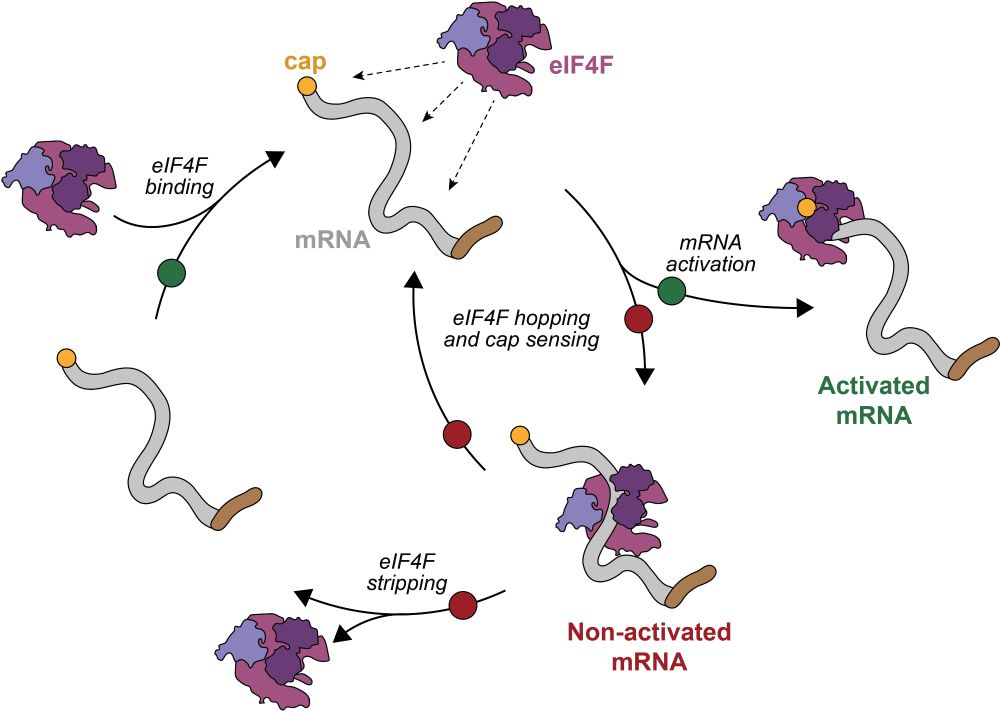
Our latest work is out in Nature today! Using smFRET, we directly visualized recruitment of the eIF4F complex to the 5' cap of eukaryotic mRNAs and formation of an activated mRNA. Our findings reveal new and surprising roles for each eIF4F component. 1/3 www.nature.com/articles/s41...
December 11, 2024 at 9:35 PM
Our latest work is out in Nature today! Using smFRET, we directly visualized recruitment of the eIF4F complex to the 5' cap of eukaryotic mRNAs and formation of an activated mRNA. Our findings reveal new and surprising roles for each eIF4F component. 1/3 www.nature.com/articles/s41...
Fascinating paper on unannotated splicing junctions between exons and transposable elements (JETs). Pervasive, but very contextual expression increasing proteome diversity.

December 12, 2024 at 7:43 AM
Fascinating paper on unannotated splicing junctions between exons and transposable elements (JETs). Pervasive, but very contextual expression increasing proteome diversity.
SM has become so dull lately. Over there, it’s mainly Elon rambling and trolls (is it me only?), while here, the feed still lacks momentum. I miss the old Twitter, where I could browse papers and enjoy some spicy cultural or political drama in the same time.
December 12, 2024 at 7:17 AM
SM has become so dull lately. Over there, it’s mainly Elon rambling and trolls (is it me only?), while here, the feed still lacks momentum. I miss the old Twitter, where I could browse papers and enjoy some spicy cultural or political drama in the same time.
Reposted by Joanna Krupka
Ok so I love this new Cell paper on lncRNAs.
and also it dovetails largely with the microproteins work on essential non-canonical ORFs that several groups have been studying including my own.
#RNAsky #microproteins #cansky folks
🧪
💻+🧬
🔎 microproteins
www.cell.com/cell/fulltex...
and also it dovetails largely with the microproteins work on essential non-canonical ORFs that several groups have been studying including my own.
#RNAsky #microproteins #cansky folks
🧪
💻+🧬
🔎 microproteins
www.cell.com/cell/fulltex...

Transcriptome-scale RNA-targeting CRISPR screens reveal essential lncRNAs in human cells
Massively parallel CRISPR-Cas13 screens in multiple human cell lines uncover universally
essential and context-specific essential lncRNAs that exhibit dynamic expression during
development and in spec...
www.cell.com
November 12, 2024 at 12:40 PM
Ok so I love this new Cell paper on lncRNAs.
and also it dovetails largely with the microproteins work on essential non-canonical ORFs that several groups have been studying including my own.
#RNAsky #microproteins #cansky folks
🧪
💻+🧬
🔎 microproteins
www.cell.com/cell/fulltex...
and also it dovetails largely with the microproteins work on essential non-canonical ORFs that several groups have been studying including my own.
#RNAsky #microproteins #cansky folks
🧪
💻+🧬
🔎 microproteins
www.cell.com/cell/fulltex...
Is there a starter pack of starter packs? A meta starter pack? 🤔
November 10, 2024 at 7:18 PM
Is there a starter pack of starter packs? A meta starter pack? 🤔
The unfortunate reality is that this wouldn't be possible today. The UK chose not to participate as an associated third country in the new Erasmus+ program.
It also brought back memories of my own elective at Oxford in 2015. I received an Erasmus+ scholarship for a mini research project on stress responses in cancer, which kicked off my research journey and led me to leave Warsaw to start my PhD at Cambridge two years later.
November 9, 2024 at 12:49 PM
The unfortunate reality is that this wouldn't be possible today. The UK chose not to participate as an associated third country in the new Erasmus+ program.
Impressed by yesterday's Medical Electives Evening
at St Catharine's College yesterday. Numerous reflections on global healthcare inequalities, and the intersections of culture, politics, and public health.
at St Catharine's College yesterday. Numerous reflections on global healthcare inequalities, and the intersections of culture, politics, and public health.
November 9, 2024 at 12:47 PM
Impressed by yesterday's Medical Electives Evening
at St Catharine's College yesterday. Numerous reflections on global healthcare inequalities, and the intersections of culture, politics, and public health.
at St Catharine's College yesterday. Numerous reflections on global healthcare inequalities, and the intersections of culture, politics, and public health.
Hi everyone! I used to post primarily on X, but with the recent turmoil, I'll be cross-posting on both sites for now.
I'm a computational clinician researching B-cell lymphomas, microproteins, and ctDNA. You can learn more about my current projects on my GitHub:
github.com/ashakru
I'm a computational clinician researching B-cell lymphomas, microproteins, and ctDNA. You can learn more about my current projects on my GitHub:
github.com/ashakru
ashakru - Overview
Coding clinician researching lymphoma biology, micropeptides and ctDNA |
Likes LOTR 🧙🏼♂️and 35mm film cameras 📷 - ashakru
github.com
November 9, 2024 at 11:57 AM
Hi everyone! I used to post primarily on X, but with the recent turmoil, I'll be cross-posting on both sites for now.
I'm a computational clinician researching B-cell lymphomas, microproteins, and ctDNA. You can learn more about my current projects on my GitHub:
github.com/ashakru
I'm a computational clinician researching B-cell lymphomas, microproteins, and ctDNA. You can learn more about my current projects on my GitHub:
github.com/ashakru